EPA List N: What Every Healthcare Buyer Needs to Know
- Qubit Technology
- 9 hours ago
- 13 min read
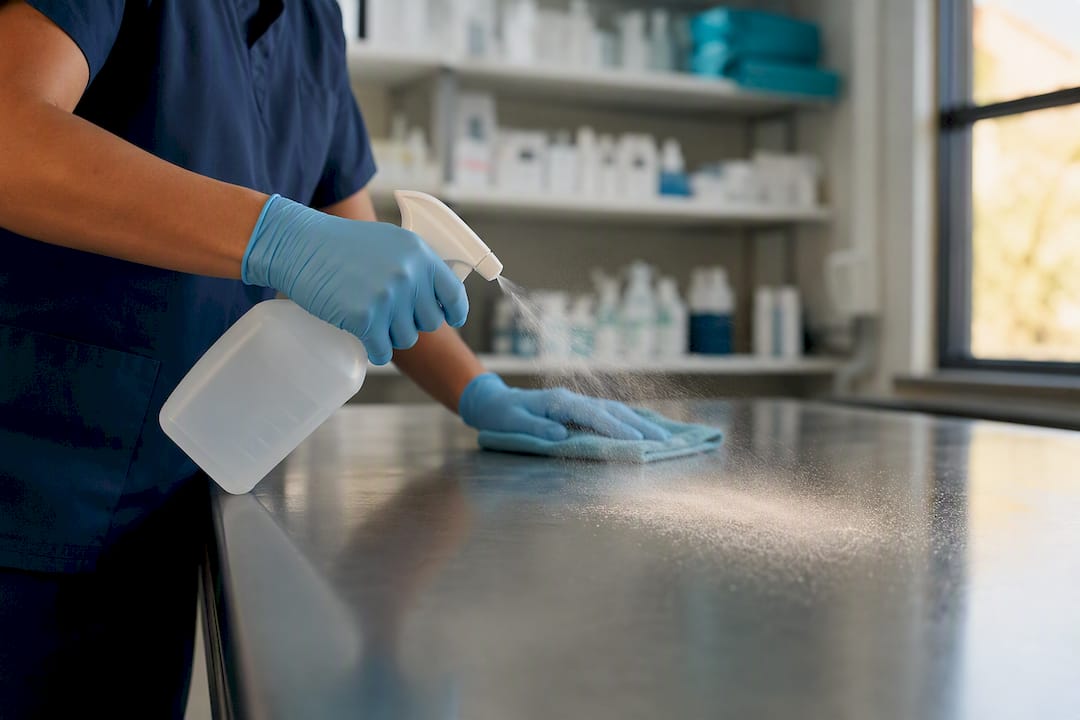
EPA List N is the U.S. Environmental Protection Agency’s searchable database of disinfectant products the agency expects to be effective against SARS‑CoV‑2 when used exactly as the label directs. It is not a rating system or a seal of quality. It is a verification tool, and it only works if you use it correctly: look up the EPA registration number printed on the product label, confirm the product appears on the list, and check that you can meet the exact contact time the label requires.
If you’re procuring or applying disinfectants in a clinical or facility setting, here’s what to do right now:
Pull the EPA Reg. No. off the product label (format looks like 12345-67-89).
Search that number on the official List N tool, not a third-party summary.
Confirm the labeled contact time and that your staff can realistically maintain it on the surfaces you clean.
Save or export the confirmation for your compliance records.
Key Takeaways
EPA List N verification depends on three things done consistently: checking the registration number, confirming the labeled contact time, and documenting both at the time of purchase.
Point | Details |
List N is a verification tool | It confirms expected efficacy against SARS‑CoV‑2 per label directions, not a quality ranking or endorsement. |
Check the registration number first | Match the first two parts of the EPA Reg. No. to find equivalent products during shortages. |
Contact time is non-negotiable | Surfaces must stay wet for the full labeled duration, or disinfection has not actually occurred. |
Residual products supplement, not replace | Residual antimicrobial items add protection between cleanings but don’t substitute for routine disinfection. |
Queenssurgical supports compliant sourcing | Queenssurgical carries EPA-registered disinfectant brands and PPE, and can help procurement teams verify labels and documentation. |
Authoritative EPA and CDC Resources Worth Bookmarking
Every claim in this guide traces back to EPA’s own published pages, and those pages are the ones to check when a product’s status is in question. Start with the List N advanced search tool for direct product lookups and CSV exports, then reference About List N for the program’s official scope and limitations.
For residual products specifically, the List N appendix breaks out formulations that work differently from standard disinfectants and should be evaluated with that distinction in mind. Since the EPA updates List N periodically, including as recently as May 2026, bookmark the search tool itself rather than saving a static export as your long-term reference. A CSV pulled today is a snapshot, not a permanent record of a product’s status.
A Publisher’s View on Getting Procurement Right
Queenssurgical has spent years supplying gloves, masks, gowns, and disinfectant products to clinics and healthcare facilities across the Americas, which means fielding a steady stream of procurement questions about EPA compliance, label verification, and product equivalence. That vantage point shapes the guidance here: most compliance gaps come from skipped label checks and unmonitored contact times, not from choosing a bad product outright.
If your team needs help verifying a registration number or sourcing documentation for an audit, reach out through Queenssurgical’s contact page and a member of the procurement support team can walk through it with you.
Table of Contents
What Is EPA List N and What Does It Actually Cover?
List N exists because the EPA needed a fast, standardized way to tell the public which registered pesticide products meet its criteria for use against SARS‑CoV‑2. The agency built and maintains it as an official government resource, and it was still being actively updated as of May 2026. That update cadence matters for procurement teams: a product’s status can shift, and a purchase order based on a printout from two years ago is a compliance risk.
Being on List N doesn’t mean the EPA has personally endorsed a brand or tested every bottle that comes off the line. It means the manufacturer submitted efficacy data that met one of the agency’s accepted testing pathways, and the EPA agreed the resulting product should work against the virus when used according to the label. That distinction sounds bureaucratic, but it changes how you should treat the list operationally.
A few things List N is not:
It is not a ranking of “best” disinfectants.
It is not a guarantee that misuse (wrong dilution, wiped dry too fast) still works.
It is not a list of hand sanitizers, skin antiseptics, or anything intended for use on people.
Scope check: Every product on List N is a surface-use antimicrobial pesticide. If a rep or catalog listing implies a List N product can be applied to skin, that claim is off-label and unsafe. The EPA is explicit that these are surface disinfectants only, regulated the same way as any other pesticide.
For a facility manager, the practical scope question is simpler than it sounds: does the product’s label list the surface types and use sites you actually have (nonporous medical equipment, floors, high-touch fixtures)? If the label doesn’t cover your surface, List N inclusion doesn’t help you.
How Does the EPA Decide Which Products Make List N?
The EPA doesn’t run a single uniform test on every submission. It accepts efficacy data through three distinct pathways, and knowing which one a product used tells you something about how directly its performance against SARS‑CoV‑2 was demonstrated.
Direct testing against SARS‑CoV‑2. The manufacturer tested the actual virus in a lab. This is the most direct evidence path.
Testing against a harder-to-kill pathogen. If a product already kills a tougher virus (one more resistant to disinfectants than SARS‑CoV‑2), the EPA accepts that as sufficient evidence the product will also work on the coronavirus.
Testing against a similar human coronavirus. Data on a closely related coronavirus can substitute when direct SARS‑CoV‑2 testing wasn’t performed.
The EPA has laid out this framework on its own methodology page, and it’s worth reading if you’re fielding questions from infection prevention staff or a hospital compliance officer who wants to know why one product’s dossier looks different from another’s.
Here’s the detail that matters for anyone worried about new variants: the EPA states it expects List N products to remain effective against all strains and variants of SARS‑CoV‑2 when used per label directions, precisely because the testing targets structural features of the virus (the lipid envelope, mainly) rather than a specific mutation. You don’t need a new “Omicron-approved” disinfectant. The chemistry that disrupts the viral envelope doesn’t care which variant it’s touching.
That said, “EPA expects” is a specific phrase, not a blanket promise, and it applies only when the product is used exactly as labeled. Skip the contact time, dilute it wrong, or apply it to a use site not listed on the label, and you’ve stepped outside the conditions the EPA’s expectation is based on. One more wrinkle worth knowing: if List N shows a product qualified using rotavirus testing data, the label itself must actually contain rotavirus-specific directions for that qualification to hold, according to EPA guidance on verifying listed products. The label and the list have to match, not just the brand name.
How Do You Find and Verify a Product on List N?
This is the step most facilities get wrong, usually because they trust a vendor’s marketing sheet instead of running the check themselves. Here’s a workflow that holds up under an audit.
Locate the EPA Reg. No. on the product label. It’s a three-part number, something like 1839-83-70585. Every registered pesticide carries one, and it’s usually in small print near the ingredient list or directions.
Use the first two parts only for your initial search. The first two segments identify the base formulation and its primary registrant. The third part is a supplemental distributor number, meaning the same chemistry is being sold under a different label or brand name. This is the single most useful trick in procurement verification, because it lets you find equivalent products fast during a shortage instead of waiting on your preferred brand to restock.
Run the advanced search on List N. Filter by formulation type (wipe, spray, concentrate), use site, or contact time to narrow results to what your facility actually needs.
Cross-check the label’s pathogen directions. Confirm the product label includes directions for the specific pathogen the EPA used to qualify it, not just a general disinfectant claim.
Export to CSV for batch verification. If you’re checking a purchase order with fifteen SKUs on it, don’t do this one product at a time. The EPA’s advanced search tool supports export, which lets your procurement team match reg numbers against a vendor catalog in one pass rather than fifteen browser tabs.
Save a dated screenshot or export with each purchase order. List N changes over time. Documentation from the date of purchase is what protects you if a product’s status is questioned later.
Pro Tip: Build a simple spreadsheet with three columns: EPA Reg. No. (first two parts), product name, and verification date. Update it every time you place a bulk order. When a supplier substitutes a brand mid-shipment, you can check equivalence in under a minute instead of escalating to your infection control team.
For high-volume buyers, the CSV export isn’t a nice-to-have. If you’re managing supply across multiple departments or a multi-site health system, matching registration numbers against a vendor catalog in bulk is the difference between a two-hour verification job and a two-day one.
Why Contact Time Determines Whether Disinfection Actually Works
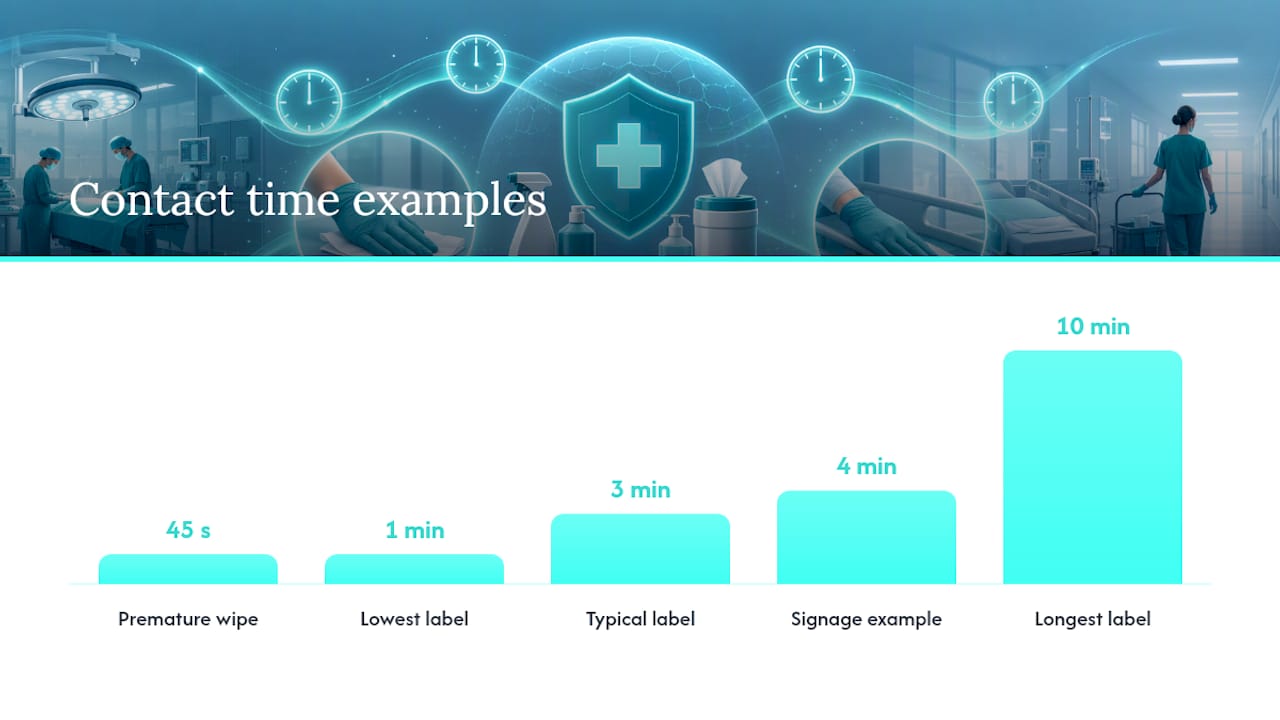
Contact time, sometimes called dwell time, is how long a surface has to stay visibly wet with the product before the disinfectant has actually killed the pathogens it’s rated for. It’s printed on the label, usually somewhere between one and ten minutes depending on the formulation, and it is not a suggestion. Wipe a surface dry at 45 seconds when the label calls for 3 minutes, and you have not disinfected that surface. You’ve cleaned it.
This is where a lot of well-intentioned cleaning protocols quietly fail. A product can be squarely on List N, correctly registered, applied by a conscientious staff member, and still underperform because the surface dried before the contact time elapsed. High-traffic areas like bed rails, exam tables, and shared equipment dry fast under HVAC airflow, which is exactly the environment where contact time gets shortchanged.
Surface-specific considerations worth building into your protocols:
Nonporous medical equipment (monitors, IV poles) generally holds moisture longer than porous countertops, but wipeable electronics need products specifically labeled safe for that surface.
Bed rails and high-touch fixtures need reapplication if they dry before the labeled time, not a shrug and a move to the next room.
PPE work surfaces and donning stations should use products compatible with the materials involved, since some formulations degrade certain plastics or rubber over repeated use.
Since EPA products are regulated as pesticides, following the labeled contact time is a compliance requirement, not a best practice suggestion you can round down when you’re short-staffed.
Pro Tip: Post contact-time signage directly at the cleaning cart, not just in a binder in the supply closet. Staff who can see “keep wet for 4 minutes” while they’re actively wiping down a room are far more likely to hit it than staff relying on memory from a training session three months ago.
A workable operational fix: assign timers, not memory. Some facilities use a simple kitchen timer clipped to the cleaning cart; others build the contact time into an electronic checklist that won’t let staff mark a room “clean” until the clock runs out. Either approach beats hoping someone remembers.
What’s the Difference Between Standard Disinfectants and Residual Antimicrobial Products?
Standard List N disinfectants kill pathogens present on a surface at the moment of application, and that’s the end of their job. Residual antimicrobial products are a different category entirely, covered under the List N appendix rather than the main list.
These products are applied to a surface and then continue working over time, sometimes for hours, sometimes for weeks or years, providing ongoing antimicrobial activity between full cleanings. The EPA is direct about the limits of this claim: residual products supplement routine cleaning and disinfection, they do not replace it. A residual coating on a doorknob doesn’t eliminate the need for your standard cleaning schedule.
Where residual products can add value:
High-touch surfaces that get missed between scheduled cleanings (elevator buttons, shared handrails).
Settings with high patient turnover where continuous baseline protection between full disinfection cycles has practical benefit.
Equipment that’s difficult to disinfect frequently without disrupting workflow.
To find these on List N, use the formulation type filter in the advanced search and look for the residual designation, or check the appendix page directly, which lists them separately from standard products. If a vendor pitches a residual product as a replacement for your regular disinfection protocol, that pitch conflicts with the EPA’s own framing of the category.
Procurement Strategies for Reliable Supply and Compliant Substitutions
Supply shortages are when List N knowledge earns its keep. When your preferred brand is backordered, the first two parts of the EPA Reg. No. are what let you find a legitimate substitute instead of guessing.
Match the first two segments of the registration number. Two products with identical first-two-part reg numbers are the same underlying formulation, just packaged or distributed under different labels. This is your fastest, most defensible substitution path.
Request documentation before accepting a substitute. Ask suppliers for the product label, the safety data sheet (SDS), and the EPA registration number. A supplier that can’t produce these quickly is a red flag, not a rounding error.
Communicate contact times across every substitution. A substitute product might carry a different labeled contact time than what your staff is used to. Update signage and training materials the same day you swap products, not weeks later.
Plan inventory around verified equivalents, not single-brand loyalty. Facilities that pre-identify two or three acceptable equivalents for each core disinfectant weather shortages far better than those locked into one SKU.
A vendor comparison checklist built around these documentation requests keeps your procurement team consistent even when the person handling purchasing changes. And matching reg numbers this way is also how you catch a supplier trying to pass off a non-equivalent product as a substitute. Reg numbers that don’t share their first two parts are not interchangeable, no matter how similar the label language sounds.
Safety Rules That Come With Every List N Product
Every product on List N is legally classified as an antimicrobial pesticide, which means it comes with binding label instructions around personal protective equipment, ventilation, and storage. Skipping those instructions isn’t just a training gap. It’s a violation of the product’s federal registration terms.
Non-negotiable safety points for any facility using List N products:
Follow labeled PPE requirements (gloves, eye protection) exactly, even for products that seem mild.
Ensure adequate ventilation during application, especially with spray or aerosol formulations in enclosed exam rooms.
Never apply disinfectant products to skin, hair, or mucous membranes. These are surface-use pesticides, not antiseptics.
Store all products out of reach of children and away from incompatible chemicals; bleach-based and ammonia-based products should never be mixed or stored adjacent to each other.
Keep the SDS accessible to every shift, not filed away in a manager’s office that’s locked after hours.
The EPA’s framing here isn’t a suggestion embedded in fine print. Because these products are regulated pesticides, label PPE and ventilation instructions carry the same legal weight as any other pesticide compliance requirement your facility already tracks for other chemicals.
Isolation gowns and disposable gloves aren’t optional add-ons when your team is applying these products for hours during a deep-clean shift. If your current PPE donning and doffing protocol doesn’t address disinfectant application specifically, that’s a gap worth closing before your next infection control review.
How a Procurement Team Actually Puts List N to Work
Here’s what a real verification workflow looks like when a facility is placing a bulk disinfectant order rather than just restocking one bottle.
Pull the EPA Reg. No. from the quote or product listing before the purchase order is finalized, not after the shipment arrives.
Cross-check the number against List N’s advanced search, confirming both the base product and the specific contact time claimed.
Request the SDS and current label PDF from the supplier, and file both alongside the purchase order for audit purposes.
Build an approved-alternates list using the first-two-parts method, so your team has backup options pre-vetted before a shortage forces a rushed decision.
Log the verification date. List N changes; a product verified in January isn’t automatically still verified in December.
Pro Tip: Keep a rolling folder (digital or physical) organized by EPA Reg. No. rather than by brand name. When surveyors or infection control auditors ask for proof of compliance, pulling records by registration number is faster and maps directly to how the EPA itself organizes the list.
This kind of documentation discipline matters most during an audit or a Joint Commission survey, when someone asks not just “what did you use” but “how do you know it was appropriate.” A dated export from List N, paired with the label and SDS on file, answers that question without a scramble. Facilities that treat this as a standing habit, not a once-a-year scramble, spend far less time reconstructing records under pressure.
Why List N Confidence Requires More Than a Bookmark
Most facility managers treat List N compliance as a one-time check: find the product, confirm it’s listed, move on. That’s the gap I’d push back on hardest. List N status isn’t static, and neither is your staff’s execution of contact time in a busy unit at 2 a.m. The list tells you a product can work. It says nothing about whether your third-shift housekeeping team is actually letting the surface stay wet for the full four minutes the label demands.
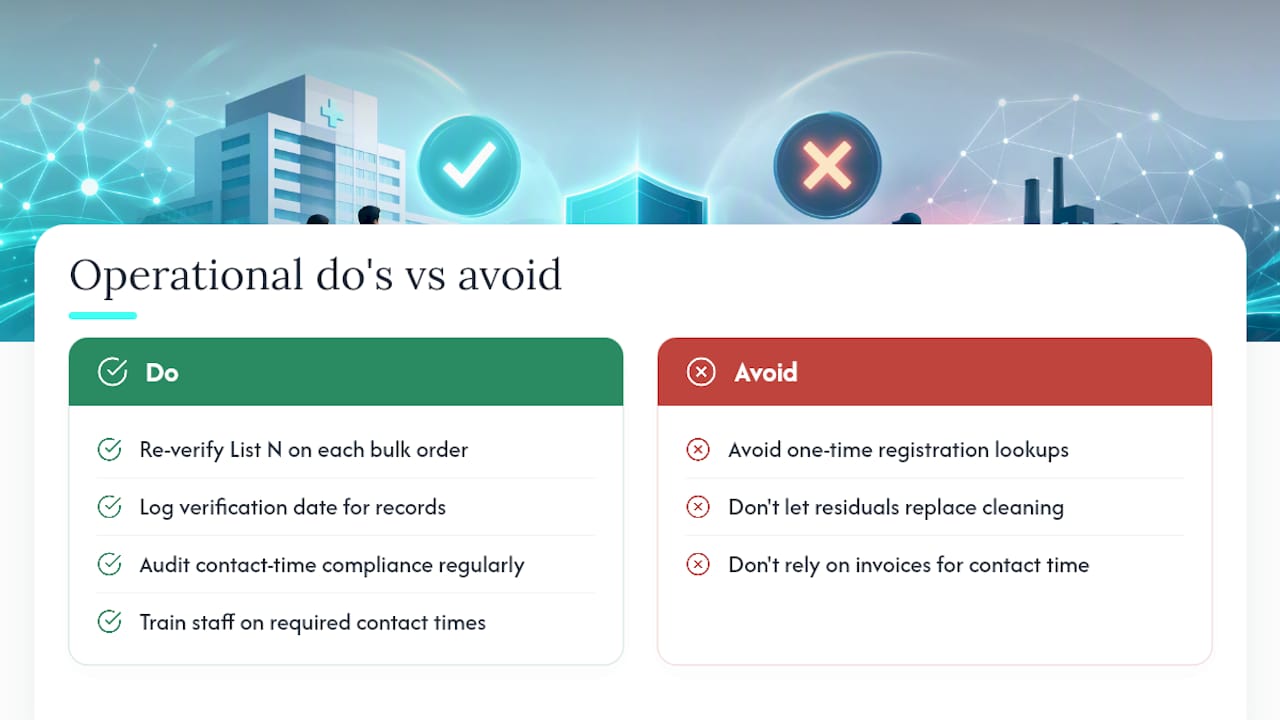
The conventional wisdom treats registration number lookups as a procurement formality, something you do once when onboarding a new vendor and then forget. In practice, the facilities that stay audit-ready are the ones that re-verify on every bulk order and log the date, because List N updates on its own schedule and a product’s qualifying data can change. Contact time compliance deserves the same skepticism. It’s the single most common point of failure in disinfection protocols, precisely because it’s invisible on any invoice or purchase record. Nobody audits a bottle for whether it sat wet long enough. They audit whether it was applied at all.
The residual antimicrobial category deserves more scrutiny than it usually gets, too. It’s tempting to read “effective for weeks or months” and quietly relax the routine cleaning schedule around high-touch surfaces. The EPA’s own guidance argues against that instinct directly. Residual protection is a supplement, and treating it as a substitute is exactly the kind of shortcut that looks fine until an infection control survey asks for your cleaning logs and finds gaps where a coating was doing work your actual protocol should have covered.
— QB
A Complementary Source for PPE and Documentation Support
Verifying a product on List N is only half the job. The other half is making sure your team has the PPE to apply it safely and the paperwork to prove you did it right, and that’s where Queenssurgical fits into your procurement stack. Beyond disinfectant products themselves, Queenssurgical stocks the protective gear your staff needs during application and cleanup, including isolation gowns rated for fluid-resistant coverage during extended cleaning shifts.
Queenssurgical also carries BP cuff barrier sleeves to protect equipment between disinfection cycles, along with surgical face masks for staff working in close quarters with chemical vapors. When your procurement team needs a supplier who can produce a label, an SDS, or a registration number quickly rather than after a week of email chasing, that responsiveness is worth as much as the product itself. Browse the current PPE catalog and request documentation for any item alongside your next order.
This article is general information, not a substitute for advice from a qualified doctor. Consult a qualified healthcare professional about your own circumstances before acting on anything here.
Recommended
Comments