Types of Respiratory Care Equipment: 2026 Clinical Guide
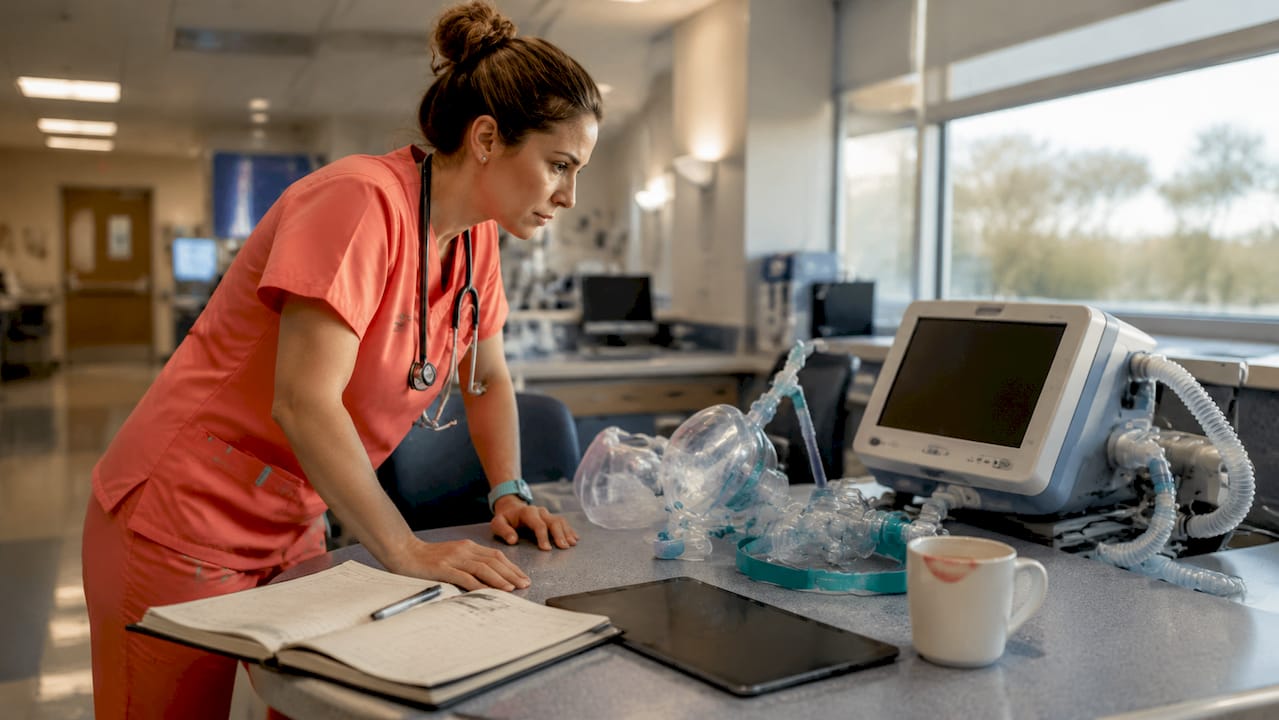
Types of respiratory care equipment are the medical devices used to assist, support, or monitor patient breathing, spanning ventilators, oxygen delivery systems, nebulizers, and airway clearance tools. Every category serves a distinct clinical function, and selecting the wrong device for a patient’s condition directly affects outcomes. This guide covers the major pulmonary equipment types used in acute care, home care, and emergency transport, with enough clinical detail to inform both experienced respiratory therapists and caregivers managing patients outside the hospital.
1. Types of respiratory care equipment at a glance
Respiratory care equipment divides into four primary functional categories: ventilatory support devices, oxygen delivery systems, aerosol therapy devices, and airway clearance tools. Each category addresses a different physiological need, from replacing or augmenting the breathing drive to clearing secretions from the lower airways. Ventilators dominate the therapeutic respiratory care device market as of 2025, covering invasive and non-invasive units for COPD, respiratory failure, and sleep apnea. That market dominance reflects how often mechanical breathing support is the difference between life and death in acute settings.
Understanding which category a device belongs to tells you its primary mechanism and, by extension, its limitations. A nasal cannula cannot replace a ventilator for a patient in respiratory failure, and a mechanical ventilator is unnecessary for a patient who simply needs supplemental oxygen at rest. Matching device to clinical need is the core skill this guide supports.
2. Mechanical ventilators and their clinical applications
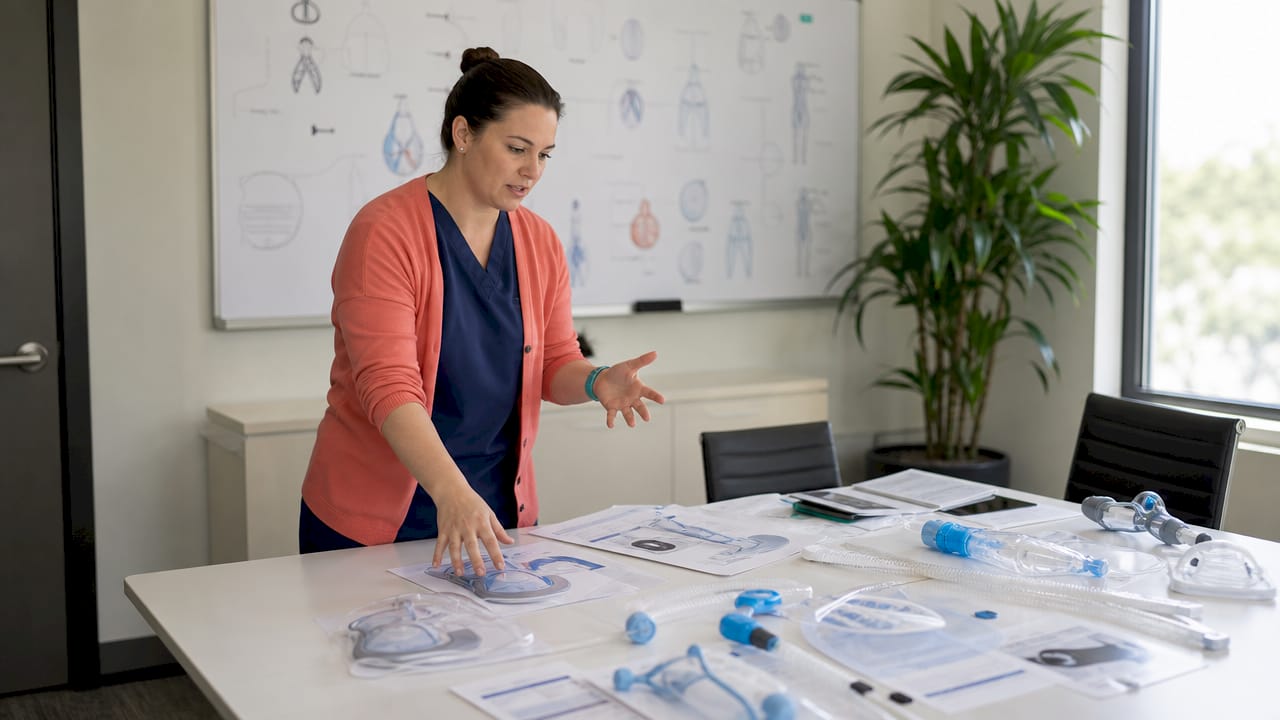
Mechanical ventilators are devices that move air into and out of the lungs when a patient cannot do so adequately on their own. They divide into two broad classes: invasive ventilators, which require an endotracheal tube or tracheostomy, and non-invasive ventilators, which deliver pressure support through a mask interface such as CPAP or BiPAP.
Invasive ventilators are used in intensive care units for patients with acute respiratory failure, severe pneumonia, or post-surgical recovery. They offer precise control over tidal volume, respiratory rate, and fraction of inspired oxygen (FiO2). Non-invasive ventilators are appropriate for patients with COPD exacerbations, obstructive sleep apnea, or mild-to-moderate respiratory distress who retain a functional airway and some spontaneous breathing effort.
Transport ventilators represent a third operational class worth knowing. The pNeuton Model S is fully pneumatic and battery-free, supporting pediatric through adult patients with CPAP and volume or pressure ventilation modes for EMS and hospital transport. Battery-free operation eliminates a critical failure point during inter-facility transfers.
Key ventilator modes you will encounter include:
Volume-controlled ventilation (VCV): Delivers a set tidal volume regardless of airway resistance.
Pressure-controlled ventilation (PCV): Delivers a set inspiratory pressure, allowing volume to vary.
Synchronized intermittent mandatory ventilation (SIMV): Combines mandatory breaths with patient-triggered spontaneous breaths.
Pressure support ventilation (PSV): Augments patient-initiated breaths, commonly used during weaning.
Pro Tip: Familiarize yourself with every alarm on any ventilator you use before placing it on a patient. Recurring alarm failures risk hypoxemia or airway trauma, and delayed troubleshooting in a transport setting can be catastrophic.
3. Oxygen delivery systems: classifications and flow rates
Oxygen delivery systems classify into three major categories: low-flow, reservoir, and high-flow. Each category delivers a different range of FiO2 and suits different levels of patient acuity.
Low-flow systems include nasal cannulas and simple face masks. A nasal cannula with a flared tip delivers 1 to 6 liters per minute (L/min), producing an estimated FiO2 of 24% to 44%. These devices are appropriate for patients with mild hypoxemia who have a stable respiratory pattern.
Reservoir systems include partial rebreather masks and non-rebreather masks. Non-rebreather masks deliver high oxygen concentrations at 10 to 15 L/min for severe hypoxemia, making them a standard tool in acute clinical settings. The one-way valve prevents exhaled gas from diluting the inspired oxygen, which is why FiO2 can approach 90% when the mask fits properly.
High-flow systems include Venturi masks and high-flow nasal cannula (HFNC) systems. Venturi masks are the device of choice when precise FiO2 delivery matters, particularly in COPD patients where over-oxygenation suppresses hypoxic drive. HFNC systems deliver heated, humidified oxygen at flows up to 60 L/min, reducing the work of breathing and improving mucociliary clearance.
Device | Flow rate | Approximate FiO2 | Best clinical use |
Nasal cannula | 1 to 6 L/min | 24% to 44% | Mild hypoxemia, home care |
Simple face mask | 5 to 10 L/min | 35% to 55% | Moderate hypoxemia |
Non-rebreather mask | 10 to 15 L/min | Up to 90% | Severe acute hypoxemia |
Venturi mask | Variable | 24% to 50% (precise) | COPD, controlled FiO2 |
High-flow nasal cannula | Up to 60 L/min | 21% to 100% | Acute respiratory distress |
Oxygen concentrators extend oxygen therapy into home and transport settings. Modern portable units like the Varon VP-8 Lite use dual delivery modes, including breath-triggered pulse flow and fixed-frequency delivery every 4 seconds if no breath is detected within 10 seconds. That automatic fallback protects patients whose respiratory rate drops unexpectedly during sleep or sedation.
4. Nebulizers and aerosol therapy devices
Nebulizers convert liquid medication into an aerosol that patients inhale directly into the airways. They are the primary delivery method for bronchodilators like albuterol and ipratropium in patients with asthma, COPD, cystic fibrosis, and bronchiectasis who cannot coordinate a metered-dose inhaler effectively.
Three nebulizer types are in common clinical use:
Jet nebulizers: Use compressed air or oxygen to aerosolize medication. They are inexpensive, widely available, and compatible with most liquid medications. Treatment time runs 10 to 15 minutes.
Ultrasonic nebulizers: Use high-frequency vibrations to produce aerosol. They deliver medication faster than jet models but generate heat, which can degrade some medications including suspensions.
Mesh nebulizers: Use a vibrating mesh plate to produce a fine, consistent aerosol. They are the most portable and efficient option, with shorter treatment times and lower residual drug volume than jet nebulizers.
Accessories matter as much as the nebulizer itself. Mouthpieces produce better lower airway deposition than masks in cooperative adults. Masks are necessary for pediatric patients, patients with altered consciousness, or anyone who cannot maintain a seal around a mouthpiece. Corrugated tubing length and reservoir cup volume also affect delivered dose.
Pro Tip: Clean nebulizer cups, mouthpieces, and masks after every treatment with warm soapy water, then air-dry completely. Residual moisture and medication deposits create a direct infection risk, particularly for immunocompromised patients.
5. Airway clearance and lung expansion devices
Airway clearance devices help patients mobilize and expel secretions that accumulate in the lower airways due to reduced cough strength, post-surgical pain, or chronic mucus hypersecretion. Lung expansion devices address atelectasis and reduced functional residual capacity, particularly in postoperative patients.
Incentive spirometers are the most widely used lung expansion tools. Flow-oriented models provide visual feedback through a rising ball or piston, while volume-oriented models measure the actual volume inhaled per breath. Both types encourage slow, sustained maximal inspiration, which recruits collapsed alveoli. Splinting techniques improve patient compliance with incentive spirometry by reducing chest pain during deep breathing and coughing, particularly after thoracic or abdominal surgery. Instruct patients to hold a pillow firmly against the incision site before each breath.
Suction machines clear secretions from the upper airway and trachea when patients cannot cough effectively. Portable suction units are standard in home care for patients with neuromuscular disease, tracheostomies, or post-stroke dysphagia. Wall-mounted suction in hospital settings provides higher and more consistent negative pressure.
Humidifiers and heat-moisture exchangers (HMEs) are supportive devices that prevent airway drying during oxygen therapy or mechanical ventilation. HMEs attach directly to the ventilator circuit and passively recover heat and moisture from exhaled gas. Heated humidifiers are preferred for patients on high-flow systems or prolonged ventilation because they provide active conditioning rather than passive recovery.
Tubing, filters, and HMEs are critical for device performance and infection prevention, and they require replacement on defined schedules rather than only when visibly soiled.
6. How to choose respiratory care equipment for specific settings
Selecting the right breathing assistance tools requires matching four variables: patient severity, care setting, portability requirements, and power availability. The table below summarizes the primary considerations.
Equipment type | Portability | Power requirement | Best setting | Patient severity |
Invasive ventilator | Low | AC or battery | ICU, hospital | Critical |
Transport ventilator | High | Pneumatic or battery | EMS, inter-facility | Critical to moderate |
CPAP or BiPAP | Moderate | AC or battery | Hospital, home | Moderate |
Non-rebreather mask | High | None (oxygen source) | Acute care, emergency | Severe hypoxemia |
Nasal cannula | High | None (oxygen source) | Home, clinic, hospital | Mild to moderate |
Portable oxygen concentrator | High | Battery or AC | Home, travel | Mild to moderate |
Jet nebulizer | Moderate | AC or compressor | Clinic, home | Mild to severe |
Mesh nebulizer | High | Battery | Home, transport | Mild to severe |
Incentive spirometer | High | None | Hospital, home | Postoperative |
For acute care settings, prioritize devices with alarm systems, backup power, and precise FiO2 control. For home care, prioritize portability, ease of cleaning, and patient ability to operate the device independently. Emergency transport demands equipment that functions without a reliable power source, which is why pneumatic ventilators and battery-operated pulse-dose oxygen concentrators remain standard in EMS kits.
Procurement decisions for respiratory supplies should also account for the difference between durable equipment and consumables. Ventilators and concentrators are capital purchases with long service lives. Masks, tubing, filters, and nebulizer cups are consumables that require regular replenishment and should be stocked in sufficient quantities to avoid care interruptions.
Key takeaways
Effective respiratory care requires matching device type to patient severity, care setting, and clinical objective rather than defaulting to the most familiar tool.
Point | Details |
Ventilators lead the market | Invasive and non-invasive ventilators cover the widest range of severity, from sleep apnea to acute respiratory failure. |
Oxygen systems require classification | Low-flow, reservoir, and high-flow systems each serve distinct FiO2 targets; Venturi masks are the standard for precise COPD management. |
Nebulizer type affects drug delivery | Mesh nebulizers produce the most consistent aerosol with the least residual drug volume, making them preferable for portable and pediatric use. |
Accessories drive infection control | Tubing, HMEs, and filters must follow replacement schedules, not just visual inspection, to prevent device-associated infections. |
Setting determines selection | Portability and power availability are non-negotiable selection criteria for transport and home care environments. |
What I’ve learned from years of watching clinicians choose the wrong device
The most common mistake I see is not a lack of knowledge about devices. It is a failure to account for the patient’s ability to use the device correctly. A mesh nebulizer is technically superior to a jet nebulizer in almost every measurable way. But if the patient is confused, has limited hand strength, or lives alone without caregiver support, the jet nebulizer connected to a simple compressor is the better clinical choice because it will actually be used correctly.
The second pattern I notice is underestimating accessories. Comprehensive respiratory equipment mastery requires knowing device selection, troubleshooting, infection control, and patient-specific application. Most clinicians know the device. Far fewer have a systematic approach to the tubing, the inline water trap, the HME, and the filter. Those components fail quietly and degrade performance before any alarm triggers.
My honest recommendation: build a device checklist for every patient transition, whether from ICU to step-down or hospital to home. Include the primary device, every accessory, the cleaning schedule, and the alarm response protocol. That checklist is worth more than any single equipment upgrade.
— QB
Queenssurgical respiratory care supplies for clinical teams
Queenssurgical stocks a full range of respiratory care consumables and accessories for clinics, hospitals, and home care providers across the Americas. The catalog includes non-rebreather masks for acute hypoxemia management, crush-resistant oxygen supply tubing in multiple lengths, nasal cannulas with standard tip options, and inline water trap accessories to protect oxygen delivery circuits. Queenssurgical serves both individual practitioners and large purchasing organizations, with competitive pricing and straightforward procurement. Browse the full respiratory care catalog at queenssurgical.net to source the supplies your patients depend on.
FAQ
What are the main types of respiratory care equipment?
The main types are mechanical ventilators, oxygen delivery systems (including nasal cannulas, Venturi masks, and non-rebreather masks), nebulizers, and airway clearance devices such as incentive spirometers and suction machines. Each category addresses a distinct aspect of respiratory support or monitoring.
What is the difference between invasive and non-invasive ventilators?
Invasive ventilators require an artificial airway such as an endotracheal tube or tracheostomy, while non-invasive ventilators deliver pressure support through a mask interface. Non-invasive options like CPAP and BiPAP are appropriate for patients who retain a functional airway and some spontaneous breathing effort.
When should a non-rebreather mask be used instead of a nasal cannula?
Non-rebreather masks are indicated for severe acute hypoxemia because they deliver oxygen at 10 to 15 L/min with FiO2 approaching 90%. Nasal cannulas are appropriate only for mild hypoxemia, delivering a maximum FiO2 of approximately 44% at 6 L/min.
How do you choose between jet, ultrasonic, and mesh nebulizers?
Mesh nebulizers offer the shortest treatment time and lowest residual drug volume, making them the best choice for portable and pediatric use. Jet nebulizers are the most cost-effective option for clinic and home settings where portability is not a priority. Ultrasonic nebulizers should be avoided for heat-sensitive medications.
Why are accessories like tubing and filters critical in respiratory care?
Peripheral accessories including tubing, filters, and heat-moisture exchangers directly affect device performance and infection risk. They require replacement on defined schedules because degradation occurs before visible soiling, and a compromised accessory can reduce delivered oxygen concentration or introduce pathogens into the airway circuit.
Recommended
Comments