How the Home Health Equipment Market Works in 2026

The home health equipment market is defined as the commercial and regulatory system through which medical devices and supplies move from manufacturers to patients receiving care at home. Understanding how this market works is not optional for procurement specialists. Reimbursement policy, distribution structure, and FDA oversight each directly shape which products you can buy, from whom, and at what price. The home health equipment industry connects manufacturers, wholesalers, distributors, and end users within a framework built around payer coverage rules and discharge-to-home care models. Getting that framework wrong costs money and generates claim denials.
How the home health equipment market works: distribution channels explained
The multi-tier distribution system moves products from manufacturers through wholesalers and distributors before they reach retailers, online marketplaces, or patients directly. Each tier adds margin, compliance requirements, and lead time. Procurement specialists who map this chain before signing supplier contracts avoid surprises in pricing and availability.
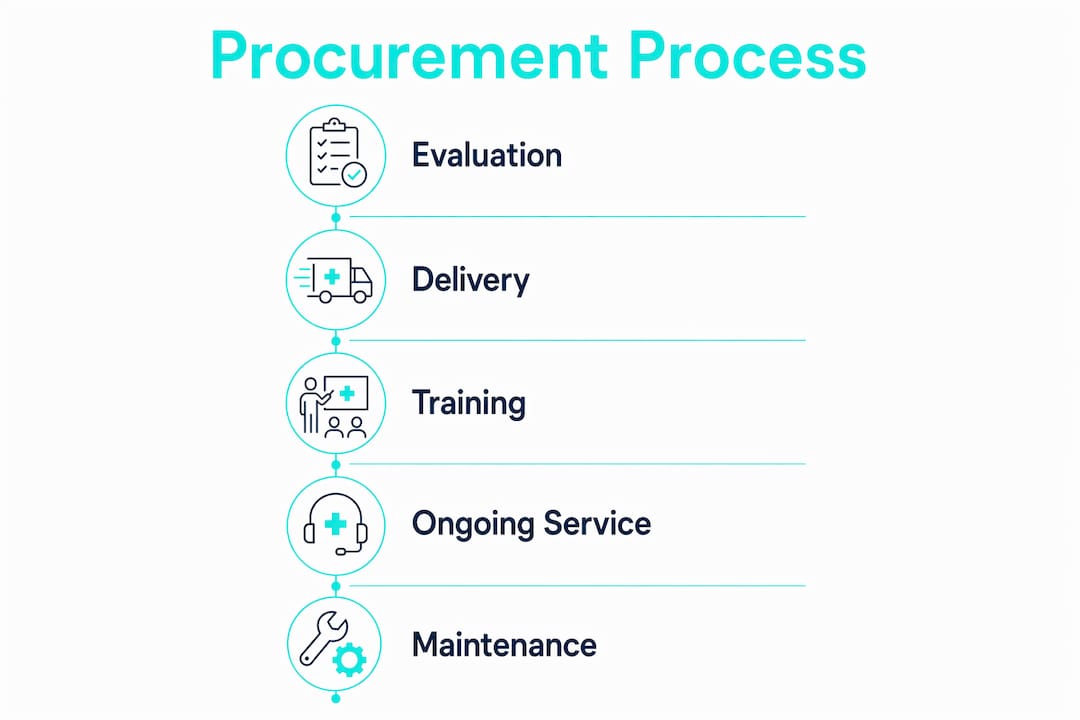
The standard operational sequence runs in five stages: equipment evaluation, delivery and setup, patient training, ongoing monitoring and maintenance, and rental pickup. Each stage generates documentation requirements and vendor performance obligations. Skipping any stage creates liability and reimbursement risk.
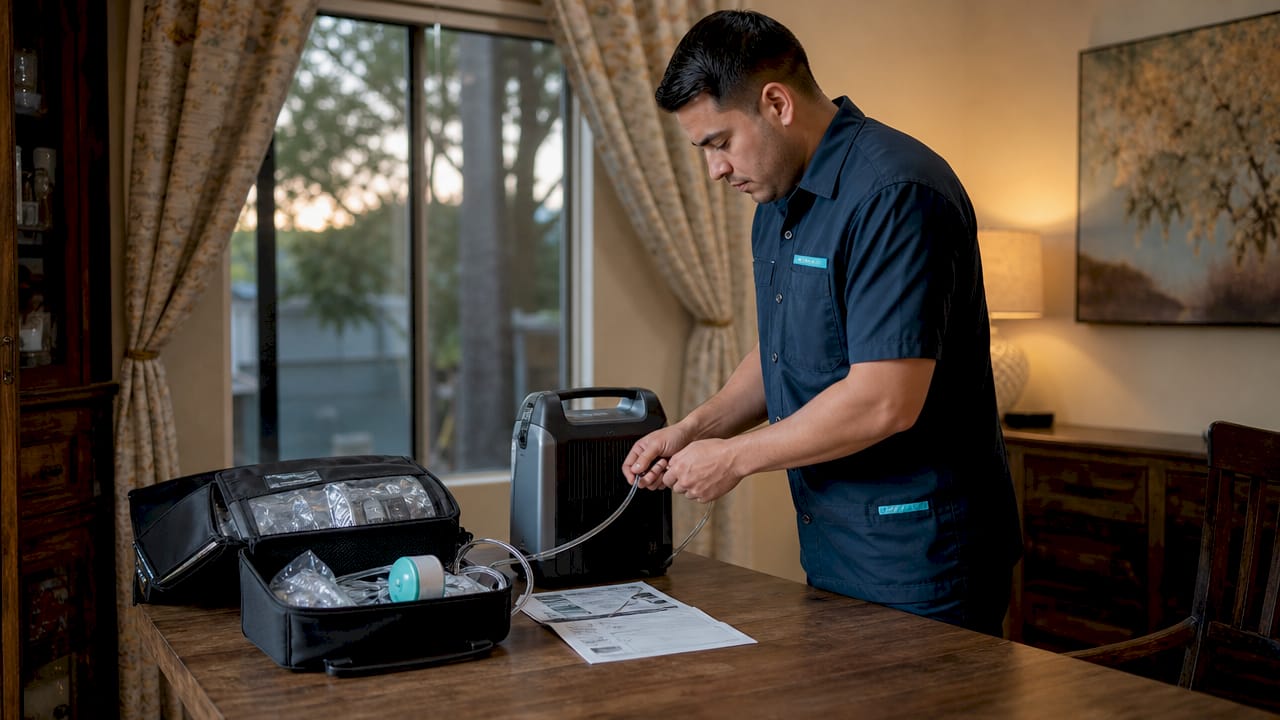
Direct-to-patient distribution is growing fast. Discharge-to-home care models are shifting procurement away from institutional channels toward suppliers who can deliver and set up equipment at the patient’s home within hours of discharge. This shift changes your vendor evaluation criteria. Speed, home delivery capability, and patient training capacity matter as much as unit price.
Online retail has expanded access to home health products significantly. Platforms that serve both wholesale and retail buyers give procurement teams more sourcing options, especially for disposable and lower-acuity supplies. The tradeoff is that online channels require stricter vendor vetting to confirm product authenticity and regulatory compliance. Review the online medical retail regulations that govern these channels before adding new online suppliers to your approved list.
Pro Tip: Build your vendor scorecard around the five operational stages. A supplier who delivers on time but cannot provide documented patient training fails the full service loop and creates downstream denial risk.
How do reimbursement policies shape procurement decisions?
Medicare DME reimbursement runs on HCPCS Level II codes paired with coverage policies called Local Coverage Determinations and National Coverage Determinations. Every claim requires medical necessity documentation aligned with the applicable LCD or NCD. Documentation errors are among the top denial reasons. That means procurement decisions and billing workflows must be coordinated from the start, not treated as separate functions.
Medicare’s competitive bidding program determines payment amounts using Single Payment Amounts based on lead-item pricing. CMS arrays supplier bids from low to high and selects contractors by product category. This process directly controls which suppliers hold financially viable contracts in a given competitive bidding area. Procurement teams that ignore bid cycle timing risk locking into supplier agreements with vendors who lose their contracts mid-cycle.
Prior authorization adds another layer. As of april 2026, Medicare’s Required Prior Authorization List includes 74 HCPCS codes. Missing prior authorization on any item from that list results in automatic payment denial. That is not a documentation problem. It is a procurement process problem that requires a formal pre-purchase authorization check.
Key reimbursement factors procurement teams must track:
HCPCS code alignment: Confirm the product’s code matches the patient’s diagnosis before ordering.
LCD and NCD coverage criteria: Verify the clinical documentation meets payer-specific requirements.
Competitive bidding area status: Check whether your preferred supplier holds a current CMS contract in your service area.
Required Prior Authorization List: Screen every order against the 74 listed codes before submission.
Documentation package from vendor: Require suppliers to deliver complete documentation at the time of equipment delivery, not after.
Payer policy changes are direct demand signals, not just compliance constraints. When Medicare updates an LCD or adds codes to the prior authorization list, procurement volumes for affected products shift within weeks.
What operational and regulatory factors govern equipment lifecycle management?
The FDA treats the home as a distinct care setting. The Home as a Health Care Hub initiative stresses that home-use devices must account for environment variability, multi-device use, and integration challenges that do not exist in clinical settings. A blood pressure monitor that performs reliably in a hospital may fail in a home with inconsistent Wi-Fi and multiple connected devices competing for bandwidth. Procurement teams must evaluate devices against home environment conditions, not just clinical specifications.
Connected home devices carry cybersecurity obligations. The FDA requires threat modeling and lifecycle risk management for devices operating within home network ecosystems that include Wi-Fi, Bluetooth, and smartphones. Cybersecurity compliance affects authorization timelines and deployment speed. A connected glucose monitor or remote patient monitoring device that fails FDA cybersecurity review delays your entire rollout. Assess vendor adherence to FDA cybersecurity guidance as a procurement gate, not an afterthought.
The table below compares key evaluation criteria for standard versus connected home devices:
Evaluation factor | Standard home device | Connected home device |
Environment testing | Home usability and durability | Home network compatibility and signal reliability |
FDA compliance focus | Usability and labeling | Cybersecurity threat modeling and lifecycle risk |
Documentation requirement | Clinical necessity and setup records | Cybersecurity assessment and software versioning |
Vendor KPI priority | Delivery speed and training quality | Software update cadence and breach response plan |
Procurement gate | Coverage code alignment | FDA cybersecurity guidance adherence |
Pro Tip: Request a vendor’s FDA cybersecurity documentation before signing any contract for connected home devices. If the vendor cannot produce it, the device is not deployment-ready regardless of its clinical performance.
Operational documentation quality directly determines claim success. Procurement timelines and vendor KPIs are shaped by each stage of the service loop. Require vendors to deliver a complete documentation package at setup, including signed delivery confirmation, training records, and maintenance schedules. Gaps in any of these records create denial exposure at audit. For a detailed breakdown of maintenance obligations, the equipment maintenance schedule guide covers operational best practices applicable to home care settings.
What trends are reshaping home health equipment demand?
The aging U.S. population and rising rates of chronic conditions are the primary demand drivers in the home health equipment industry. These are not projections. They are active forces already reshaping procurement volumes for products like oxygen concentrators, infusion pumps, and remote monitoring devices. Procurement planning that does not account for multi-year demographic trends will consistently underestimate demand.
Current trends procurement teams must factor into their planning:
Telehealth integration: Remote patient monitoring devices now connect directly to telehealth platforms, creating demand for devices with data transmission capability rather than standalone function.
Miniaturization: Smaller, lighter devices are replacing bulkier clinical-grade equipment in home settings, changing storage, shipping, and training requirements.
Direct-to-patient models: Suppliers are building last-mile delivery infrastructure to reach patients at home within hours of discharge, compressing procurement lead times.
Reimbursement reform: CMS policy updates, including changes to competitive bidding areas and prior authorization lists, are shifting which product categories are financially viable for suppliers and providers.
Smart device adoption: Devices with embedded sensors and connectivity are entering product categories that were previously analog, requiring procurement teams to apply cybersecurity evaluation criteria to a wider product set.
Understanding home health product demand by product category helps procurement specialists anticipate volume shifts before they hit supply chains. The distinction between durable and disposable supplies also matters for budget planning. The procurement guide on consumables vs. durable equipment breaks down how reimbursement rules differ between these two categories.
Key Takeaways
The home health equipment market works through a multi-tier distribution system governed by Medicare reimbursement rules, FDA device standards, and competitive bidding cycles that procurement teams must actively manage.
Point | Details |
Distribution is multi-tier | Products move from manufacturers through wholesalers and distributors before reaching patients; map the chain before contracting. |
Reimbursement drives procurement | HCPCS codes, LCDs, and the 74-code prior authorization list determine which products are financially viable to purchase. |
Competitive bidding affects suppliers | CMS bid cycles control which suppliers hold valid contracts; align vendor agreements with bid timelines. |
FDA governs home device standards | Home-use devices must meet usability and cybersecurity requirements specific to home environments, not clinical settings. |
Documentation prevents denials | Require vendors to deliver complete documentation packages at setup to protect claim integrity and audit readiness. |
What I’ve learned about procurement in this market after years of watching it closely
Most procurement teams treat reimbursement policy as a billing department problem. That is the single most expensive mistake I see repeated across healthcare organizations. When CMS updates an LCD or adds a code to the Required Prior Authorization List, the effect lands on procurement first. Demand for affected products shifts within weeks. Suppliers adjust pricing and availability. If your procurement cycle runs on a quarterly review, you are already behind.
The other pattern I keep seeing is a fixation on unit price at the expense of coverage risk. A device that costs 15 percent less per unit but generates a 20 percent denial rate on claims is not a savings. It is a liability. The real cost of a procurement decision includes documentation completeness, payer coverage alignment, and the vendor’s ability to deliver a full service loop from setup through maintenance.
Connected devices deserve special attention right now. The FDA’s cybersecurity expectations are real and enforceable. I have watched procurement teams approve connected monitoring devices without requesting a single cybersecurity document from the vendor, then face deployment delays when the devices fail authorization review. Build the cybersecurity gate into your vendor evaluation process before you issue a purchase order.
The procurement specialists who perform best in this market treat payer policy updates as market intelligence. They sit in on billing team reviews. They track CMS competitive bidding cycles the way a supply chain manager tracks commodity prices. That alignment between procurement and reimbursement is not a best practice. It is the baseline for operating without constant denial exposure.
— QB
Queenssurgical’s supply catalog for home health procurement teams
Healthcare managers sourcing disposable and home care supplies need a reliable partner who can deliver across the Americas without long lead times or minimum order complexity.
Queenssurgical carries a broad catalog of disposable supplies suited to home health settings, including protective apparel, hygiene products, and suction management supplies. The disposable suction canister with float valve shutoff is a practical option for home care providers managing airway clearance needs. Queenssurgical serves both wholesale and retail buyers, making it a practical sourcing option whether you are managing a single clinic or a regional procurement program. Browse the full catalog at Queenssurgical to find supplies that fit your home care delivery model.
FAQ
What is the home health equipment market?
The home health equipment market is the system through which medical devices and supplies move from manufacturers to patients receiving care at home, governed by reimbursement policies, FDA regulations, and multi-tier distribution channels.
How does Medicare reimbursement affect home equipment procurement?
Medicare reimburses home medical equipment through HCPCS Level II codes tied to LCDs and NCDs. Claims require medical necessity documentation, and 74 HCPCS codes require prior authorization before payment is approved.
What is competitive bidding and why does it matter for procurement?
CMS competitive bidding sets payment amounts for DME categories and selects suppliers by bid. Procurement teams must confirm their preferred suppliers hold current CMS contracts in their service area before signing agreements.
How do FDA cybersecurity rules apply to connected home devices?
The FDA requires threat modeling and lifecycle risk management for connected home devices operating on Wi-Fi, Bluetooth, and home networks. Devices that do not meet these requirements face authorization delays that affect deployment timelines.
What is the difference between durable and disposable home health supplies in procurement?
Durable medical equipment is subject to Medicare competitive bidding and prior authorization rules, while disposable supplies follow different coverage criteria. Procurement teams must apply separate reimbursement evaluation processes to each category.
Recommended
Comments