Types of Preventive Care Equipment: 2026 Clinical Guide

Preventive care equipment is defined as the full range of devices, tools, and systems that enable early diagnosis, infection prevention, continuous patient monitoring, rehabilitation support, and health data management across clinical settings. Healthcare facilities that build procurement strategies around these categories reduce hospital-acquired infections, catch chronic disease risk earlier, and generate the documentation trails that CMS and USPSTF compliance requires. Diagnostics receive about 40% of hospital equipment budgets, with therapeutic devices accounting for roughly 30%. Those numbers reflect where clinical risk concentrates. Understanding the types of preventive care equipment your facility needs is the first step toward building a procurement plan that actually protects patients.
What are the primary types of preventive care equipment?
Preventive care equipment falls into five functional categories. Each category addresses a distinct phase of patient risk management, from initial screening through long-term rehabilitation.
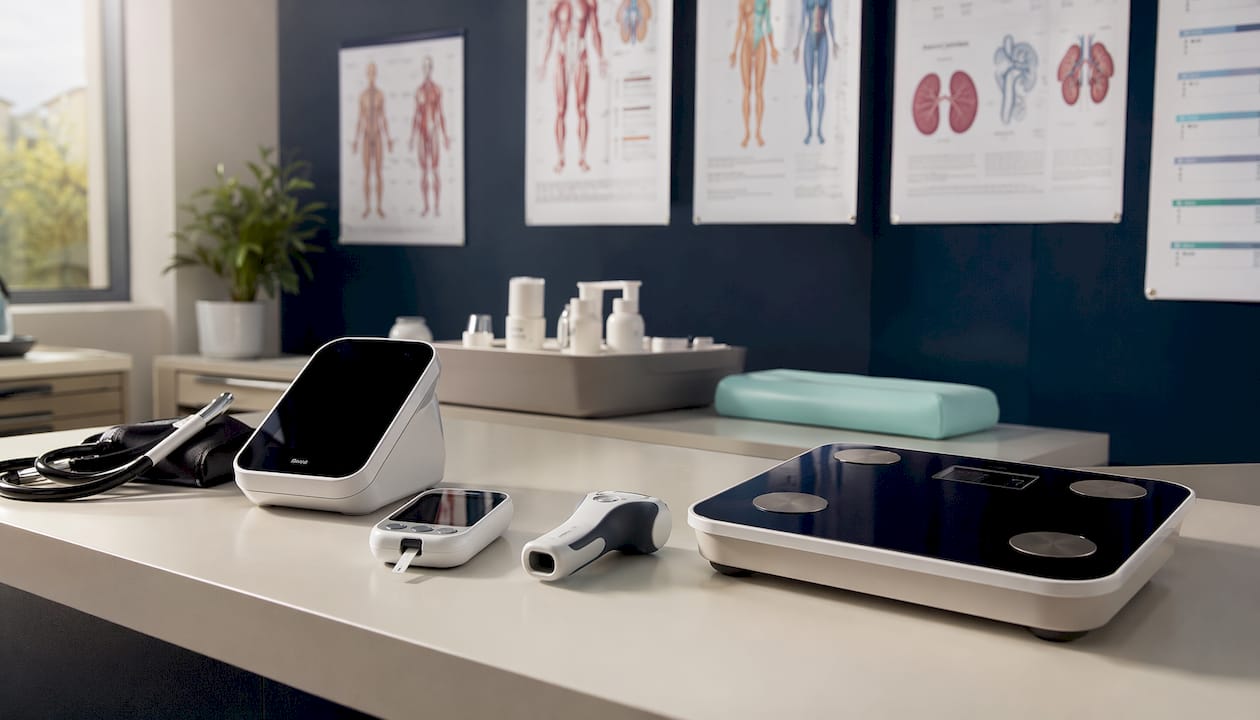
1. Diagnostic devices include glucometers, blood pressure monitors, lipid analyzers, BMI scales, and imaging equipment. These tools generate the biometric data that drives every downstream clinical decision.
2. Infection control supplies cover personal protective equipment (PPE), sterilization units, isolation gowns, face shields, gloves, and surface disinfection systems. Infection control equipment is mandated across healthcare settings by CMS and is central to protecting both patients and staff.
3. Monitoring devices include pulse oximeters, wearable biosensors, continuous glucose monitors, and multi-parameter vital signs monitors. These tools track patient status between clinical visits and flag deterioration before it becomes acute.
4. Therapeutic and rehabilitative equipment covers physiotherapy units, patient lifts, mobility aids, and hospital-grade breast pumps. Breast pumps and related accessories are included in major preventive care coverage policies as of 2026, which means procurement decisions in this category now carry direct reimbursement implications.
5. Health IT and decision support systems include clinical risk stratification software, AI-enabled preventive care apps, and EHR-integrated monitoring platforms. These systems convert raw device data into clinical actions.
Pro Tip: When building a procurement list, map each item to one of these five categories first. Facilities that skip this step tend to over-invest in diagnostics and under-invest in monitoring and health IT, which creates gaps in long-term patient management.
How do diagnostic and monitoring devices improve preventive outcomes?
Diagnostic accuracy at the point of care determines whether a patient gets the right intervention at the right time. The shift toward CLIA-waived diagnostic kits has made this possible outside traditional lab settings.
CLIA-waived kits and rapid screening
CLIA-waived diagnostic kits measure blood pressure, BMI, glucose, and lipids with results delivered instantly via app. That speed removes the lab wait that causes patients to disengage from screening programs. For clinic managers running high-volume preventive health programs, these kits reduce clinical time per patient without sacrificing data quality.
Compliance with CLIA regulations also enables expansion of preventive services beyond traditional labs, which increases patient accessibility. Facilities that verify CLIA-waived status before procurement avoid the legal and operational risk of deploying diagnostic equipment in non-lab settings without authorization.
Monitoring tools and chronic disease risk
Pulse oximeters, wearable sensors, and continuous vital signs monitors give clinicians a longitudinal view of patient health rather than a single data point. That continuous picture is where chronic disease risk reduction actually happens. A blood pressure reading taken once during an annual visit tells you less than a 30-day trend captured by a wearable device.
Calibration matters as much as the device itself. Vital signs monitors require annual calibration, and digital monitoring assets typically need software updates on a 5–7 year cycle. Facilities that skip calibration schedules introduce measurement error that undermines the clinical value of the entire monitoring program.
Pro Tip: Always request the calibration certificate and software update history when evaluating monitoring devices. A device that has not been calibrated in 18 months is not a preventive health tool. It is a liability.
What infection control and therapeutic devices must facilities prioritize?
Infection control is not a secondary concern in preventive care. It is the foundation that makes every other clinical intervention possible.
Core infection control equipment
The minimum infection control inventory for any clinical facility includes:
Isolation gowns (fluid-resistant and standard variants for different exposure levels)
Face shields (full-length for high-splash procedures)
Examination and surgical gloves (nitrile and latex options for different sensitivities)
Sterilization units (autoclave or chemical sterilizers for reusable instruments)
Surface disinfection systems (UV-C units and chemical fogging for high-touch areas)
Disposable laboratory uniforms (for staff in specimen handling and lab environments)
Understanding the difference between consumables and durable equipment is critical here. PPE is consumed per use. Sterilizers are durable assets with maintenance cycles. Procurement budgets must account for both streams separately.
Therapeutic and rehabilitative preventive devices
Therapeutic equipment prevents secondary complications and supports recovery from conditions that, left unmanaged, become acute events. Physiotherapy units reduce fall risk in elderly patients. Patient lifts prevent musculoskeletal injury in both patients and staff. Hospital-grade breast pumps, when provided under coverage-compliant protocols, support infant nutrition outcomes that have long-term public health implications.
Multi-patient therapeutic devices require documented sanitization protocols between uses. Facilities that skip this step face both infection risk and compliance exposure under CMS preventive services guidelines.
Equipment category | Primary function | Key compliance consideration |
Isolation gowns | Barrier protection against fluid and pathogen exposure | Must meet AAMI PB70 fluid resistance standards |
Face shields | Eye and face protection during aerosol-generating procedures | ANSI Z87.1 impact and splash rating required |
Sterilization units | Elimination of pathogens on reusable instruments | FDA 510(k) clearance and documented cycle logs |
Hospital-grade breast pumps | Therapeutic lactation support under preventive coverage | Sanitation standards for multi-patient use per UHC policy |
Physiotherapy units | Rehabilitation and fall prevention | Biomedical certification and annual safety inspection |
How does health IT transform preventive care equipment utility?
Standalone devices generate data. Integrated systems generate decisions. That distinction defines the current shift in how facilities deploy preventive care devices.
Modern preventive care equipment moves from data collection toward integrated systems that provide actionable insights. Clinical frameworks and AI allow translation of complex biometric metrics into specific patient care behaviors. A glucose reading fed into an isolated glucometer tells a clinician a number. The same reading fed into an AI-enabled platform triggers a dietary recommendation, a follow-up appointment flag, and a documented care action in the EHR.
“Effective preventive care devices integrate with EHR and clinical workflows via standardized APIs to enable automated clinical steps. Closed-loop systems ensure biometric measurements trigger patient reminders and documented care actions, replacing manual follow-up with automated, consistent workflows.”
Integrated preventive care platforms are preferred over isolated devices for sustained health trend tracking. Isolated measurements capture a moment. Trend data captures a trajectory. The clinical value of a pulse oximeter doubles when its readings feed into a platform that flags a declining trend over 14 days rather than alerting only when a single reading crosses a threshold.
For facility administrators, the practical implication is clear. When evaluating new preventive care devices, ask whether the device supports HL7 FHIR or standard API connectivity. Devices that cannot connect to your EHR become data silos that require manual transcription, which introduces error and increases staff workload.
What should administrators consider when selecting preventive care equipment?
Equipment selection decisions made without a full cost and compliance framework create problems that surface 18 months after purchase, not at the point of sale.
Procurement and lifecycle planning
Total cost of ownership (TCO) covers purchase price, annual calibration, maintenance contracts, software updates, and end-of-life decommissioning. TCO planning is non-negotiable for any device with a digital component.
Regulatory verification means confirming FDA clearance, CLIA-waived status for diagnostics, and AAMI or ANSI ratings for PPE before a purchase order is issued.
Staff training requirements vary significantly between ICU-grade equipment and CLIA-waived at-home devices. Match device complexity to the training capacity of your team.
Storage conditions affect device reliability and shelf life. Review medical equipment storage requirements for temperature, humidity, and sterility standards before committing to a product line.
Facility size and patient population determine which categories to prioritize. A high-volume primary care clinic needs a different diagnostic mix than a specialty rehabilitation center. The specialty clinic equipment guide provides category-level guidance for different clinical contexts.
Maintenance and calibration schedules significantly impact equipment reliability and care quality. Facilities that budget for these costs upfront avoid the operational disruption of unplanned equipment failures during patient care.
Pro Tip: Build a three-year TCO model for every device category before finalizing a procurement budget. Include calibration, software licensing, and one replacement cycle. Facilities that skip this step consistently underestimate equipment costs by 20–40%.
Key Takeaways
Preventive care equipment effectiveness depends on selecting the right category mix, verifying compliance, and integrating devices into clinical workflows rather than deploying them in isolation.
Point | Details |
Five core categories | Diagnostics, infection control, monitoring, therapeutic, and health IT each address a distinct phase of patient risk. |
Diagnostics dominate budgets | Diagnostics receive about 40% of hospital equipment budgets; balance this with monitoring and health IT investment. |
CLIA-waived status matters | Verify CLIA-waived certification for any diagnostic device used outside a traditional lab setting. |
TCO drives real cost | Budget for calibration, software updates, and a 5–7 year digital asset lifecycle, not just purchase price. |
Integration multiplies value | Devices connected to EHRs via standardized APIs generate automated care actions; isolated devices generate only data. |
What I have learned from watching facilities get this wrong
Most procurement mistakes I have seen do not happen because administrators chose bad equipment. They happen because facilities treat preventive care devices as a checklist rather than a system.
A clinic that buys glucometers, pulse oximeters, and a sterilization unit has checked three boxes. But if those devices do not connect to the EHR, if calibration schedules are not built into the maintenance budget, and if staff have not been trained on CLIA-waived protocols, the clinical value of that investment drops sharply within 12 months.
The facilities that get this right share one habit. They evaluate equipment at the system level before the device level. They ask how a new device fits into the existing workflow before they ask what it costs. That sequence matters because a $400 glucometer that integrates with your EHR delivers more long-term value than a $200 device that requires manual data entry.
The shift toward AI-enabled preventive platforms is real and accelerating. But the facilities that benefit most are not the ones that adopt the newest technology. They are the ones that have built the foundational infrastructure: calibrated devices, trained staff, documented protocols, and EHR connectivity. Technology amplifies what is already working. It does not fix what is broken.
My practical advice: audit your current preventive care device inventory against the five categories before you spend another dollar. Find the gaps, verify compliance on everything you already own, and build your next procurement cycle around closing those gaps systematically.
— QB
Queenssurgical’s infection control and PPE supply catalog
Healthcare facilities need a reliable supply partner for the infection control equipment that sits at the foundation of every preventive care program. Queenssurgical stocks the PPE and protective supplies that clinical teams depend on daily.
The Queenssurgical catalog includes the CPE thumb loop isolation gown for standard barrier protection, the full-length face shield for aerosol-generating procedures, and disposable laboratory uniforms for specimen handling environments. All products are available for wholesale and retail ordering across the Americas, with competitive pricing for facilities managing high-volume procurement cycles. Browse the full catalog at Queenssurgical to source the infection control supplies your facility needs.
FAQ
What are the five types of preventive care equipment?
The five categories are diagnostics, infection control supplies, monitoring devices, therapeutic and rehabilitative equipment, and health IT decision support systems. Each category addresses a distinct phase of patient risk management.
What does CLIA-waived mean for diagnostic devices?
CLIA-waived status means a diagnostic device is approved by the FDA for use outside a traditional laboratory setting. Facilities must verify this status before deploying point-of-care diagnostic kits in clinic or home environments.
How often do preventive care devices need calibration?
Vital signs monitors require annual calibration, and digital monitoring systems typically need software updates on a 5–7 year cycle. Skipping calibration introduces measurement error that undermines clinical reliability.
Are breast pumps covered as preventive care equipment?
Hospital-grade breast pumps and related accessories are included in major preventive care coverage policies as of 2026. Facilities must meet quality and sanitation standards for multi-patient use to qualify for coverage reimbursement.
Why does EHR integration matter for preventive care devices?
Devices connected to EHRs via standardized APIs enable closed-loop systems that automatically trigger patient reminders and documented care actions based on biometric readings. Isolated devices require manual data entry, which increases error and staff workload.
Recommended
Comments