Match Your Medication: Nebulizer Types and Which Device Fits
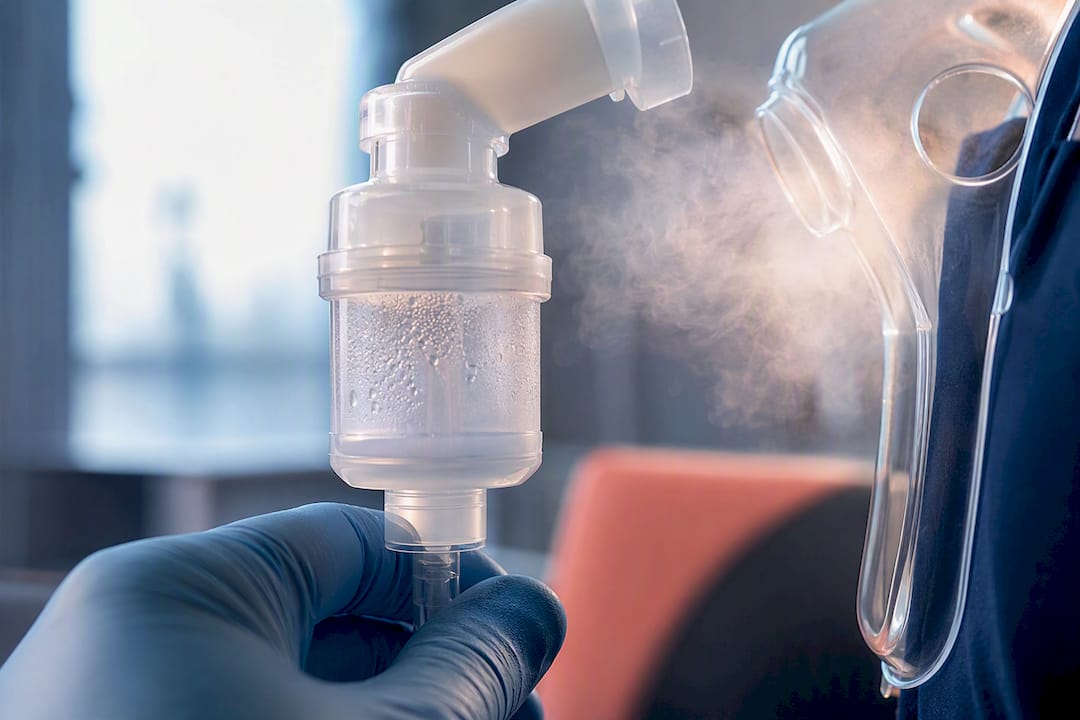
The three main nebulizer types are jet (pneumatic), ultrasonic, and vibrating mesh, and each turns liquid medication into breathable mist a different way. Jet nebulizers are the workhorse: rugged, cheap, and compatible with almost any drug, including thick suspensions. Ultrasonic models are quiet and fast but struggle with suspensions and proteins. Vibrating mesh devices are portable and efficient, often finishing treatment fastest, though they cost more and demand gentler care. Always confirm medication compatibility with your prescriber before buying.
TL;DR:
Jet nebulizers are compatible with most medications, especially suspensions, and are ideal for high-dose or continuous treatments in clinical settings.
Ultrasonic nebulizers are faster and quieter but should be avoided with heat-sensitive or suspension medications due to potential degradation.
Vibrating mesh nebulizers deliver higher doses more efficiently, offer portability, and treat faster, but require meticulous cleaning to prevent clogging.
Medication compatibility is critical; many drugs, particularly suspensions, may not work properly with ultrasonic or mesh devices, emphasizing the need for prescriber confirmation.
Proper maintenance and cleaning of any nebulizer profoundly impact performance and safety, making discipline in care as important as device selection.
Table of Contents
Nebulizer Types Overview: What They Are and Why the Differences Matter
A nebulizer converts a liquid drug solution into an aerosol fine enough to reach deep into the lungs, bypassing the coordination problems that trip up inhaler use. That matters most for young children, older adults with arthritis or tremor, and anyone struggling to time a breath with a metered-dose inhaler puff. Nebulizers show up constantly in asthma and COPD treatment, and they’re standard equipment in neonatal units where a baby simply cannot use a handheld inhaler at all.
Modern devices fall into three categories—pneumatic jet nebulizers, ultrasonic nebulizers, and vibrating mesh nebulizers—according to research summarized on PubMed. All three do the same basic job. How well they do it, and for which drugs, is where things diverge sharply.
Particle size is the detail most buyers overlook. A mist with particles too large gets stuck in the throat; too small, and it’s exhaled right back out without ever depositing in the airway. The sweet spot for lower-airway deposition sits roughly between 1 and 5 microns, and each nebulizer type produces a slightly different distribution around that range. Treatment time and delivered dose follow directly from that particle profile, along with the device’s raw output rate.
There’s also a size distinction worth knowing before you shop:
Small-volume nebulizers hold 5 to 20 mL of solution and cover the vast majority of home and portable use.
Large-volume nebulizers handle continuous, high-dose treatments, typically in a hospital or emergency setting rather than at home.
For nearly every reader comparing nebulizer device options for home use, the small-volume category is what actually applies.
Jet Nebulizers: The Workhorse Option
A jet nebulizer, sometimes called a pneumatic nebulizer, forces compressed air through a narrow venturi opening. That rush of air passes over a liquid reservoir and drags the medication up into a fine mist. It’s the same physics behind an old-fashioned perfume atomizer, just engineered for precision dosing. Treatment usually runs 10 to 15 minutes, sometimes longer, because output is comparatively low and steady rather than concentrated.
Not all jet nebulizers work identically. Three variants exist, and the difference affects how much medicine actually reaches your lungs versus how much gets wasted into the room:
Constant-output models generate aerosol continuously, whether you’re inhaling or exhaling, which wastes a meaningful share of the dose.
Breath-enhanced designs boost aerosol output during inhalation and taper it during exhalation, cutting waste.
Breath-actuated devices release aerosol only when you inhale, the most efficient jet configuration for reducing drug waste.
Jet devices are noisy thanks to the air compressor, and the expanding air can actually cool the solution during a long treatment. But they’re the most forgiving option for viscous suspensions and certain antibiotic formulations that other technologies handle poorly, which is why hospitals and resource-limited clinics keep them in rotation despite the noise.
Pro Tip: If your prescription is a suspension rather than a clear solution, ask your pharmacist directly whether it’s rated for ultrasonic or mesh delivery. Many are not, and a jet nebulizer is the safer default.
Ultrasonic Nebulizers: Fast and Quiet, With Limits
Ultrasonic nebulizers skip the air compressor entirely. A piezoelectric crystal vibrates at high frequency beneath the liquid reservoir, and those vibrations shake the solution into a fine mist without any rushing air noise. The result is a notably quiet device that tends to run faster than a comparable jet unit, which is a real advantage for a fidgety toddler who won’t sit still for a fifteen-minute treatment.
The trade-off is chemistry, not comfort. High-frequency vibration can raise the temperature of the solution and, according to design literature on nebulization devices, that heat plus the mechanical stress can degrade certain protein-based drugs or fail to break up suspensions into a usable mist at all.
Use ultrasonic when: the prescribed medication is a clear solution and quiet, quick delivery matters, such as for anxious kids or noise-sensitive environments.
Avoid ultrasonic when: the drug is a suspension, a protein formulation, or anything your pharmacist flags as heat-sensitive.
That single caution is why ultrasonic units never fully replaced jet nebulizers in clinical settings. They solved noise and speed but introduced a compatibility problem jet devices never had.
Vibrating Mesh Nebulizers: Why They Often Deliver More
A vibrating mesh nebulizer pushes liquid medication through a mesh perforated with thousands of tiny holes that vibrate at high frequency, shearing the liquid into a remarkably fine, consistent mist without heating it or relying on compressed air. The mechanism sits closer to ultrasonic technology in spirit but avoids the temperature problem, since the mesh does the work rather than bulk fluid vibration.
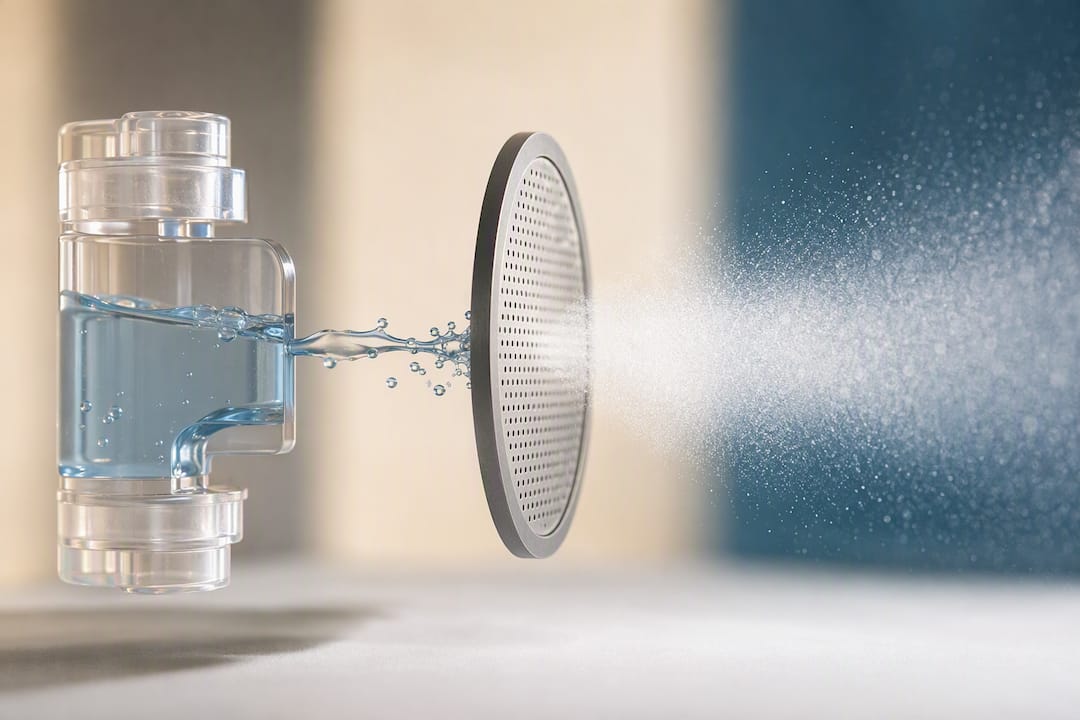
The evidence backing mesh performance is specific. A comparative in vitro study measuring albuterol output and particle size across all three device types found vibrating mesh nebulizers delivered the highest respirable fraction and emitted more drug than jet nebulizers, and generally outperformed ultrasonic devices on delivered dose as well.
That efficiency shows up as real-world convenience: shorter treatment sessions, less wasted medication, and battery-powered portable units small enough to fit in a jacket pocket. Mesh handles most liquid medications well, though it isn’t universally compatible either.
Advantages: high delivered dose, fast treatment times, genuinely portable, quiet operation.
Disadvantages: higher upfront cost, and the mesh itself is delicate. It can clog if not cleaned meticulously, and a clogged mesh is often expensive to replace rather than simple to fix.
How to Use a Nebulizer and What to Expect
Every nebulizer treatment follows roughly the same sequence, regardless of which technology powers the mist:
Measure the prescribed medication into the nebulizer cup, or load the pre-filled ampule.
Attach the mouthpiece or mask and connect the tubing or power source.
Sit upright, ideally at a table, rather than reclining.
Turn the device on and breathe normally through the mouthpiece or mask until the mist stops or the mist visibly thins out.
Rinse your mouth afterward if the medication is a corticosteroid, to reduce throat irritation.
Treatment duration varies by device for a simple reason: output rate differs. Jet nebulizers commonly run 10 to 15 minutes since they push aerosol out at a lower, steadier rate. Ultrasonic and mesh devices frequently finish in 5 to 8 minutes because they generate aerosol more concentrated per minute. Your actual delivered dose also depends on tidal volume (how deeply you breathe), whether you’re using a mouthpiece versus a mask, and how tightly that interface seals against your face.
Cleaning, Maintenance, and Medication Compatibility
Skipping cleaning isn’t a minor lapse. A nebulizer left wet between uses becomes a breeding ground for bacteria and mold, and you’re inhaling whatever grows in it directly into your lungs.
After every use: rinse the cup, mouthpiece, or mask with warm water and let it air-dry completely before storing.
Weekly: disassemble fully and wash all removable parts in warm soapy water, then disinfect per the manufacturer’s instructions (often a diluted vinegar soak or a manufacturer-approved wipe).
Replace regularly: tubing, filters, and masks wear out and should be swapped on a schedule, not just when they visibly fail.
Watch for: cracked tubing, a cloudy or pitted nebulizer cup, or a mist that looks noticeably thinner than usual.
Pro Tip: Never run a suspension medication through an ultrasonic unit “just this once.” The device won’t break it into a usable mist, and you’ll waste the dose along with your treatment time.
Choosing a Nebulizer: A Quick Buyer Checklist
Before comparing specific units, weigh these factors against how and where the device will actually get used:
Portability: a mesh device wins for travel; a compressor-based jet unit is better anchored at a bedside.
Noise: ultrasonic and mesh are dramatically quieter than jet compressors.
Treatment speed: matters most for kids and anyone who struggles to sit still.
Medication compatibility: confirm before buying, not after.
Cost and support: jet units cost less upfront; mesh costs more but may save time daily.
Common matches: infants and toddlers often do best with a mask-compatible jet or mesh unit that tolerates a shorter attention span; older adults with grip or dexterity limits benefit from simpler, fewer-button designs; frequent travelers lean mesh for size and battery power; clinics and hospitals often keep jet units on hand for suspension compatibility and durability. Ask your respiratory therapist which specific device your prescribed drug has been tested with.
Clinical Evidence and Related Resources
In vitro testing consistently shows mesh and some ultrasonic devices outdeliver traditional jet nebulizers on respirable dose, though jet units remain the compatibility standard for suspensions. For interface and accessory needs, Queenssurgical’s guide to respiratory care equipment covers masks, cannulas, and replacement parts relevant to any nebulizer setup.
What Actually Matters When You’re Choosing a Nebulizer
Most buying guides treat nebulizer selection like a spec sheet comparison: fastest wins, quietest wins, cheapest wins. That framing misses the one variable that actually determines whether the device works at all, which is whether it’s compatible with the specific medication prescribed. A mesh nebulizer that delivers a beautifully fine mist is worthless if it clogs on a suspension it was never built to handle.
The conventional advice to “just get the mesh one, it’s newer” ignores that jet nebulizers survive in hospitals for a reason. Durability and drug compatibility still beat speed in a lot of real clinical situations, and that won’t change soon. If you’re outfitting a home setup, prioritize in this order: confirm compatibility with your prescribed drug first, then weigh speed and noise, then think about price. Buyers who reverse that order end up owning a device that can’t run their medication.
What’s underrated is maintenance discipline. A mesh nebulizer with a clogged screen performs worse than a well-kept jet unit, and that gap is almost always a cleaning failure, not a design flaw.
— QB
Stock Up on the Accessories Your Nebulizer Setup Actually Needs
Medical supply distributors provide the masks, gowns, and disposable essentials that respiratory care actually runs on, often with flexible order quantities and prompt availability. Whether you’re a clinic replacing patient interfaces in bulk or a caregiver stocking up for home treatments, the same catalog covers both.

For anyone managing nebulizer treatments alongside other respiratory care, having reliable masks on hand matters as much as the device itself. Queenssurgical carries disposable medical face masks suited to both clinical and home settings, along with protective gowns and other consumables clinics order on a recurring basis. Browse the current catalog and place an order directly through Queenssurgical to get supplies moving before your next restock deadline.
This article is general information, not a substitute for advice from a qualified doctor. Consult a qualified healthcare professional about your own circumstances before acting on anything here.
Sources
FAQ
What are the three main types of nebulizers?
The three types are jet (pneumatic), ultrasonic, and vibrating mesh nebulizers, each using a different mechanism to turn liquid medication into an inhalable mist.
What type of nebulizer is best?
There’s no single best type; jet nebulizers handle suspensions most reliably, ultrasonic units are quiet and fast for clear solutions, and vibrating mesh devices often deliver the highest respirable dose in shorter treatment times.
What’s the best nebulizer to get for asthma or COPD treatment?
It depends on the prescribed medication and patient needs. Fast, portable mesh devices suit active adults with COPD, while jet nebulizers remain the safer default for suspension-based asthma medications.
What are the different types of nebulizer treatments?
Treatments vary mainly by device speed and interface. Jet treatments typically run 10 to 15 minutes through a mouthpiece or mask, while ultrasonic and mesh treatments often finish in 5 to 8 minutes.
Can I switch nebulizer types for the same medication?
Not always. Some medications, particularly suspensions and certain proteins, aren’t compatible with ultrasonic devices, so confirm with your prescriber or pharmacist before switching device types.
Recommended
Comments