The Role of Digital Catalog in Medical Retail

A digital catalog in medical retail is defined as an interactive, web-based product database that replaces static price lists with real-time inventory data, compliance filters, and automated ordering workflows. The role of digital catalog in medical retail goes far beyond simple product display. Procurement managers at clinics, hospitals, and healthcare facilities now rely on these platforms to cut order errors, speed up fulfillment, and capture behavioral data that informs future purchasing decisions. Queenssurgical operates exactly this kind of catalog, giving healthcare buyers across the Americas a single, organized source for medical supplies ranging from examination gloves to disposable protective wear.
What are the primary benefits of digital catalogs in medical retail?
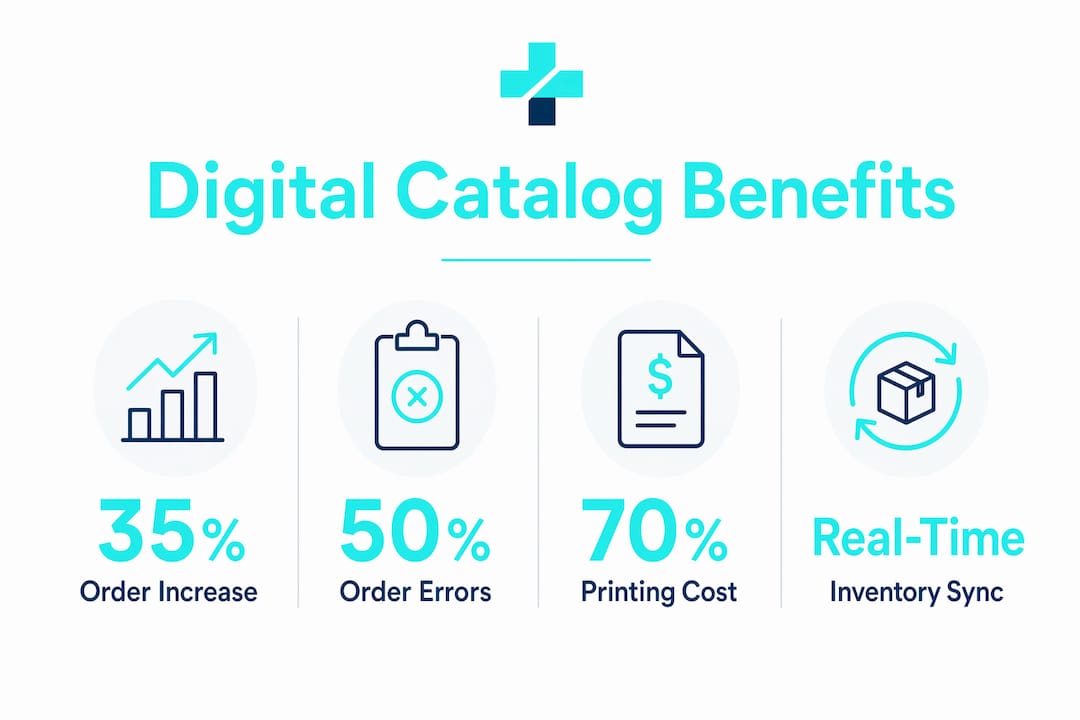
Digital catalogs deliver measurable financial and operational gains that static product lists cannot match. Moving to a wholesale digital catalog delivers a 35% increase in average order value and a 40% improvement in order processing speed. That combination means procurement managers spend less time chasing confirmations and more time managing clinical priorities.
The cost reductions are equally significant. Digital catalogs produce a 70% reduction in printing costs and 50% fewer manual order entry errors compared to paper-based systems. Fewer errors translate directly into fewer returns, fewer credit requests, and less time spent on the phone with supplier support teams.

Beyond cost savings, digital catalogs change how procurement managers engage with product information. Catalog sessions generate longer browsing times, more pages per visit, and higher return rates than standard ecommerce product pages. That engagement produces first-party behavioral data on what buyers actually look at, compare, and purchase, which is critical intelligence as third-party cookies phase out.
Key benefits procurement teams report include:
Faster order cycles through automated validation and pre-approved supplier lists
Lower procurement costs from reduced printing, manual entry, and error correction
Higher order accuracy through real-time stock confirmation before checkout
Richer purchasing data from catalog engagement metrics tied to specific buyer roles
Consultative buying support through curated bundles and educational product content
Pro Tip: Track which product categories generate the most return visits in your catalog. That data reveals unmet demand you can address through targeted restocking or supplier negotiations.
Which features make digital catalogs effective for healthcare procurement?
The features that separate a functional medical catalog from a basic product list are the ones built around compliance and integration. Healthcare procurement operates under regulatory constraints that general retail does not face. A catalog that ignores those constraints creates bottlenecks rather than removing them.
The most critical features fall into four categories:
Real-time inventory sync. API-based connections between the catalog and warehouse management systems show live stock levels. Procurement managers see exactly what is available before submitting an order, which eliminates back-order surprises on critical supplies.
Prescription and compliance validation. Integrating compliance filters such as sterile versus non-sterile classification and real-time prescription validation at the browsing stage prevents procurement bottlenecks. Buyers know immediately whether a product meets their facility’s regulatory requirements.
Automated minimum order quantity enforcement. Catalogs that validate minimum order quantities automatically reduce the back-and-forth between buyers and supplier account managers. This is especially valuable in B2B medical supply chains where contract terms govern order thresholds.
Bulk upload and list management. Procurement teams managing recurring orders benefit from saved order lists and CSV upload capabilities. Reordering a standard set of consumables takes minutes rather than hours.
The data layer underneath these features is equally important. Digital catalogs generate first-party data on user behavior that informs procurement strategy and supplier negotiations. As third-party data sources become less reliable, this internal intelligence becomes a genuine competitive advantage.
Feature | Operational benefit |
Real-time inventory sync | Eliminates back-orders on critical supplies |
Compliance filtering | Prevents regulatory procurement errors |
Automated MOQ validation | Reduces supplier communication overhead |
Bulk upload and saved lists | Cuts reorder time for recurring consumables |
Behavioral analytics | Informs demand forecasting and supplier selection |
Pro Tip: Request API documentation from your catalog provider before signing a contract. If the platform cannot connect to your existing inventory or ERP system, the compliance and stock-sync features will not function correctly.
How do digital catalogs transform supply chain workflows in medical retail?
The operational impact of a well-built medical catalog reaches across the entire supply chain, not just the ordering interface. Healthcare retailers using modernized digital ecosystems report 25–30% sales growth and double the speed and reliability in fulfilling regulated medicines through API-based integrations. That speed improvement matters most when facilities are managing time-sensitive consumables like sterile gloves, suction canisters, or protective uniforms.
Catalog-driven ordering also reduces the volume of inbound customer service calls. Over 35% of NHS trusts transitioned to online catalogs with features like automated product comparison and bulk upload, and the result was a measurable drop in service interactions. Fewer calls mean supplier support teams can focus on complex procurement issues rather than routine order status questions.
Multi-channel coordination improves as well. When a single catalog connects procurement managers, clinical department heads, and finance approvers to the same product database, purchasing decisions align faster. There is no version mismatch between what the department ordered and what finance approved, because everyone works from the same live data.
“Healthcare retail is shifting from transactional to consultative models, with digital catalogs enabling guided buying, curated bundles, and educational content that build trust between suppliers and procurement teams.”
The shift toward consultative medical retail is not a trend. It is a structural change in how healthcare facilities evaluate and select suppliers. Procurement managers who use catalogs that surface related products, usage guides, and compliance documentation make better purchasing decisions and build longer supplier relationships. Understanding why product bundling works in medical retail gives procurement teams a practical framework for applying this consultative approach to their own ordering processes.
What are best practices for implementing a digital catalog in medical retail?
Implementation quality determines whether a digital catalog delivers its promised benefits or creates new operational problems. Most failures trace back to three avoidable mistakes: poor system integration, missing compliance features, and low user adoption.
Follow these steps to avoid those pitfalls:
Integrate with inventory and ordering systems first. A catalog that does not connect to live stock data is a static brochure. Real-time integration with inventory and regulatory compliance systems is the foundation of effective medical catalog management. Build this connection before launching to end users.
Embed compliance features at the browsing stage. Do not make procurement managers check compliance separately after selecting a product. Filters for sterile classification, regulatory approval status, and prescription requirements should appear alongside product listings, not in a separate workflow.
Design search filters for clinical roles. A nurse ordering wound care supplies searches differently than a lab manager ordering protective equipment. Role-based filtering and saved search templates reduce browsing time and improve order accuracy for both groups.
Train end users with real order scenarios. Generic software training does not stick. Walk procurement teams through the exact workflows they will use daily, including bulk reorders, compliance checks, and back-order management.
Monitor catalog engagement metrics monthly. Track which categories generate the most views, which products are added to lists but not purchased, and where buyers exit the ordering process. Use that data to refine product placement, update descriptions, and flag supply gaps.
Reviewing a medical supply vendor comparison checklist before selecting a catalog platform helps procurement managers identify which integration and compliance capabilities to prioritize during vendor evaluation.
Pro Tip: Run a 30-day pilot with one department before full deployment. Measure order error rates and processing time before and after. That data makes the business case for organization-wide rollout far easier to defend.
Key Takeaways
Digital catalogs are the most effective tool for reducing order errors, accelerating fulfillment, and generating procurement intelligence in medical retail supply chains.
Point | Details |
Order value and speed gains | Digital catalogs increase average order value by 35% and improve processing speed by 40%. |
Compliance features prevent bottlenecks | Sterility filters and prescription validation must be embedded at the browsing stage, not added later. |
Integration is non-negotiable | Real-time inventory sync reduces order errors by up to 50% in B2B medical supply chains. |
Behavioral data drives strategy | Catalog engagement metrics reveal demand patterns that inform restocking and supplier negotiations. |
Consultative catalogs build trust | Curated bundles and educational content shift medical retail from price competition to supplier loyalty. |
The shift I keep watching in medical procurement
The procurement managers I find most effective are the ones who stopped treating their catalog as a price list and started treating it as a data asset. That shift sounds simple. In practice, most facilities have not made it yet.
The real problem is that catalog implementation gets handed to IT or operations, and the clinical and procurement teams who actually use the system get consulted last. The result is a technically functional catalog that nobody trusts because the search filters do not match how clinicians actually think about products. A sterile glove is not just “gloves, nitrile.” It is a product with a specific sterility class, a shelf life, a regulatory approval number, and a clinical application. Catalogs that flatten those attributes into generic categories create the same friction they were supposed to eliminate.
The facilities that get this right do one thing differently. They involve procurement managers in the catalog design process before a single product is uploaded. They map the actual ordering workflow, identify where compliance checks currently happen manually, and then build those checks directly into the catalog interface. The result is a system that feels like it was built for the job, because it was.
The data advantage is the part most facilities underestimate. Every time a procurement manager browses a catalog, compares two products, or adds something to a saved list without purchasing it, that behavior tells you something. It tells you what is being considered, what is being rejected, and where your product range has gaps. That intelligence is worth more than any quarterly sales report, and it is sitting unused in most catalog platforms right now.
— QB
Queenssurgical’s catalog for medical supply procurement
Queenssurgical gives procurement managers across the Americas direct access to a product catalog built for clinical and facility purchasing. The platform covers disposable protective wear, examination gloves, instruments, and consumables, all organized for fast, accurate ordering.
Procurement teams sourcing protective equipment can browse disposable laboratory uniforms made from anti-fluid SMS material, available in packs of 10, or order nitrile examination gloves in non-sterile purple for routine clinical use. Queenssurgical’s catalog is structured to support both single-facility buyers and larger purchasing organizations managing recurring supply needs across multiple departments.
FAQ
What is a digital catalog in medical retail?
A digital catalog in medical retail is an interactive, web-based platform that displays products with real-time inventory data, compliance filters, and automated ordering tools. It replaces static price lists and paper-based procurement processes.
How do digital catalogs reduce order errors in healthcare?
Integrating a digital catalog with inventory and compliance systems reduces order errors by up to 50% by automating stock validation and minimum order quantity checks before an order is submitted.
What compliance features should a medical catalog include?
A medical catalog should include filters for sterile versus non-sterile products, real-time prescription validation, and regulatory approval status displayed at the product browsing stage, not in a separate checkout workflow.
How do NHS trusts use digital catalogs?
Over 35% of NHS trusts have adopted online catalogs with bulk upload, automated product comparison, and compliance filtering, which reduced customer service call volumes and improved order accuracy across their supply chains.
Why do digital catalogs generate better procurement data than standard ecommerce?
Digital catalogs produce longer browsing sessions, more product comparisons per visit, and higher return rates than standard product pages. That behavior generates first-party intelligence on demand patterns that procurement managers can use to refine supplier selection and inventory planning.
Recommended
Comments