Bulk Medical Supply Ordering Benefits for Clinics in 2026

Bulk medical supply ordering is defined as the practice of purchasing medical consumables and equipment in large quantities to reduce per-unit costs and improve supply chain reliability. Healthcare administrators who adopt wholesale procurement strategies consistently outperform those relying on fragmented, order-by-order purchasing. Healthcare facilities using group purchasing organizations typically reduce medical supply costs by 10% to 18% compared to independent negotiations. That gap translates directly to budget headroom for staffing, equipment upgrades, and patient care improvements. The bulk medical supply ordering benefits extend well beyond price: they reshape how facilities plan, stock, and operate.
1. How does bulk ordering reduce medical supply costs?
Volume discounts are the most direct mechanism. Manufacturers and distributors price per-unit costs lower as order quantities rise, because their own logistics, packaging, and handling costs drop proportionally. Purchasing agents who commit to predictable large orders give suppliers a reason to offer better terms.
Group purchasing organizations, known as GPOs, amplify this effect significantly. Facilities using GPO-scale purchasing see over $1.2 million in annual savings on average. That figure reflects the combined leverage of many facilities negotiating as a single buyer block, which no individual clinic can replicate alone.

Centralized volume-based procurement delivers measurable results even outside GPO structures. Optimized wholesale bulk purchasing can achieve up to 30% savings on consumables through volume discounts alone. That level of reduction changes the financial math for mid-sized clinics operating on tight margins.
Shipping and logistics costs also fall with bulk orders. Fewer shipments mean lower freight charges per unit, reduced receiving labor, and fewer invoice processing cycles. Each of those savings compounds over a full fiscal year.
Pro Tip: Negotiate freight terms separately from product pricing. Many distributors will absorb shipping costs entirely on orders above a defined threshold, which adds another layer of savings beyond the unit price discount.
Key cost-reduction mechanisms include:
Volume discounts from manufacturers and distributors
Lower per-unit freight and handling costs
GPO collective bargaining power
Reduced invoice processing and administrative overhead
Stronger negotiation position due to predictable, large order commitments
2. What operational efficiencies come with bulk medical supply ordering?
Reduced ordering frequency is the first efficiency gain purchasing agents notice. When a facility orders monthly instead of weekly, the administrative time spent on requisitions, approvals, and receiving drops sharply. That time redirects to higher-value procurement work.
Stock availability improves in parallel. Predictable bulk ordering aligned with usage and lead times eliminates the costly emergency procurement that last-minute shortages force. Emergency orders carry premium pricing and expedited shipping fees that erode any savings achieved elsewhere in the budget.
Standardization is a less obvious but equally important benefit. Bulk purchasing consistent quantities from a reliable source reduces product variation across departments. Fewer product variants mean simpler staff training, fewer clinical errors caused by unfamiliar equipment, and faster onboarding for new team members.
Budget predictability also improves. When purchasing agents know order volumes and pricing months in advance, finance teams can model cash flow accurately. That predictability supports better capital allocation decisions across the entire facility.
Operational efficiency gains from bulk ordering include:
Lower administrative burden from reduced ordering frequency
Fewer emergency purchases and the premium costs they carry
Standardized products that reduce training complexity and clinical errors
Improved budget forecasting through predictable procurement cycles
Better supplier relationships built on consistent, high-volume orders
3. How can bulk ordering support sustainability and waste reduction?
Bulk orders reduce packaging waste per unit. A single large shipment uses far less corrugated cardboard, plastic wrap, and filler material than the equivalent volume split across multiple smaller deliveries. For facilities with institutional sustainability goals, this reduction is measurable and reportable.
Reprocessed single-use devices represent the most significant sustainability opportunity in medical procurement. U.S. hospitals saved over $398 million in 2024 by integrating reprocessed single-use devices, reducing CO2 emissions by 113 million pounds while lowering costs by up to 25%. Those numbers show that environmental and financial goals align, not compete.
Reprocessed sterile products can comprise up to 80% of certain sterile product categories for some health systems. Reaching that level requires deliberate contract negotiation. OEM suppliers often restrict reprocessed devices through contract terms, so procurement teams must negotiate flexibility explicitly.
Audit current single-use device categories to identify reprocessing candidates.
Request contract language that permits reprocessed equivalents from certified third-party reprocessors.
Track packaging volume per order to document sustainability progress for institutional reporting.
Align bulk order schedules with reprocessor lead times to maintain stock continuity.
Pro Tip: Present reprocessed device savings as a dual win to clinical leadership: cost reduction and a documented drop in medical waste. That framing accelerates internal approval for program adoption.
4. What risks and challenges should healthcare providers manage?
Overstocking is the primary risk in bulk procurement. Products with short shelf lives, including certain sterile consumables and reagents, can expire before use if order volumes exceed actual consumption rates. Carrying costs and expiration risks can erode bulk purchase savings entirely when purchasing agents overestimate demand.
Storage infrastructure adds another layer of cost. Climate-controlled storage for temperature-sensitive supplies requires dedicated space and energy. Facilities without adequate storage capacity may spend more on warehousing than they save on unit pricing.
Data-driven ordering is the solution to both problems. Purchasing agents who base order volumes on actual consumption data rather than estimates avoid the twin traps of overstocking and stockouts. Reviewing 12 months of usage history before setting bulk order quantities is the minimum standard.
The right items for bulk purchasing are high-turnover consumables: gloves, masks, gowns, and basic wound care supplies. Specialty items with low and unpredictable usage rates belong on just-in-time schedules, not bulk orders. Mixing these two categories is where most bulk purchasing programs lose money.
Contract leakage is a hidden risk that purchasing agents often overlook. Invoices billed above negotiated contract prices go undetected without systematic auditing. Regular invoice matching against contract terms is the only reliable way to confirm that negotiated savings are actually realized.
5. Which supply categories benefit most from bulk ordering?
Not every product category delivers equal returns from bulk purchasing. The table below contrasts high-turnover consumables against specialty items across the dimensions that matter most to purchasing agents.
Category | Examples | Price savings potential | Storage demand | Expiration risk | Bulk ordering fit |
High-turnover consumables | Gloves, masks, gowns, syringes | High | Low to moderate | Low | Excellent |
Wound care basics | Gauze, bandages, tape | Moderate to high | Low | Low | Excellent |
Sterile procedure kits | Surgical drape sets, catheter kits | Moderate | Moderate | Moderate | Good with planning |
Diagnostic reagents | Lab test strips, culture media | Moderate | High (climate control) | High | Limited |
Specialty implants | Orthopedic hardware, stents | Low | Low | Very low | Poor |
Durable equipment | Infusion pumps, monitors | Not applicable | High | None | Not applicable |
High-turnover consumables deliver the strongest return on bulk purchasing. Their usage rates are predictable, their shelf lives are long, and their per-unit prices respond well to volume. Specialty implants and diagnostic reagents carry too much variability and expiration risk to benefit from large-quantity orders. For a deeper look at how to segment your procurement by product type, the consumables vs. durable equipment guide from Queenssurgical provides a practical framework.
Key Takeaways
Bulk medical supply ordering delivers the strongest financial returns when purchasing agents combine volume discounts, GPO leverage, and data-driven order quantities focused on high-turnover consumables.
Point | Details |
GPO savings are substantial | Facilities using group purchasing organizations save 10%–18% on supply costs versus independent negotiation. |
Consumables are the priority | Focus bulk orders on gloves, masks, and gowns. Keep specialty items on just-in-time schedules. |
Audit invoices regularly | Contract leakage erodes savings. Match every invoice against negotiated contract prices. |
Reprocessed devices cut costs and waste | Integrating reprocessed single-use devices can reduce costs by up to 25% while lowering medical waste. |
Data drives order accuracy | Base bulk quantities on 12 months of actual usage data to avoid overstocking and expiration losses. |
What I’ve learned from watching bulk programs succeed and fail
Most bulk purchasing programs fail in the same place: the initial order. Purchasing agents set quantities based on gut feel or vendor recommendations rather than actual consumption data. The result is a storage room full of supplies that expire before use, and a CFO who never approves another bulk initiative.
The programs that work start with a usage audit. Springfield Clinic saved $3.3 million in annual supply costs using data-driven contracting. That result did not come from simply buying more. It came from knowing exactly what they used, benchmarking those prices against market rates, and negotiating from a position of documented evidence.
The second failure point is stakeholder buy-in. Clinical staff resist standardization when they feel it is imposed on them. The purchasing agents who succeed bring department heads into the product selection process early. When clinicians choose the standardized product, they defend it. When it is chosen for them, they work around it.
My honest view is that the vendor comparison process matters as much as the order volume. A great price from an unreliable distributor costs more in emergency orders and operational disruption than a slightly higher price from a dependable partner. Choose your supplier before you commit to volume, not after.
— QB
Queenssurgical: a trusted source for bulk medical supplies
Healthcare administrators who want to put these purchasing strategies into practice need a distributor with the product range and pricing to make bulk orders worthwhile.
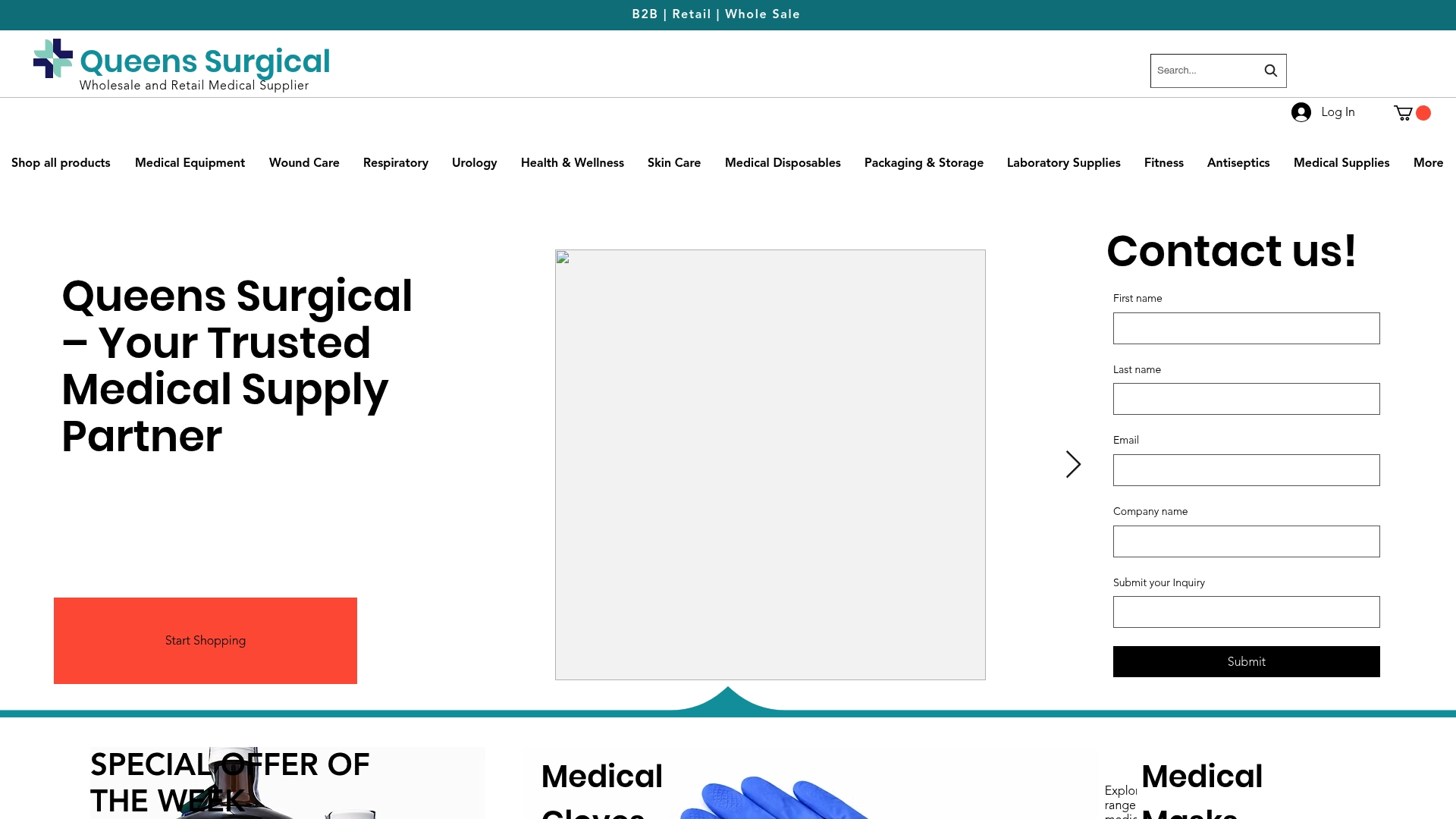
Queenssurgical supplies hospitals, clinics, and healthcare facilities across the Americas with a broad catalog of high-turnover consumables, including surgical face masks, gloves, instruments, and wellness products. The platform supports both wholesale and retail purchasing, with competitive pricing designed for facilities buying in volume. Queenssurgical’s full product catalog covers the consumable categories that deliver the strongest bulk ordering returns. Purchasing agents can browse by category, review pricing, and place orders without the friction of traditional distributor relationships.
FAQ
What is the average cost saving from bulk medical supply ordering?
Healthcare facilities using GPOs typically reduce supply costs by 10%–18%, with some facilities achieving up to 30% savings through optimized wholesale purchasing. Actual savings depend on product category, order volume, and negotiation strategy.
Which medical supplies are best suited for bulk purchasing?
High-turnover consumables such as gloves, masks, gowns, and basic wound care supplies deliver the strongest returns from bulk ordering. Specialty items with low or unpredictable usage rates are better managed on just-in-time schedules to avoid expiration losses.
How do purchasing agents avoid overstocking when buying in bulk?
Base order quantities on at least 12 months of actual consumption data rather than estimates or vendor recommendations. Aligning order volume with usage and lead times prevents both costly overstocking and emergency procurement premiums.
What is contract leakage and why does it matter?
Contract leakage occurs when invoices are billed above the negotiated contract price without detection. Regular invoice auditing against contract terms is the only reliable way to confirm that bulk purchasing savings are fully realized.
Can bulk ordering support a facility’s sustainability goals?
Bulk orders reduce packaging waste per unit, and integrating reprocessed single-use devices can cut costs by up to 25% while significantly lowering CO2 emissions. Both strategies align financial and environmental objectives without compromising clinical standards.
Recommended
Comments