Online Medical Retail Best Practices for Healthcare Pros

Online medical retail best practices are defined as the operational, regulatory, and customer experience standards that healthcare retailers must follow to sell medical supplies safely and legally through digital channels. The industry term for this discipline is healthcare e-commerce compliance, and it covers everything from HIPAA data handling to refill workflow design. Medical retailers who skip these foundations face regulatory penalties, lost customer trust, and costly system rewrites. Queenssurgical operates within this framework daily, supplying clinics, hospitals, and individual practitioners across the Americas with products that meet verified quality standards. Getting these practices right is not optional. It is the baseline for any credible digital retail operation in healthcare.
1. What are the online medical retail best practices for compliance?
Compliance is the non-negotiable foundation of every effective online medical retail operation. Three regulatory bodies set the core rules: the FDA’s Drug Supply Chain Security Act (DSCSA), the DEA’s Electronic Prescribing for Controlled Substances (EPCS) standard under 21 CFR 1311, and HIPAA’s Privacy and Security Rules for Protected Health Information (PHI).
The single most important technical step is building your audit log first. An audit log records every transaction, access event, and data change in your system. Skipping it means costly rewrites later, because HIPAA, DEA, and FDA DSCSA all require it as a baseline.

HIPAA also requires Business Associate Agreements (BAA) with every third-party vendor that touches PHI. That includes your payment processor, your cloud host, and your shipping software. Digital trust in healthcare directly influences how often customers return and whether they recommend your platform. Security-by-design is not a feature. It is the product.
Pro Tip: Start your compliance build with audit logging and BAA contracts before you write a single line of customer-facing code. This sequence prevents the most expensive compliance failures.
2. How to handle controlled substances in online medical retail
Controlled substances require a completely separate compliance track from general medical supplies. The DEA mandates two-factor authentication and full audit trails for electronic prescribing of controlled substances under 21 CFR 1311. These are not suggestions. Violations carry federal penalties.
The practical advice here is direct: do not include controlled substances in your initial product launch. Treat DEA registration and EPCS infrastructure as a separate project with its own timeline, legal review, and technical build. Retailers who bundle controlled substances into a general launch routinely underestimate the compliance burden and delay their entire operation.
Start with non-controlled medical supplies, build your compliance record, then expand. This phased approach protects your license and your customers.
3. How can online medical retailers optimize the refill experience?
Refill flows account for 60–80% of total pharmacy application volume in mature markets. That single statistic tells you where to invest your product development budget first. A clunky refill process is not a minor inconvenience. It is the primary reason customers leave for another provider.
The most effective refill systems share four characteristics:
Auto-refill enrollment at the point of first purchase, with clear opt-out controls
Reminder notifications sent via SMS or email at 7 days and 3 days before estimated depletion
Pharmacist verification checkpoints built into the workflow, not bolted on afterward
Real-time status updates from order placement through delivery confirmation
Subscription models built on top of strong refill flows produce measurable results. Subscription conversion rates can reach 30% for regularly purchased health products, which significantly increases customer lifetime value. That number reflects what happens when refill friction is removed.
Pro Tip: Map your current refill flow end-to-end before building new features. Most friction points appear at prescription verification and payment re-entry. Fix those two steps first.
4. What operational technologies improve inventory management?
Medical supply inventory is more complex than general retail inventory. Products have expiry dates, temperature requirements, and regulatory classifications that standard retail systems ignore. A Warehouse Management System (WMS) built for healthcare addresses all three.
The critical WMS features for medical retailers are batch tracking, expiry management using the FEFO (First Expired, First Out) method, and inventory segregation by storage requirements. FEFO prevents expired products from shipping. Segregation by temperature and light exposure prevents product degradation before it reaches the customer.
Order Management Systems (OMS) handle the customer-facing side of the same problem. An OMS synchronizes inventory across every sales channel in real time, so a product sold through your website is immediately reflected in your warehouse count. Without this synchronization, overselling and backorder failures become routine.
The table below compares the two system types by function:
System | Primary function | Key medical feature |
WMS | Warehouse operations | FEFO, batch tracking, segregation |
OMS | Order and channel management | Real-time inventory sync, omnichannel |
Cold chain logistics and controlled substance storage require dedicated handling outside your standard WMS workflow. These categories need separate physical storage, separate documentation, and separate audit trails. Treating them as standard inventory is a compliance violation, not just an operational error.
For a deeper look at how healthcare inventory tracking works across batch and expiry management, the operational principles apply directly to online medical retail.
5. Which website practices build trust and increase conversions?
A medical retail website that loads slowly or displays incomplete product information loses customers before they reach the checkout. Mobile-friendly design is the baseline. The majority of healthcare professionals now research and order supplies on mobile devices during or between patient care activities.
Complete product detail pages are the highest-leverage conversion tool in digital retail healthcare. Every listing should include:
Full product name, manufacturer, and SKU
Dosage or usage instructions where applicable
Contraindications and safety warnings
Multiple product images from different angles
Certifications and compliance markings (FDA clearance, ISO standards)
Transparent shipping policies are equally critical. Ambiguous “fast shipping” claims create dissatisfaction when customers discover the fine print. State your processing time, order cutoff time, weekend dispatch policy, and estimated delivery window explicitly on every product page and at checkout.
Customer service channels must be reachable and responsive. For medical retailers, a missed question about product compatibility or dosage is not just a lost sale. It is a patient safety concern. Live chat, a direct phone line, and a documented response time standard are the minimum.
Pro Tip: Add a “frequently bought together” section to product pages using real order data. Medical professionals often need complementary supplies and will add them to a single order if prompted clearly.
6. How starting small protects your compliance record
Starting with restricted geographies and a limited product catalog is the most underrated ecommerce healthcare strategy. Retailers who launch nationally with a full catalog before their compliance systems are tested create regulatory exposure they cannot easily undo.
A state-by-state rollout lets you verify that your HIPAA workflows, shipping policies, and pharmacist oversight protocols work correctly before scaling. Each new state adds regulatory nuance. Controlled substance rules, pharmacy board requirements, and sales tax obligations all vary by jurisdiction.
The same logic applies to product categories. Launch with non-controlled, non-prescription medical supplies first. Build your operational track record. Then expand into higher-complexity categories with the compliance infrastructure already proven.
For a current overview of medical retail regulations in 2026, the state-level variation in pharmacy and medical device rules is significant and worth reviewing before any geographic expansion.
7. How AI fits into effective online medical selling
AI personalization in medical retail works best for product recommendations, reorder reminders, and demand forecasting. These are low-risk applications that improve the customer experience without touching clinical decision-making.
The constraint is privacy. AI personalization must comply with HIPAA and integrate with your WMS to prevent waste and safety failures. An AI system that recommends a product without checking current inventory or expiry status creates more problems than it solves.
The practical rule is this: AI tools that process or infer PHI require the same BAA and audit log treatment as any other vendor touching patient data. Do not deploy AI personalization features before your core compliance infrastructure is in place. The sequence matters.
8. Building transparency into your supply chain
Supply chain transparency is a direct trust signal to healthcare buyers. Clinics and hospitals purchasing medical supplies online need to know where products come from, how they are stored, and whether they meet current regulatory standards. Vague sourcing claims do not satisfy procurement officers.
The pharmaceutical distribution compliance standards that govern physical distributors apply equally to online retailers. Your product pages should reference manufacturer certifications, lot numbers, and storage conditions. This information is not just reassuring. It is often required by institutional purchasing policies.
Queenssurgical publishes product details and sourcing information across its catalog precisely because institutional buyers require this level of documentation before approving a new supplier. Transparency is a procurement requirement, not a marketing choice.
Key Takeaways
Effective online medical retail requires compliance infrastructure, refill workflow investment, and transparent product and delivery information built before scaling.
Point | Details |
Build audit logs first | Audit logging is the compliance foundation for HIPAA, DEA, and FDA DSCSA requirements. |
Prioritize refill workflows | Refills drive 60–80% of pharmacy app volume; invest here before any other feature. |
Use FEFO inventory management | First Expired, First Out prevents expired products from shipping and reduces compliance risk. |
State explicit shipping policies | Vague delivery claims create dissatisfaction; list processing times and cutoffs on every page. |
Start small, then scale | Launch in restricted geographies with limited categories to build a clean compliance record. |
What I’ve learned from watching online medical retail evolve
The retailers who struggle most are the ones who treat compliance as a legal checkbox rather than a product feature. They build the customer-facing experience first, then try to retrofit HIPAA controls and audit trails afterward. That sequence almost always produces a costly rebuild within 18 months.
The retailers who succeed treat their audit log, their BAA contracts, and their pharmacist oversight workflow as core product infrastructure. They launch slower, in fewer states, with fewer product categories. But they scale without regulatory interruption.
The AI question comes up constantly now. My honest view is that AI has real value in demand forecasting and reorder reminders, but most retailers are not ready for it. Their inventory data is too inconsistent and their compliance documentation too thin to support AI safely. Fix the data and the compliance record first. Then AI becomes genuinely useful rather than a liability.
Trust will be the defining competitive factor in online medical retail through 2026 and beyond. Customers who trust your platform return more often, spend more per order, and refer colleagues. That trust is built through supply chain transparency, not through marketing language. The retailers who understand this distinction will own the category.
— QB
Queenssurgical: quality medical supplies for online retailers
Healthcare retailers building or refining their online operations need a supply partner whose products meet the same compliance and quality standards they are working to uphold.
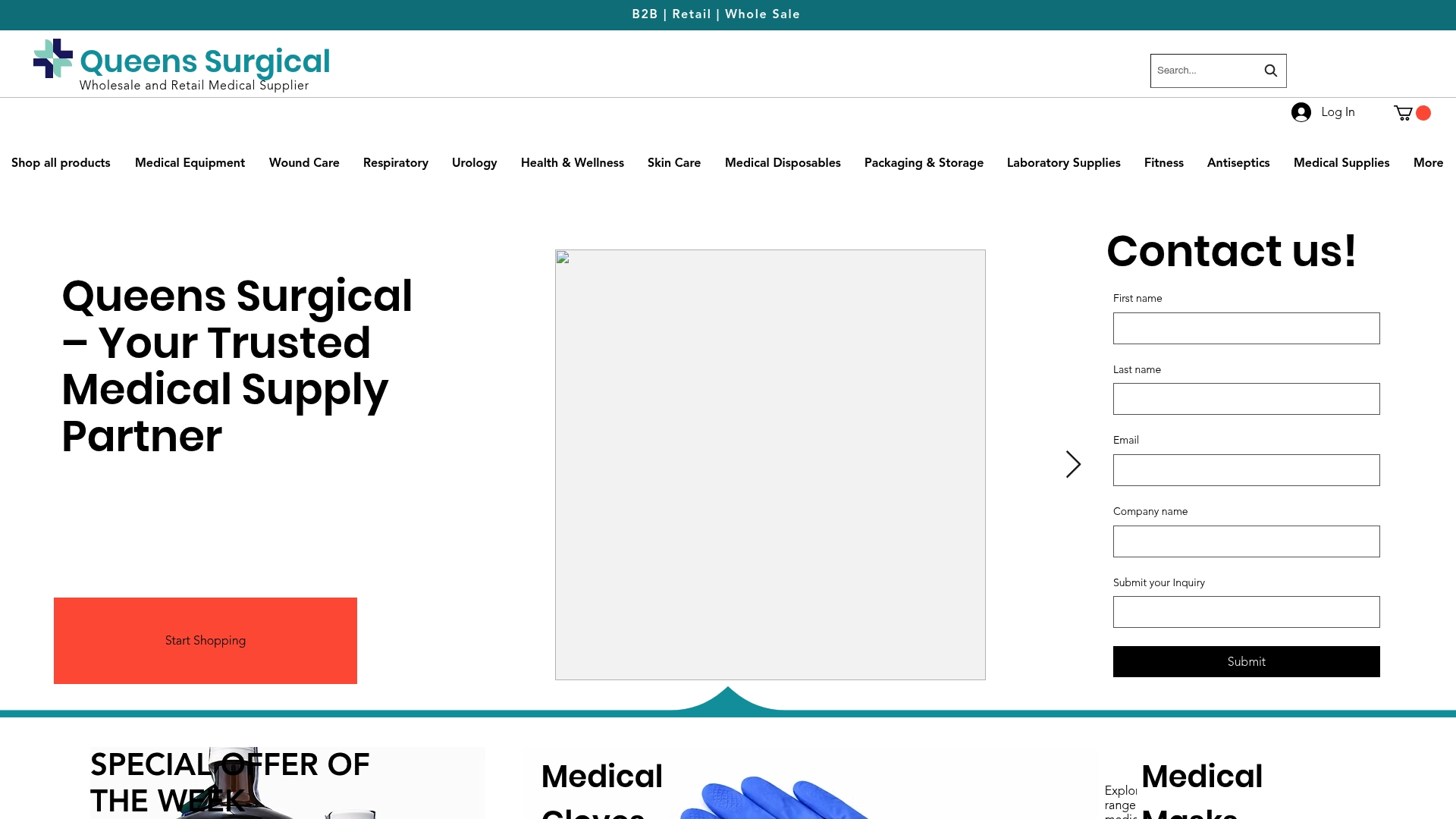
Queenssurgical supplies clinics, hospitals, and medical retailers across the Americas with verified medical products including isolation gowns, skin protectant creams, and protective equipment that meets current regulatory standards. Every product in the catalog includes full manufacturer details and compliance documentation. Queenssurgical also offers weekly specials for bulk purchasing, making it practical for retailers to maintain stock without overextending procurement budgets. Visit Queenssurgical to review the full catalog and current pricing.
FAQ
What compliance standards apply to online medical retail?
Online medical retailers must comply with HIPAA for patient data, FDA DSCSA for drug traceability, and DEA EPCS rules for controlled substances. Building an audit log is the required first step before any other compliance feature.
How do I reduce customer churn in medical e-commerce?
Auto-refill enrollment and proactive reminder notifications are the most effective retention tools. Refill flows account for 60–80% of pharmacy app volume, so reducing friction in that process directly reduces churn.
What is FEFO and why does it matter for medical supply retailers?
FEFO stands for First Expired, First Out. It is a WMS inventory method that ships products with the nearest expiry date first, preventing expired medical supplies from reaching customers and reducing compliance risk.
How should I handle shipping policy claims on my medical retail site?
State your processing time, order cutoff, weekend dispatch policy, and estimated delivery window explicitly on every product page and at checkout. Ambiguous fast-shipping claims are a leading cause of customer dissatisfaction in online pharmacy and medical retail.
When should an online medical retailer add controlled substances to its catalog?
Add controlled substances only after completing full DEA registration and building EPCS infrastructure with two-factor authentication and audit trails. Treat this as a separate compliance project, not an extension of your general product launch.
Recommended
Comments