Match All 4 AAMI Isolation Gown Levels to Tasks and Procurement Risk
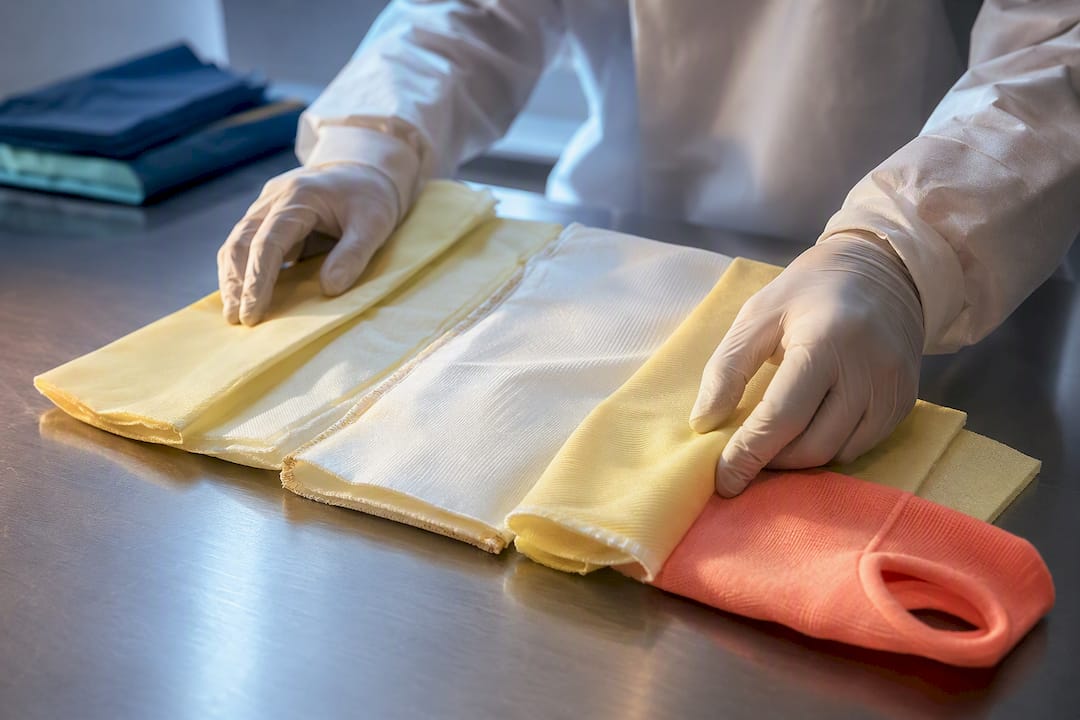
Level 1 covers minimal-risk tasks, Level 2 covers low-risk exposure, Level 3 covers moderate splash risk, and Level 4 is the only tier tested for viral penetration and reserved for high-risk, high-fluid procedures. All four levels come from AAMI/ANSI PB70, which grades gowns using specific textile tests rather than marketing language. The procurement rule that trips up most buyers: match the lowest level that still covers the task, and never assume a Level 1 through 3 gown blocks a virus.
TL;DR:
Gowns rated for levels 1 through 3 rely on water-based tests and do not guarantee viral or bloodborne pathogen resistance.
Most gowns labeled as isolation gowns are not consistently tested or labeled according to their actual protective standards, risking underperformance.
Selection of gown levels must be based on detailed exposure assessment, confirming test standards on labels, and verifying critical-zone construction before purchase.
A single test report from vendors provides more reliable assurance of gown performance than generic specification sheets or labels.
Facilities tend to overbuy high-level gowns for low-risk tasks, increasing waste and shortage risks for high-protection cases; proper risk assessment prevents this.
Table of Contents
What Do AAMI/ANSI PB70 Isolation Gown Levels Mean?
Each level corresponds to a specific set of pass thresholds, not a vague description of “protection.” A gown’s level tells you exactly how much fluid pressure or impact it can withstand before failing, and which body zones that rating actually covers.
Level 1 (minimal risk): Passes AATCC 42 impact penetration at 4.5 grams or less. Suitable for basic patient care, standard isolation visits, and cleaning routines where fluid contact is unlikely. Think visitor gowns on a general medical floor.
Level 2 (low risk): Passes AATCC 42 at 1.0 gram or less and AATCC 127 hydrostatic pressure at 20 centimeters of water or more. Appropriate for blood draws, IV starts, arterial blood gas draws, and other minimally invasive tasks with light fluid exposure.
Level 3 (moderate risk): Passes AATCC 42 at 1.0 gram or less, and AATCC 127 at 50 centimeters of water or more, a meaningfully higher pressure tolerance than Level 2. Fits arterial catheter insertion, GI procedures, ER trauma intake, and suturing where splashing is likely but sustained fluid saturation is not.
Level 4 (high risk): Tested under ASTM F1670 for synthetic blood penetration and ASTM F1671 for viral penetration, using the Phi-X174 bacteriophage as the surrogate pathogen. This is the tier for long, fluid-intensive surgery, open trauma, cardiac cases, and any procedure with known or suspected bloodborne pathogen exposure.
The jump from Level 2 to Level 3 is really about sustained pressure resistance, not just a bigger splash. A gown rated for 20 centimeters of hydrostatic pressure can still fail during a procedure that generates continuous fluid contact, which is why ER and OR staff usually work in Level 3 or 4 regardless of procedure length.
Design details matter as much as the level number. Critical zones (chest, arms, the areas most likely to contact fluid) must meet the gown’s rated level, but non-critical zones like the back sometimes carry a lower barrier rating even on a labeled Level 3 or 4 gown. Seam construction and closure type (tie-back versus thumb loop cuffs) also affect real-world performance, since a strong fabric with a weak seam still leaks.
What Standards and Tests Actually Determine Gown Levels?
AAMI PB70 doesn’t invent its own physics. It borrows four established textile tests and sets pass thresholds for each level, then FDA recognizes the standard as the benchmark for gown labeling claims.
AATCC 42 (impact penetration): Simulates a fluid impact striking the gown surface and measures how many grams of synthetic fluid pass through onto an absorbent pad underneath. Lower grams mean better resistance, this is the test behind the 4.5 gram and 1.0 gram thresholds separating Levels 1 through 3.
AATCC 127 (hydrostatic pressure): Measures how many centimeters of water column a fabric can withstand before leaking, essentially a slow, building-pressure test rather than an impact test. This is what separates Level 2 (20 cm) from Level 3 (50 cm).
ASTM F1670 (synthetic blood penetration): Checks whether synthetic blood, which has lower surface tension than water and behaves more like real blood, penetrates the fabric under pressure. Required for Level 4 claims.
ASTM F1671 (viral penetration): Uses a bacteriophage surrogate to confirm the fabric blocks viral-sized particles, not just visible fluid. This is the only test in the PB70 framework that addresses viral penetration directly.
AAMI PB70 also builds in sampling requirements and quality metrics like RQL (rejectable quality level) so a manufacturer can’t pass one sample and ship a defective lot. A CDC evaluation of marketed gowns found that sampling rigor and seam integrity were common failure points, which is exactly why buyers should ask vendors for lot-level test data rather than a single certificate of conformance.
How Should You Choose the Right Gown Level for a Task?
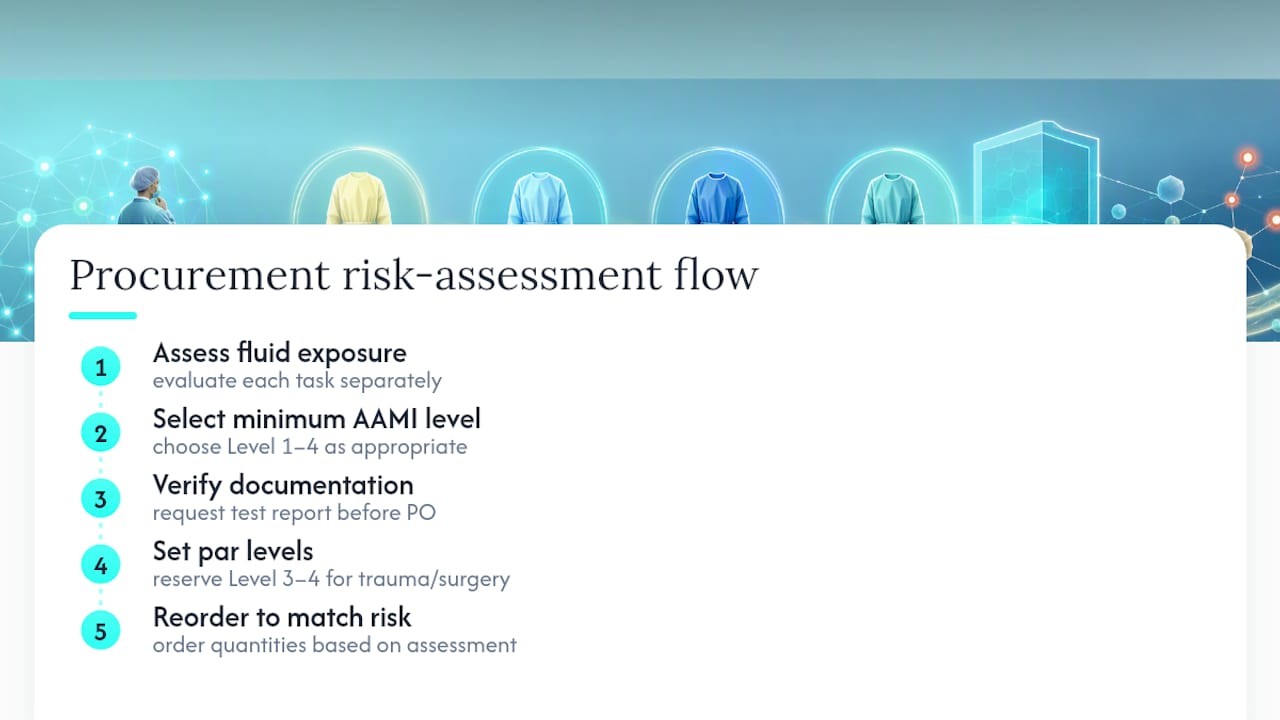
Selection works better as a short, repeatable process than a gut call made at the supply closet. Here’s the flow procurement teams and clinical leads should run before adding any gown to formulary:
Identify the expected exposure. Estimate fluid volume, whether pressure will be sustained or brief, and whether bloodborne pathogen exposure is plausible.
Map that exposure to an AAMI level. Minimal contact points to Level 1, light procedural work to Level 2, splash-heavy procedures to Level 3, and any surgical or high-fluid-volume, high-pathogen-risk setting to Level 4.
Confirm the label cites the actual test standards, not just a level number with no test reference attached.
Check critical-zone construction, including seam type, cuff style, and closure, since these are common failure points even on gowns that pass the base fabric test.
Request QC documentation, including AQL or RQL sampling data or full test reports, before committing to a bulk order.
Vendor labeling gets inconsistent fast. Terms like “isolation gown,” “procedural gown,” and “non-surgical gown” get used interchangeably across manufacturers with no standardized meaning, so the AAMI level and cited test methods on the label matter more than the product name.
Pro Tip: Ask any vendor for their test lab report, not just a spec sheet. A spec sheet can say “Level 3.” A test report shows the actual AATCC 127 pressure reading that earned it, and that’s the number an auditor or infection preventionist will want to see.
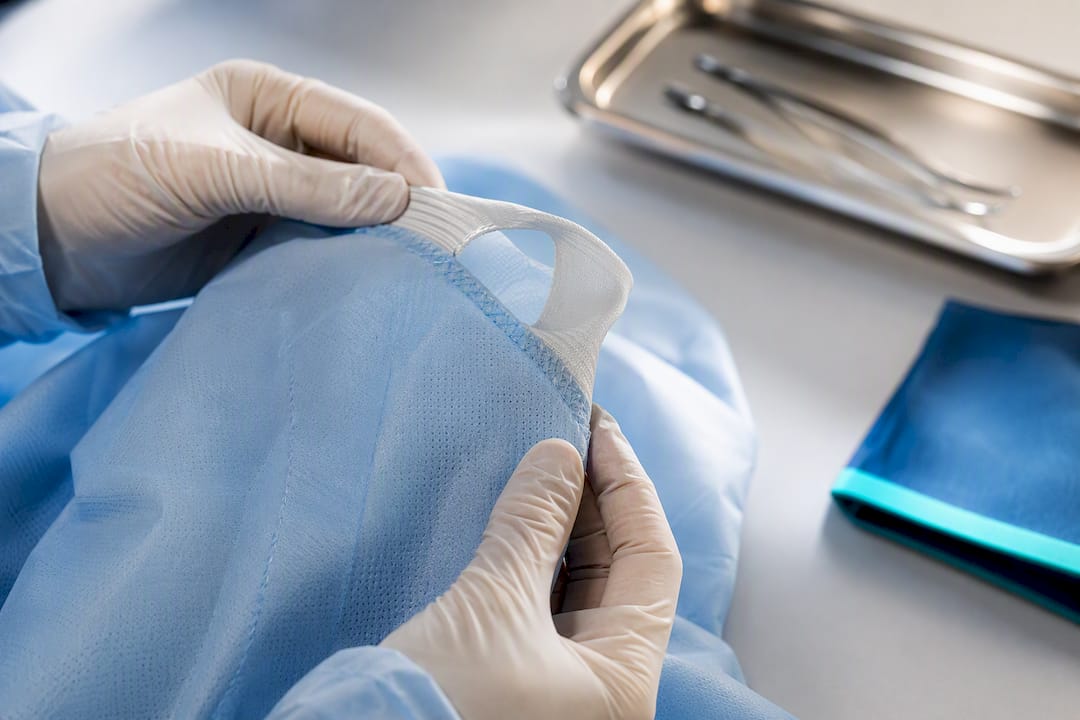
For usability, factor in sizing range, how easily staff can don and doff without contaminating the gown surface (see proper donning and doffing technique), and whether single-use or reusable fits your par-level model better.
What Levels 1 Through 3 Don’t Guarantee
Levels 1 through 3 rely on water-based tests, and water has higher surface tension than blood or many bodily fluids. That mismatch means a gown can pass its AATCC 42 or AATCC 127 threshold and still allow lower-surface-tension fluids through under real clinical conditions.
Levels 1 through 3 are not rated or tested for viral penetration. Only Level 4, using ASTM F1671, carries that claim.
Marketed gowns don’t always perform as labeled. A CDC-cited evaluation found seam and attachment failures were a recurring cause of gowns falling short of their claimed level, even when the base fabric passed.
Under OSHA’s bloodborne pathogen standard, employers must supply PPE appropriate to actual occupational exposure risk, not just whatever gown happens to be cheapest or in stock.
Treat “fluid resistant” as marketing language until the label names a test and a threshold.
How Queens Surgical Supports Compliant Gown Procurement
Queens Surgical stocks isolation gowns across multiple protection tiers, with labeling and specification details available on each product page. Procurement teams can review documentation, request samples, and plan par levels before committing to bulk orders.
The Real Problem With How Facilities Buy Isolation Gowns
Most facilities over-buy Level 3 and 4 gowns for tasks that only need Level 1 or 2, then run short on the high-barrier stock when a genuine trauma or surgical case shows up. That’s not caution, it’s a planning failure dressed up as risk aversion. The fix isn’t buying more of everything, it’s actually running the risk-assessment flow before reordering, task by task, instead of defaulting every unit to the highest level “to be safe.”
The bigger blind spot is trusting the word “isolation gown” as if it means one fixed thing. It doesn’t. A product can carry that name and sit anywhere from Level 1 to Level 4, and the only way to know which is checking the cited test standard on the label, not the product category name. Procurement staff who skip that step are gambling with exposure risk, not managing it.
If there’s one habit worth building, it’s asking vendors for the actual test report before the purchase order, not after a failure gets flagged in an audit. That single step catches most of the mismatched-level problems before they reach a patient care area.
— QB
Where to Buy AAMI-Rated Isolation Gowns
Queens Surgical carries isolation gowns across AAMI protection tiers, with labeling detail and specification documentation available directly on each product listing so your team can verify the level before ordering.
Browse the fluid-resistant isolation gown line for general-use coverage, or check the thumb loop cuff design if cuff security matters for your procedure mix. For facilities building out full par levels across gowns, gloves, and masks, the Queens Surgical catalog lets you request documentation and quote bulk quantities in one place. Start by pulling your current gown inventory against the risk-assessment flow above, then request a quote for whichever level you’re short on.
This article is general information, not a substitute for advice from a qualified doctor. Consult a qualified healthcare professional about your own circumstances before acting on anything here.
Sources
FAQ
What Is the Difference Between Level 1 and Level 2 Isolation Gowns?
Level 1 gowns pass AATCC 42 impact penetration at 4.5 grams or less and suit minimal-risk tasks like basic patient care. Level 2 gowns pass a stricter 1.0 gram threshold on the same test plus an added hydrostatic pressure test (AATCC 127 at 20 cm), making them appropriate for blood draws and other low-risk procedural contact.
What Is the Difference Between a Level 3 and Level 4 Gown?
Level 3 gowns pass AATCC 127 hydrostatic pressure at 50 centimeters of water, covering moderate splash risk in procedures like GI work or ER trauma intake. Level 4 gowns undergo an entirely different test set, ASTM F1670 and ASTM F1671, and are the only tier confirmed resistant to viral penetration.
What Are the CDC Guidelines for Isolation Gowns?
CDC’s PPE-Info resource summarizes AAMI PB70 as the governing standard, noting that Levels 1 through 3 provide increasing liquid resistance but are not impermeable, while Level 4 is the only tier tested for viral penetration. CDC also points employers toward matching gown level to the actual exposure risk of the task at hand.
What Are AAMI Level 2 Isolation Gowns Used For?
Level 2 gowns fit low-risk clinical tasks with brief, light fluid exposure, such as IV starts, arterial blood draws, and basic wound care. They pass AATCC 42 at 1.0 gram or less and AATCC 127 at 20 centimeters of water, a meaningful step up from Level 1 but well below the sustained-pressure tolerance of Level 3.
How Much Do Isolation Gowns Cost at Queens Surgical?
Current pricing for isolation gowns and related PPE is listed directly on each Queens Surgical product page, where buyers can also review labeling and specification details before ordering.
Recommended
Comments