Best MedicalSupplyZone.com Alternatives for US Procurement

The strongest alternatives to MedicalSupplyZone.com for U.S. healthcare procurement are McKesson, Medline, Cardinal Health, B. Braun, Queenssurgical, Quality Medical Supply, and Qual-Med Supply. Each covers a distinct slice of the market, from high-volume hospital distribution to specialized physician office and home care supplies. If your facility is rethinking its sourcing mix, these seven providers represent the most credible options available to U.S. buyers right now.
Supplier | Specialty / Product Range | Pricing Model | Key Service Features | U.S. Availability |
McKesson | Full-line distribution, pharmaceuticals, surgical | Contract and volume pricing | Distribution network, inventory programs | Nationwide |
Medline | Clinical consumables, post-acute, home care | Contract, GPO pricing | Private-label products, clinical consulting | Nationwide |
Cardinal Health | Surgical, lab, physician office supplies | Contract and bulk pricing | Supply chain management, specialty distribution | Nationwide |
B. Braun | IV therapy, infusion, surgical instruments | Contract pricing | Clinical education, product support | Nationwide |
Queenssurgical | Gloves, masks, instruments, wellness, equipment | Wholesale and retail, B2B and B2C | Online catalog, weekly offers, Americas-wide | Nationwide + Americas |
Quality Medical Supply | Physician office, colon irrigation, disposable kits | Competitive retail and wholesale | Regulatory compliance, vendor communication | U.S. (Arizona-based) |
Qual-Med Supply | Long-term care, physician office, home patient | Discounted wholesale | Active inventory maintenance, billing support | U.S. nationwide |
Facilities that rely on a single distributor for all supply categories expose themselves to the same disruption risk every time a shortage, tariff, or logistics failure hits that one channel. The most resilient procurement programs spread orders across at least two or three vetted suppliers with complementary product strengths.
Table of Contents
What do the top MedicalSupplyZone.com alternatives actually offer?
Procurement professionals rarely need a replacement that mirrors MedicalSupplyZone.com feature for feature. What they need is a supplier that covers their specific product categories reliably, at a price that holds up under contract review, and with service policies that reduce administrative friction. The seven providers profiled here each bring something distinct.

McKesson

McKesson is one of the largest medical supply distributors in the United States, serving hospitals, surgery centers, physician offices, and long-term care facilities. Its product catalog spans surgical supplies, exam room consumables, pharmaceuticals, and durable medical equipment. McKesson’s wholesale medical supplies operation gives procurement teams access to volume pricing tiers and GPO contract options, which can significantly reduce per-unit costs on high-turnover items like gloves, drapes, and sutures. The distributor also offers inventory management programs that automate reorder cycles, a practical feature for facilities running lean supply rooms.
Key product segments:
Surgical and procedural supplies
Exam room consumables (gloves, gowns, drapes)
Pharmaceuticals and biologics
Durable medical equipment
Lab and diagnostic supplies
Medline
Medline operates as both a manufacturer and distributor, which gives it pricing leverage that pure distributors cannot always match. Its catalog covers clinical consumables, post-acute care supplies, home medical equipment, and a broad private-label line. For long-term care facilities and home health agencies, Medline’s post-acute division is particularly well-stocked. The company also provides clinical consulting services, which can help procurement teams standardize product selections across departments and reduce SKU proliferation.
Key product segments:
Wound care and advanced dressings
Incontinence and skin care products
Surgical packs and procedure trays
Home medical equipment
Personal protective equipment
Cardinal Health
Cardinal Health focuses heavily on physician office and surgery center supply chains, making it a natural fit for ambulatory care facilities and specialty practices. Its distribution network covers lab supplies, surgical instruments, and medical-surgical consumables. Cardinal Health also operates a specialty distribution arm for oncology and other high-acuity settings, which separates it from general-line distributors. Procurement teams sourcing for surgery centers will find its procedure pack customization particularly useful.
Key product segments:
Physician office supplies
Surgery center and OR supplies
Lab and diagnostic products
Specialty distribution (oncology, nuclear)
Medical-surgical consumables
B. Braun
B. Braun specializes in IV therapy, infusion systems, and surgical instruments, making it the go-to source for facilities with high infusion volumes or complex surgical programs. Its product line is narrower than a full-line distributor, but the depth within those categories is hard to match. B. Braun also invests in clinical education and product support, which matters when staff need training on new infusion protocols or instrument handling. Facilities sourcing primarily for OR and ICU settings will find B. Braun’s catalog well-aligned with their needs.
Key product segments:
IV solutions and infusion systems
Surgical instruments and sutures
Anesthesia and pain management supplies
Renal care products
Hospital pharmacy supplies
Queenssurgical
Queenssurgical runs a comprehensive online platform serving medical professionals, clinics, hospitals, and healthcare facilities across the Americas with both wholesale and retail purchasing options. Its catalog covers gloves, masks, surgical instruments, medical equipment, and wellness products, with weekly special offers that give procurement teams opportunities to reduce costs on recurring purchases. The B2B and B2C structure means individual practitioners and larger purchasing organizations can both order through the same platform without needing a separate account setup. For U.S. facilities that also source for operations in Latin America or Canada, Queenssurgical’s Americas-wide reach is a practical advantage.
Key product segments:
Exam and surgical gloves
Masks and respiratory protection
Surgical instruments
Medical equipment and devices
Wellness and patient care products
Quality Medical Supply
Quality Medical Supply, based in Arizona, focuses on physician office supplies and specialty products including closed-system colon irrigation equipment. The company’s quality policy centers on regulatory compliance and continuous improvement, with strong emphasis on vendor communication and product assurance. Its financing options make higher-cost equipment purchases more accessible for smaller practices. Quality Medical Supply suits physician offices and specialty clinics that need a supplier with a clear compliance posture and direct vendor relationships.
Key product segments:
Physician office consumables
Closed-system colon irrigation equipment
Disposable kit bags and procedure supplies
Specialty clinical products
Qual-Med Supply
Qual-Med Supply targets long-term care facilities, doctors’ offices, and home patients with a discounted wholesale model. Its active inventory maintenance programs and third-party billing support are the features that set it apart from general distributors. For busy physician offices managing insurance billing alongside supply procurement, having a vendor that handles billing logistics reduces administrative overhead considerably. Qual-Med Supply’s catalog is broad enough to cover most routine supply needs for the settings it serves.
Key product segments:
Long-term care facility supplies
Physician office consumables
Home patient medical supplies
Durable medical equipment
How do you evaluate and choose the right medical supply partner?
Switching suppliers or adding a new one to your sourcing mix is not a decision you want to make based on a website’s homepage. The criteria below give you a structured way to compare options before committing to a contract or a bulk order.
Specialty and product range alignment
Confirm the supplier covers your top 20 SKUs by volume before evaluating anything else.
Check whether they stock both consumables and capital equipment, or specialize in one.
Verify product categories for your specific care setting: physician office, surgery center, long-term care, or home health.
Pricing and contract terms
Ask for volume pricing tiers and GPO contract compatibility upfront.
Clarify whether pricing is locked for a contract period or subject to change on short notice.
Compare per-unit costs on your highest-turnover items, not just headline pricing.
Minimum order quantities and bulk options
Some distributors require minimum order values that may not suit smaller facilities.
Bulk purchasing programs can reduce per-unit costs but require storage capacity planning.
Check whether the supplier offers bulk ordering benefits that align with your facility’s consumption rate.
Delivery times and shipping policies
Standard lead times vary widely across distributors, from next-day to one to two weeks.
Confirm geographic coverage, especially for facilities in rural or underserved areas.
Ask about expedited shipping options and whether they carry a surcharge.
Customer service and support responsiveness
Test the supplier’s responsiveness before signing a contract: call their support line and ask a product question.
Look for dedicated account representatives rather than general call center routing.
Check whether they offer after-hours support for urgent supply needs.
Return policies and product warranties
Understand the return window and whether restocking fees apply.
Confirm warranty terms for durable medical equipment and capital purchases.
Ask how the supplier handles defective product claims and replacement timelines.
Market reputation and supplier credentials
Review BBB ratings and any formal complaints filed against the supplier.
Ask for references from facilities similar to yours in size and care setting.
Verify that the supplier maintains regulatory compliance documentation for the products you need.
Pro Tip: Run a dual-source strategy for your top 10 consumables: one large distributor for volume pricing and a specialized supplier for categories where the large distributor’s depth is thin. A dual-sourcing approach combining full-line distributors for daily consumables and specialized vendors for surgical or surplus inventory reduces supply chain risk when one channel faces a shortage or price spike.
The evaluation process works best when you score each supplier against these criteria using a simple weighted matrix. Assign higher weights to the factors that matter most for your care setting, whether that is pricing, delivery speed, or billing support, and let the scores guide the shortlist.
What procurement practices actually build supply chain resilience?
The medical supply chain has faced repeated stress tests over the past several years, from pandemic-era shortages to tariff-driven cost increases and natural disaster disruptions. Facilities that weathered those events better than average shared a few common practices.
Technology integration is the one procurement teams most often underinvest in. Consolidating manufacturer offerings through a technology-enabled platform, rather than managing dozens of individual vendor relationships manually, reduces overhead and surfaces competitive pricing across a broader supplier base. Sourcing services that aggregate catalogs from manufacturers across multiple countries and route them through established U.S. distributors give procurement teams access to pricing and availability data they could not realistically compile on their own. The efficiency gain is real, but the resilience benefit is arguably larger: when one manufacturer faces a production disruption, the platform surfaces alternatives immediately rather than leaving the procurement team scrambling.
Active inventory maintenance programs deserve more attention than they typically get. Qual-Med Supply and Quality Medical Supply both offer programs that monitor stock levels and flag reorder points before a facility runs short. For a busy physician office managing supply procurement alongside patient scheduling and billing, that kind of automated oversight prevents the last-minute emergency orders that always cost more than planned purchases.
Technology-enabled aggregation of manufacturer catalogs reduces procurement overhead and exposes pricing across a far wider supplier base than any single distributor relationship can match. Facilities that adopt this approach typically find both cost savings and better supply continuity.
Third-party billing support is a related service that procurement teams at smaller facilities often overlook when evaluating suppliers. When a supplier handles insurance billing logistics for certain product categories, the administrative burden on the facility drops considerably. Better Living Now, for example, facilitates insurance billing for chronic care supplies delivered directly to patients, which removes a significant workflow burden from the clinical staff who would otherwise manage those claims.
Queenssurgical’s approach to supply chain resilience reflects the same logic. By operating a platform that covers a broad product range across the Americas, with both wholesale and retail purchasing available, it gives procurement teams a single access point for categories that might otherwise require separate vendor relationships. That consolidation matters when a facility needs to move quickly on a supply gap.
The medical supply chain management practices that hold up best under pressure are the ones built before the disruption hits, not assembled in response to it. Dual sourcing, technology-enabled aggregation, and active inventory programs are not contingency measures. They are the baseline for any facility that cannot afford to run out of critical supplies.
Key Takeaways
The most resilient U.S. medical procurement programs use multiple vetted suppliers with complementary strengths rather than depending on a single distributor for all categories.
Point | Details |
Diversify your supplier base | Relying on one distributor for all categories creates a single point of failure when shortages or price spikes hit. |
Match supplier to care setting | McKesson and Cardinal Health suit high-volume hospital and surgery center needs; Qual-Med Supply fits long-term care and physician offices. |
Prioritize service features | Active inventory maintenance and third-party billing support reduce administrative overhead for busy facilities. |
Use dual sourcing for consumables | Combining a full-line distributor for daily consumables with a specialized supplier for surgical or surplus inventory reduces supply chain risk. |
Queenssurgical for broad Americas coverage | Queenssurgical offers wholesale and retail purchasing across a full product catalog, including gloves, masks, instruments, and equipment, with B2B and B2C options for U.S. facilities. |
Queenssurgical gives you direct access to quality medical supplies without the distributor markup
Procurement teams that have just reviewed seven supplier options are often looking for one that skips the complexity. Queenssurgical is built for exactly that: a direct-access platform where clinics, hospitals, and individual practitioners can order disposable lab uniforms, protective gear, instruments, and consumables without navigating GPO contracts or minimum order thresholds that favor only the largest buyers.
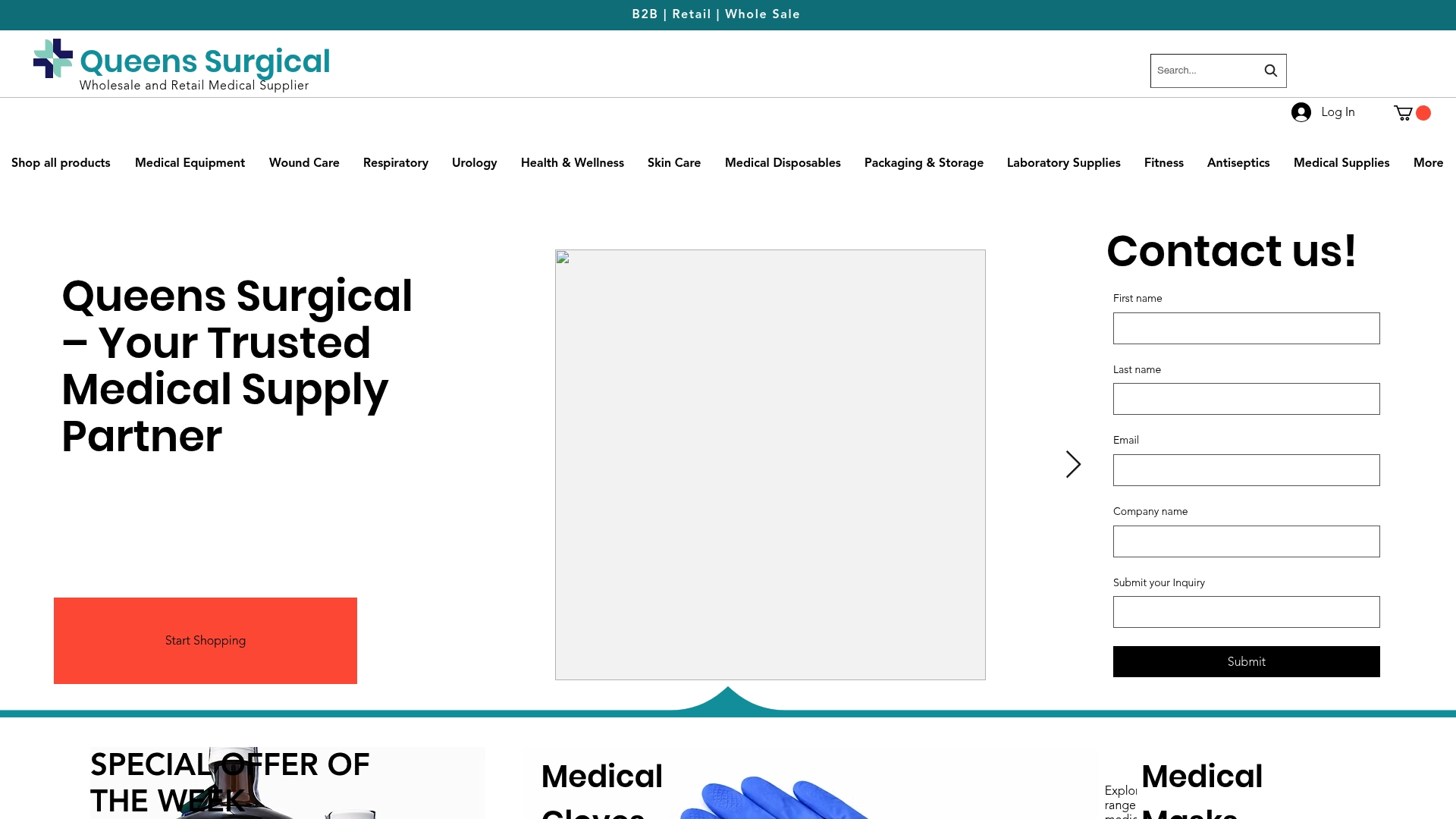
The catalog covers the product categories that procurement teams order most frequently, from exam gloves and isolation gowns to surgical instruments and wellness products, with weekly special offers that reward facilities willing to plan purchases a week or two ahead. The B2B structure means volume buyers get wholesale pricing, while smaller practices can order at retail without being locked into a contract. For U.S. facilities that also source for operations elsewhere in the Americas, the platform’s geographic reach removes the need for a separate regional supplier.
Browse the full catalog at queenssurgical.net and check current weekly offers to see where Queenssurgical fits your next procurement cycle.
Recommended
Comments