Verify N95s in 2 Minutes: Spot Counterfeit N95 Masks for U.S. Buyers
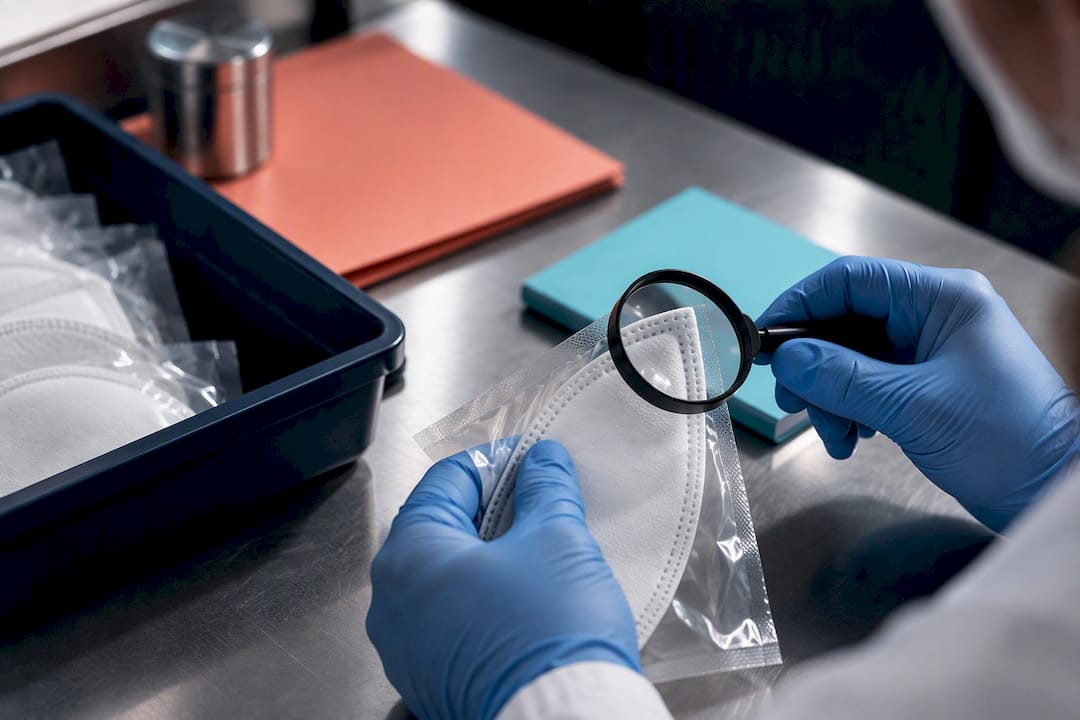
Counterfeit N95 masks are widespread enough that federal agencies have seized a large number of them at U.S. borders, and a fake respirator can leave you breathing unfiltered air during exactly the exposure it is supposed to block. The single most reliable safeguard is checking the mask’s NIOSH markings and its TC approval number, formatted as TC-84A-XXXX, against the NIOSH Certified Equipment List. If you can’t confirm the match, don’t wear it and don’t distribute it. Report it instead.
TL;DR:
Confirm the TC approval number on the mask matches the NIOSH Certified Equipment List, as fake masks often have incorrect or forged numbers.
Be wary of masks with misspelled “NIOSH,” unusual markings, decorative features, or packaging inconsistencies that do not meet official standards.
Purchase masks from verified suppliers who provide approval-holder documentation and lot-traceability records, avoiding marketplace sellers without traceable information.
Isolate and document any suspect masks, then report them promptly to NIOSH and customs agencies before resuming use or distribution.
Federal seizures show millions of counterfeit N95 masks have been intercepted at U.S. ports, often with forged or mismatched approval details.
Table of Contents
How Do You Spot a Counterfeit N95 Mask?
A genuine NIOSH-approved respirator carries four specific markings: the word “NIOSH,” the name of the approval holder, a model or part number, and a TC approval number in the format TC-84A-XXXX. NIOSH’s own guidance treats any of these being missing, altered, or misspelled as a strong warning sign.
Fakes tend to repeat the same mistakes. NIOSH’s counterfeit respirator checklist flags several patterns worth memorizing:
The word “NIOSH” misspelled or printed at an odd angle
Ear loops instead of headbands, without an approved alternate strap design
Decorative fabric, sequins, or printed patterns that a real N95 never carries
Claims like “for children” or heavy emphasis on “FDA approved” instead of NIOSH approval
Packaging with inconsistent lot numbers, blurry logos, or mismatched fonts
Sellers give away almost as much as the product does. Watch for free-email contact addresses instead of a business domain, prices that swing wildly week to week, or stock claims that sound too large for a genuine supply chain under strain.
Pro Tip: Zoom in on the product photo before you buy. Counterfeit listings frequently show a TC number that’s legible but doesn’t match any real NIOSH filing, which you can catch in under a minute with the CEL search tool.
One consumer-testing review found that a meaningful share of unaudited imported respirators failed to hit the 95% filtration standard when checked in a lab, a pattern documented in Wirecutter’s breakdown of fake mask signs. Looks alone won’t tell you that. Verification will.
How Do You Verify a Mask on the NIOSH Certified Equipment List?
The NIOSH Certified Equipment List is the authoritative database of every respirator NIOSH has actually certified, and checking it takes about two minutes.
Locate the TC number printed on the respirator or its packaging. It should read TC-84A followed by four digits, with no extra letters or truncated digits.
Search the CEL by TC number first, then cross-check the approval holder name and exact model number against what’s printed on the box.
Confirm all three fields (TC number, approval holder, model) match exactly. A partial match, a transposed digit, or an approval holder that doesn’t correspond to the brand on the box means the respirator is not approved.
If nothing matches, treat the product as unapproved. Photograph the packaging, save the purchase confirmation or listing URL, and report the findings to ppeconcerns@cdc.gov.
Counterfeiters sometimes lift a real TC number from a legitimate respirator and print it on fake packaging, according to CDC’s own documentation of misrepresentation cases. That’s why an approval-holder mismatch matters just as much as the number itself.
If you’re a buyer sitting on suspect inventory, don’t send it back to the supplier yet. Isolate the lot, keep the original box and any inserts, and hold onto the invoice. That paper trail is what NIOSH and CBP need to act on your report.
Where Can You Buy Authentic N95 Masks?
Procurement risk drops sharply when you buy from manufacturers directly or from established medical distributors who can show a clean chain of custody for every lot. One-off marketplace sellers are the riskiest channel for critical PPE, precisely because a listing can look identical to a legitimate one while shipping counterfeit stock.
Before you commit to a supplier, ask for the paperwork that separates a legitimate vendor from a risky one:
Documentation naming the NIOSH approval holder for the specific model you’re ordering
A TC number tied to each lot, not just a generic product page
Lot traceability records showing where and when that batch was manufactured
If you’re forced to use a marketplace, confirmed seller identity plus a CEL cross-check before any unit reaches a patient or staff member
Institutional buyers should build this into a receiving process, not just a purchasing decision. That means a sample-testing policy for new suppliers, a receiving inspection checklist that includes a CEL check on arrival, and a quarantine protocol that holds any lot with red flags until it’s cleared. Experts who track PPE fraud consistently point to the same failure mode: buyers who rely on marketplace star ratings instead of documentation are the ones who end up with unusable stock. Queens Surgical’s guide to ordering medical supplies online safely walks through vetting steps for buyers who want a repeatable process rather than a one-time gut check.
What Should You Do If You Suspect Counterfeit Stock?
Move fast, but move in order.
Quarantine the suspect product immediately and stop distributing or wearing it.
Photograph the mask, packaging, and any visible markings, including the TC number if one is present.
Notify NIOSH at ppeconcerns@cdc.gov with the manufacturer name, model, TC number, photos, and the purchase URL or seller name, following the evidence checklist in NIOSH’s fact sheet on counterfeit respirators.
If you suspect deliberate smuggling or large-scale fraud, flag it to CBP or DHS through their public reporting channels as well.
Arrange replacement PPE from a verified source before resuming normal operations, and notify staff who may have already used the suspect lot.
Escalate to law enforcement when the volume or intent suggests organized fraud rather than an isolated bad batch. That’s a judgment call NIOSH and CBP are equipped to help you make once you’ve filed the initial report.
What Do Recent Counterfeit Seizures Tell Us?
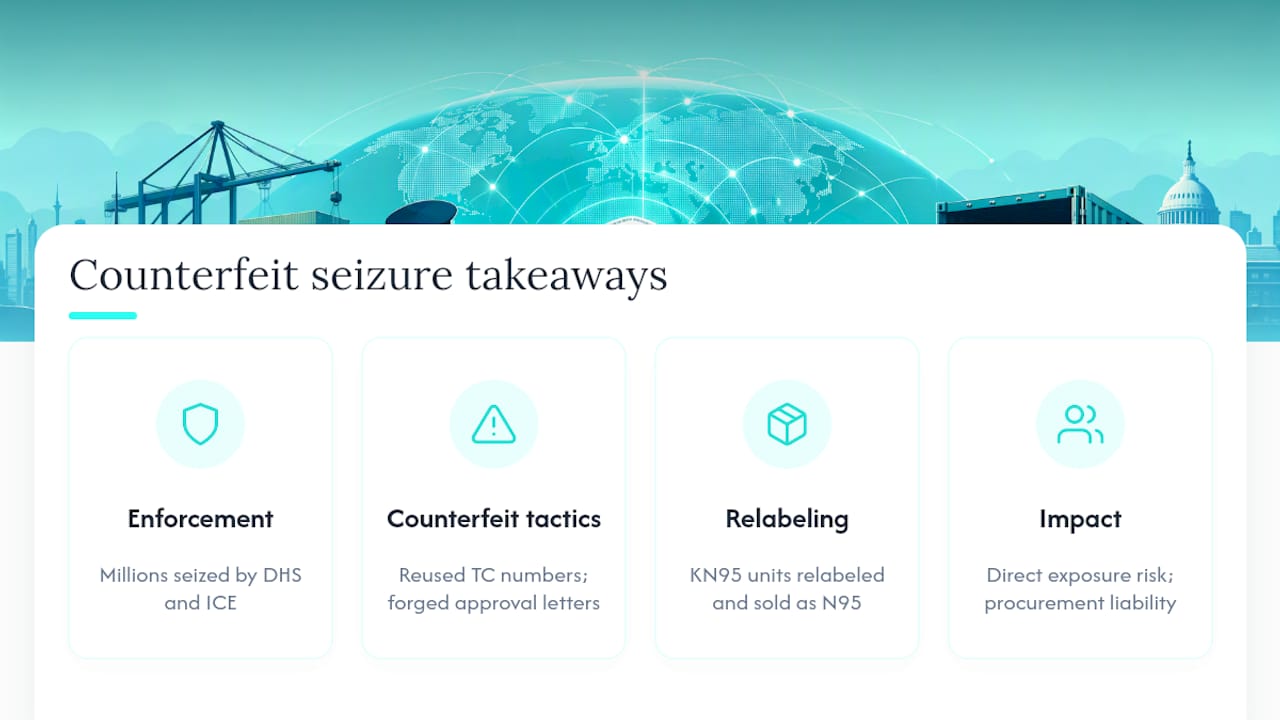
Federal enforcement has intercepted counterfeit N95s at real scale. DHS and ICE reported seizing millions of counterfeit 3M-branded N95 respirators headed toward hospital workers, and CBP’s own seizure reports document ongoing interceptions at U.S. ports of entry.
The tactics repeat: reused TC numbers on fake boxes, forged approval letters, KN95 units relabeled as N95, and packaging designed to mimic a known brand down to the font. For a hospital or clinic, that’s not an abstract fraud problem. It’s a direct exposure risk and a procurement liability the moment a bad lot reaches the floor.
Queens Surgical’s Approach to Verified PPE
Queens Surgical supplies medical-grade PPE focusing on alignment with NIOSH and regulatory standards. We request approval-holder documentation and lot-level traceability from suppliers, and support buyers who want to confirm those records. For procurement teams building out their own vetting process, our guide to sourcing wholesale medical equipment suppliers breaks down what documentation to ask for and why.
— QB
Get Verified N95s Without Guessing on Supplier Documentation
This article addresses procurement teams or individual buyers seeking to avoid marketplace listings without traceable TC numbers. Rather than chasing down documentation from unfamiliar sellers, it is best to work with suppliers who require approval-holder paperwork and lot traceability before listing products.
Our respiratory and PPE catalog covers N95s and related supplies for clinics, hospitals, and individual healthcare professionals, with bulk and wholesale options for facilities that need consistent, documented supply rather than one-off marketplace purchases. If your facility is building a receiving inspection process, our note on respirator shelf life covers the expiration checks worth adding to that checklist. Buyers can request supplier documentation and set up recurring orders to obtain shipments sourced from traceable supply chains.
This article is general information, not a substitute for advice from a qualified doctor. Consult a qualified healthcare professional about your own circumstances before acting on anything here.
Sources
FAQ
Are There Authentic KN95 Masks Available on Amazon?
Some Amazon listings sell genuine KN95s, but KN95 is a Chinese standard, not a NIOSH approval, so the usual N95 verification steps don’t apply to it. If filtration performance matters for your use case, an N95 with a verifiable TC number on the NIOSH CEL gives you a stronger guarantee than any marketplace rating.
Are All KN95 Masks Made in China?
Most KN95 masks are manufactured in China as part of that country’s domestic respirator standards, which are separate from NIOSH approval, and testing has shown inconsistent filtration performance among unaudited imported respirators, which is why NIOSH-approved N95s remain the safer default for U.S. buyers.
Where Can You Buy Authentic N95 Masks?
Buy directly from the manufacturer or from an established medical distributor that can provide TC numbers and lot documentation for the exact product you’re ordering. Queens Surgical’s respiratory and PPE catalog is built around that kind of documented sourcing for both individual buyers and healthcare facilities.
Which N95 Masks Are Made in the USA?
Several NIOSH-approved manufacturers produce N95 respirators domestically, but “Made in USA” isn’t itself a substitute for checking the TC number against the NIOSH Certified Equipment List. Country of origin doesn’t guarantee approval status, and the reverse is also true: many legitimate NIOSH-approved respirators are manufactured overseas under audited supply chains.
What’s the Fastest Way to Report a Suspected Counterfeit N95?
Email ppeconcerns@cdc.gov with photos of the mask and packaging, the TC number if visible, the manufacturer name, and the purchase URL or seller information, following the checklist in NIOSH’s fact sheet. If you suspect large-scale smuggling, also flag it to CBP through its public seizure reporting channels.
Recommended
Comments