Medical Glove Material Types Explained for Procurement
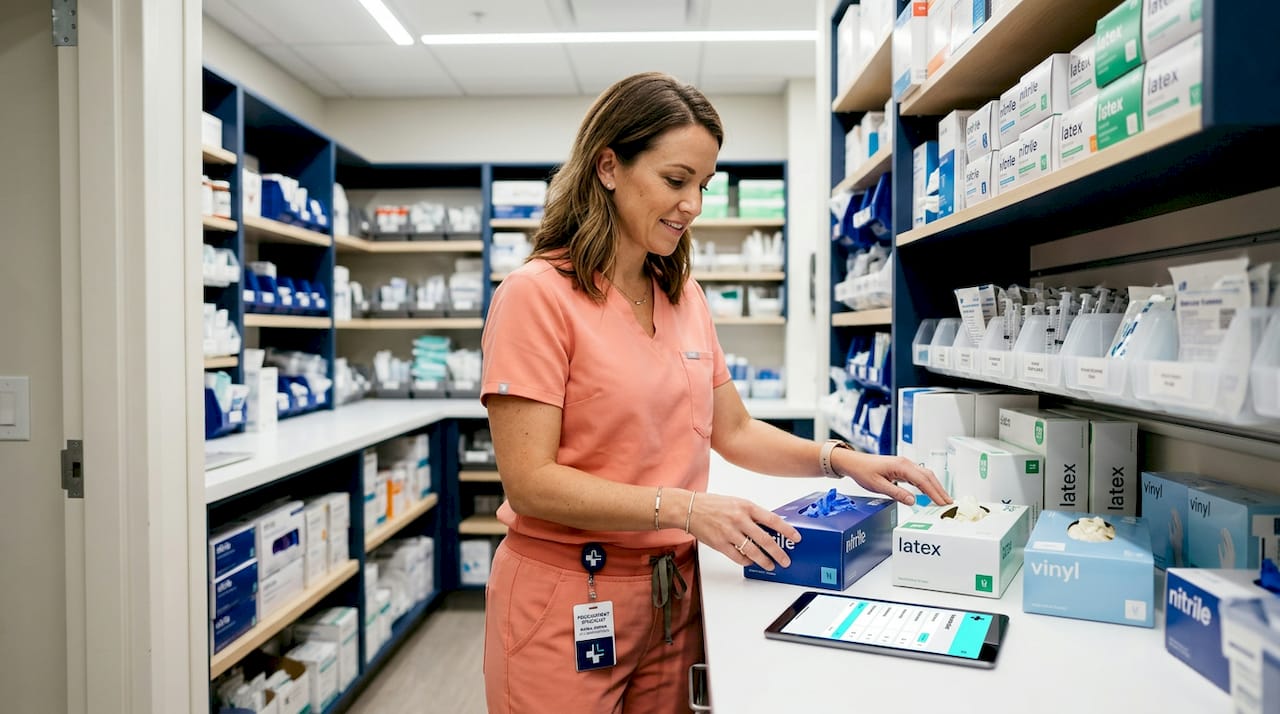
Most procurement managers have experienced this: you place a large glove order, staff starts using them, and within weeks you’re fielding complaints about fit, allergic reactions, or chemical breakthrough. Getting medical glove material types explained clearly before you buy is not a formality. It’s the difference between a safe clinical environment and a costly mistake. This guide breaks down every major glove material used in healthcare today, covering performance properties, allergy profiles, regulatory benchmarks, and the real-world criteria that should drive your purchasing decisions.
Table of Contents
Key takeaways
Point | Details |
Nitrile dominates the market | Nitrile holds over 53% of the disposable glove market due to superior strength and chemical resistance. |
Latex carries real allergy risk | Type I latex allergy affects 8 to 12% of healthcare workers, requiring careful procurement screening. |
Vinyl suits low-risk tasks only | Vinyl gloves have poor tensile strength and degrade after disinfection, making them unsuitable for clinical procedures. |
AQL is a batch stat, not a guarantee | AQL measures lot quality, not individual glove protection. Never buy on AQL alone. |
Certifications are non-negotiable | ASTM standards and FDA 510(k) clearance are the minimum threshold for any glove entering a clinical setting. |
Medical glove material types explained
Understanding what each glove is made from tells you nearly everything about how it will perform. The five major materials you will encounter in healthcare procurement are nitrile, latex, vinyl, neoprene, and polyisoprene. Each has a distinct origin, chemical composition, and clinical use profile.
Nitrile is a synthetic rubber derived from acrylonitrile and butadiene. It offers outstanding puncture resistance and holds up against a broad range of chemicals. Nitrile now accounts for 53.10% market share of disposable medical gloves globally, and that number keeps climbing.
Latex comes from the Hevea brasiliensis rubber tree. It delivers exceptional tactile sensitivity and elasticity, which is why surgeons historically preferred it. The tradeoff is a real allergy risk tied to naturally occurring rubber proteins.
Vinyl is made from polyvinyl chloride (PVC) combined with plasticizers. It is the least expensive option and the weakest. Suitable only for tasks with minimal exposure risk, it has no place in procedures involving blood, body fluids, or hazardous chemicals.
Neoprene is a synthetic rubber with strong chemical resistance and good elasticity. It sits between nitrile and latex on the cost spectrum and is frequently used in surgical settings as a latex alternative.
Polyisoprene is a synthetic version of natural rubber latex, engineered to eliminate the allergenic proteins while preserving the feel. It commands a premium price and is used primarily in surgical gloves.
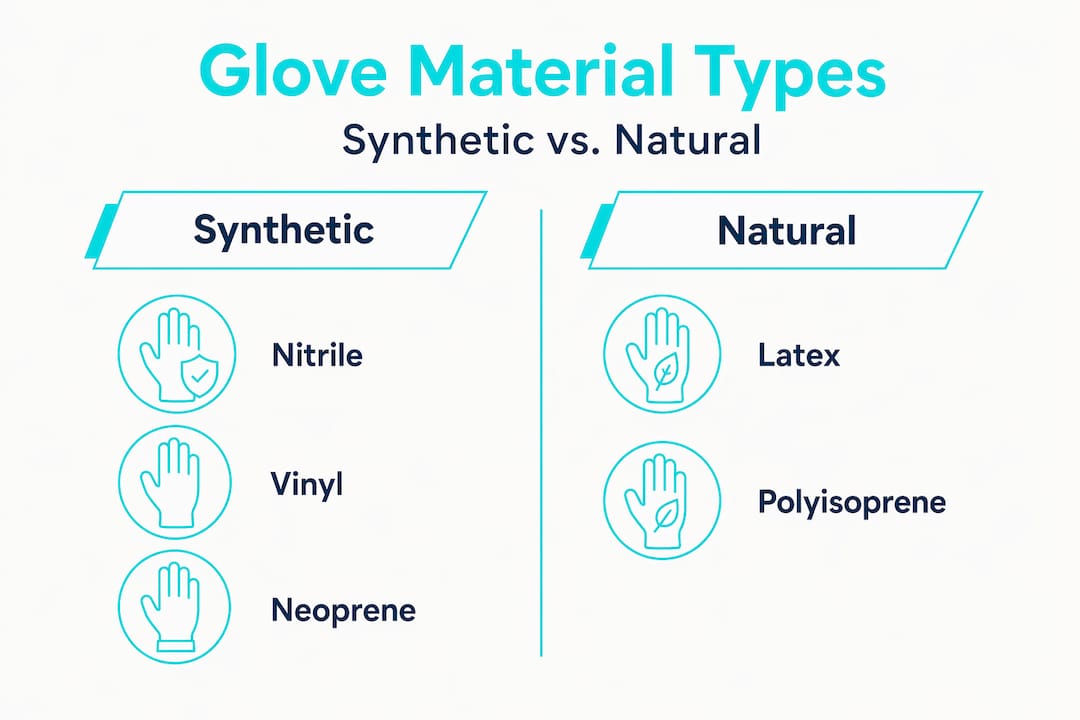
Material | Tactile sensitivity | Chemical resistance | Allergy risk | Relative cost |
Nitrile | Good | Excellent | None | Moderate |
Latex | Excellent | Good | High | Low to moderate |
Vinyl | Poor | Low | Minimal | Very low |
Neoprene | Very good | Very good | None | High |
Polyisoprene | Excellent | Good | None | Very high |
Latex gloves: performance, allergy risks, and standards
Latex remains the gold standard for tactile feedback. Surgeons performing fine suturing or delicate dissection often cite latex as irreplaceable for feel. The elasticity allows the glove to conform tightly without restricting movement. These are real clinical advantages, not marketing claims.
The problem is the allergy profile. Latex proteins trigger Type I hypersensitivity reactions in 8 to 12% of healthcare workers. Type I is an IgE-mediated response that can escalate from contact urticaria to anaphylaxis. For facilities with known sensitized staff or patients, latex gloves require a risk assessment before you stock them.
Regulatory compliance for latex gloves centers on:
ASTM D3577: The standard for rubber surgical gloves, covering dimensions, tensile strength, and leak testing.
ASTM D5252: Used for low-protein and ultra-low-protein certification, requiring protein content below 50 µg/dm² via centrifugal washing and rigorous testing.
FDA 510(k) clearance: Required for all gloves classified as medical devices in the U.S.
One critical safety note: powdered latex gloves were banned in U.S. healthcare in 2016 due to airborne protein aerosolization. If a supplier is still offering them, that is an immediate disqualification. Stock powder-free only. High-quality latex gloves must meet ASTM D3577 and D5252 to verify low-protein content and structural integrity.
Pro Tip: Always request a Certificate of Analysis (CoA) from your latex glove supplier. The CoA should specify protein content per ASTM D5252 and confirm powder-free status. If a supplier cannot provide this document, source elsewhere.
Latex gloves are still appropriate for surgical procedures in facilities that have screened staff and patients for latex sensitivity, and where their tactile advantages justify the risk management overhead.
Nitrile gloves: chemical resistance, allergy safety, and clinical dominance
Nitrile has moved from a latex substitute to the preferred choice in most clinical environments. The reason is simple: it outperforms on nearly every safety metric without the allergy liability.
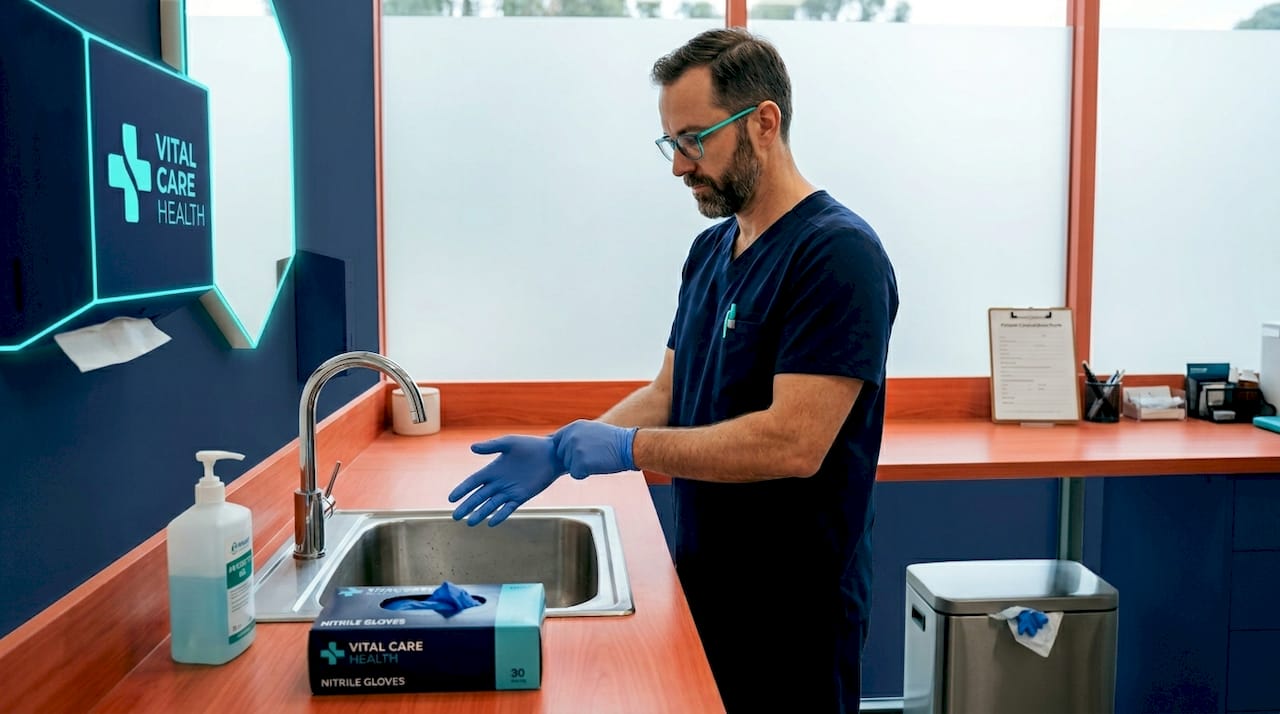
Nitrile provides 3 to 5 times higher puncture resistance than latex and delivers superior chemical resistance. For healthcare workers in contact with disinfectants, cytotoxic agents, or organic solvents, that matters. Nitrile gloves carry zero allergy risk, making them the safe default wherever latex sensitivity is a concern.
Key standards to verify when purchasing nitrile gloves:
ASTM D6319: Covers nitrile examination gloves for medical use, specifying tensile strength, elongation, and integrity requirements.
ASTM D6978: The specific certification required for chemotherapy drug resistance. Any facility handling cytotoxic drugs must stock ASTM D6978-certified gloves. This is mandatory, not optional.
FDA 510(k) clearance: Again, required for all examination and surgical gloves sold in the U.S.
The strongest applications for nitrile include:
Emergency department and trauma settings (high puncture risk)
Oncology units and pharmacy compounding areas (chemotherapy handling)
Infection control procedures (bodily fluid exposure)
Any setting where staff latex sensitivity has been documented
Pro Tip: Always specify powder-free nitrile. Powdered gloves, regardless of material, introduce contamination risk and can interfere with wound healing. Confirm powder-free status and ASTM D6319 compliance on every order before shipment.
For facilities managing procurement across multiple departments, nitrile is the easiest single-material strategy. You get consistency, allergy safety, and strong protection without building a separate management protocol for latex-sensitive staff. That operational simplicity has real value at scale. You can also pair nitrile gloves with latex-free protective apparel to build a fully latex-free clinical environment.
Vinyl and neoprene gloves: uses and limitations
Vinyl gloves are the product most likely to be over-purchased relative to what clinical environments actually need them for. They are inexpensive and that makes them attractive in bulk procurement budgets. But vinyl has a tensile strength of approximately 12 MPa and degrades noticeably after repeated disinfection cycles. That disqualifies them from anything involving prolonged or repeated exposure.
Where vinyl gloves are genuinely appropriate:
Non-clinical administrative tasks requiring basic hand hygiene
Food handling in non-patient areas
Brief, low-contact patient interactions with no blood or fluid exposure
Dry environments where chemical exposure is absent
Where they should never be used:
Any procedure involving blood or bodily fluids
Chemotherapy or pharmaceutical compounding
Surgical procedures of any kind
Extended patient contact
Neoprene sits at the opposite end of the performance spectrum. It has excellent chemical resistance and good elasticity, making it a legitimate surgical option for patients and staff with documented latex allergies. The fit and tactile properties are closer to latex than nitrile, which surgeons appreciate. The cost is significantly higher, so facilities typically reserve neoprene for surgical gloves rather than examination use.
A practical checklist for deciding between vinyl, neoprene, nitrile, or latex based on task risk:
High biological exposure risk: Nitrile or latex (confirm allergy status)
High chemical exposure risk: Nitrile (ASTM D6319 verified)
Surgical use with latex allergy present: Neoprene or polyisoprene
Low-risk non-clinical task: Vinyl is acceptable
Chemotherapy handling: Nitrile with ASTM D6978 certification only
Procurement considerations: compliance, AQL, and allergy management
Procurement decisions on medical gloves require you to look past price and box count. The regulatory baseline matters. ASTM standards and FDA 510(k) clearance are the minimum threshold for any glove entering a clinical setting. If a product lacks documented compliance, it does not belong in your facility regardless of cost.
One of the most misunderstood metrics in glove procurement is the Acceptable Quality Level. AQL is a statistical sampling benchmark, not a per-glove quality guarantee. An AQL of 1.5 means that in a batch of gloves, statistically 1.5% may be defective when tested at a defined confidence level. It does not mean every individual glove in the box is performing at that level. Suppliers who market on AQL alone without specifying ASTM compliance and FDA clearance are obscuring more than they are revealing.
AQL should never be the primary procurement criterion. It confirms batch sampling quality. ASTM standards and FDA 510(k) clearance confirm the glove performs as a medical device.
For allergy risk management, build a tiered protocol:
Screen new staff for latex sensitivity during onboarding
Maintain a latex-free floor stock in all units with known sensitized staff or patients
Document glove brand and lot numbers in case of adverse reactions to enable traceability
Review supplier documentation annually, including CoAs and updated certifications
Integrating glove procurement into a broader medical supply procurement strategy helps you catch compliance gaps before they become incident reports.
My perspective on glove procurement decisions
I’ve reviewed procurement failures across clinical settings, and the pattern is almost always the same. A facility switches to a cheaper glove, the documentation looks acceptable, and nobody runs a side-by-side comparison against the previous product. Then something goes wrong. A staff member develops a latex reaction. A glove tears during a blood draw. A chemotherapy nurse gets a chemical exposure.
What I’ve learned is that the glove conversation in procurement rooms defaults too quickly to unit cost. That’s the wrong starting point. Start with the procedure risk level. Then move to the material that covers it. Then negotiate on cost within that material category.
I’ve also seen AQL numbers used as a marketing shortcut to justify inferior products. A 1.5 AQL figure from a supplier who cannot produce ASTM test reports is a number with no clinical meaning. Insist on both.
The other thing I’d push back on is the assumption that nitrile is always the answer. It is the right default. But for a surgeon performing microsurgery, the tactile loss with nitrile versus polyisoprene is real and clinically significant. Match the material to the task. That’s the discipline that protects staff, patients, and your facility’s liability exposure.
— QB
Explore certified gloves at Queenssurgical
If this guide has clarified what you need, the next step is finding products that actually meet those specifications.
Queenssurgical carries a curated range of medical gloves built for clinical environments across the Americas, from exam rooms to operating theaters. Their nitrile examination gloves are powder-free and manufactured to ASTM standards, making them a strong default choice for most facilities. For a full view of glove options and current availability, browse Queenssurgical’s product catalog where detailed specs and bulk pricing are clearly listed. Whether you are sourcing for a single clinic or a multi-site health system, Queenssurgical offers the product depth and procurement support to match your needs.
FAQ
What is the most widely used medical glove material in 2026?
Nitrile is the dominant material, holding over 53% of the disposable medical glove market. Its combination of chemical resistance, puncture strength, and zero allergy risk makes it the preferred choice for most clinical applications.
What is the difference between latex and nitrile gloves?
Latex offers better tactile sensitivity and elasticity but carries allergy risks for 8 to 12% of healthcare workers. Nitrile is synthetic, hypoallergenic, and provides 3 to 5 times greater puncture resistance, making it safer for general clinical use.
Are vinyl gloves safe for medical procedures?
Vinyl gloves are appropriate only for low-risk, non-invasive tasks. Their low tensile strength and poor chemical resistance make them unsuitable for procedures involving blood, bodily fluids, or chemical exposure.
What does AQL mean on a glove box?
AQL is a batch-level sampling statistic, not a per-glove performance guarantee. An AQL of 1.5 means a controlled percentage of defects is statistically acceptable in a lot. Always verify ASTM compliance and FDA 510(k) clearance alongside any AQL claim.
Which glove material is required for chemotherapy drug handling?
Nitrile gloves certified to ASTM D6978 are mandatory for chemotherapy drug handling. This certification specifically verifies that the glove material resists permeation by cytotoxic agents.
Recommended
Comments