How Medical Wholesale Pricing Tiers Work for Buyers
- Qubit Technology
- Jun 5
- 10 min read

Medical wholesale pricing tiers are structured discount levels that determine what a buyer pays based on order volume, contract terms, and the pricing benchmark a supplier references. Understanding how medical wholesale pricing tiers work is the difference between paying list price and capturing the discounts your purchase volume actually earns. Procurement agents and supply chain managers who can read a tier schedule, identify the underlying benchmark, and negotiate service commitments will consistently outperform peers who treat pricing as a fixed input. This article breaks down the benchmarks, tier mechanics, and practical strategies that govern medical supply cost structures across the Americas.
How medical wholesale pricing tiers work: the core mechanics
Medical wholesale pricing tiers function by dividing buyers into price bands based on purchase volume, contract status, or both. A supplier sets a base price, then applies progressively larger discounts as buyers commit to higher order quantities or longer contract terms. The result is a schedule where Tier 1 might represent a 5% discount for orders above $5,000 per month, Tier 2 a 12% discount above $15,000, and Tier 3 a 20% discount above $30,000. Each threshold is a deliberate signal: the supplier is trading margin for volume predictability.
The commercial logic behind this structure is well established. Tiered pricing balances supplier margin protection with volume incentives for buyers, promoting predictable demand and reducing fulfillment costs. For a procurement manager, this means the tier schedule is not just a price list. It is a map of where the supplier’s interests and your organization’s buying power intersect.
Three parties typically shape how tiers are structured in medical supply chains: manufacturers, who set the foundational list price; wholesalers or distributors, who apply their own markup and tier logic; and Group Purchasing Organizations (GPOs) like Vizient or Premier, which negotiate contract-based tiers on behalf of member institutions. Understanding which party controls the tier you are buying from determines how much negotiating room you actually have.
What pricing benchmarks underlie wholesale tiers?
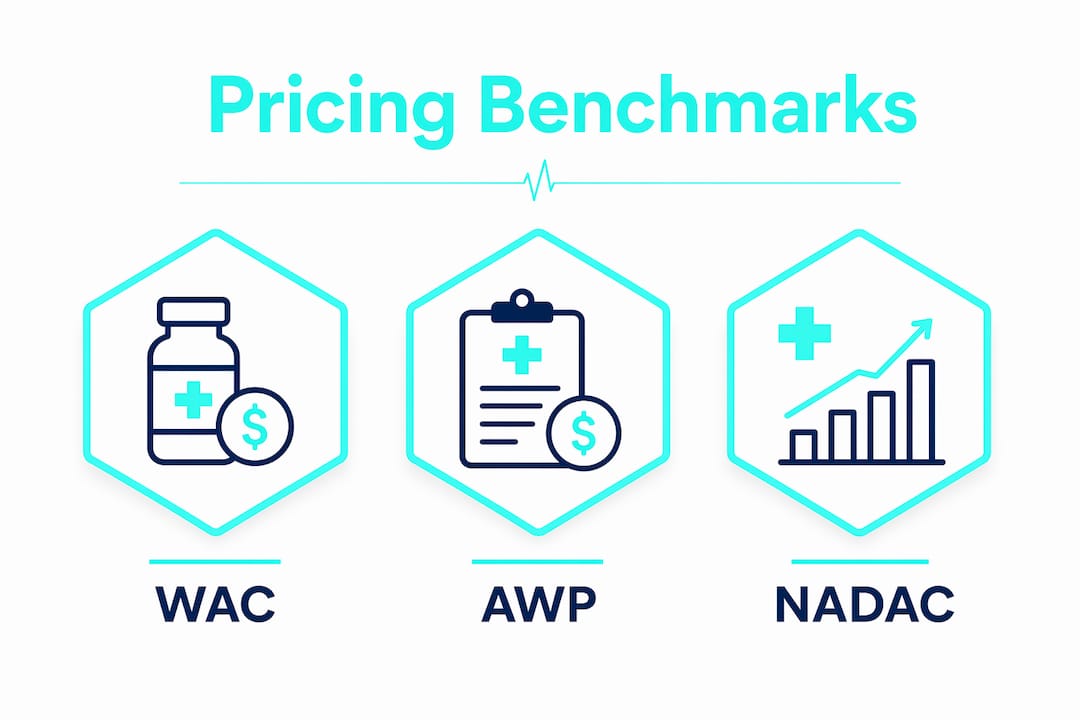
Every tier in a medical supply contract references a benchmark price. The three benchmarks you will encounter most often are Wholesale Acquisition Cost (WAC), Average Wholesale Price (AWP), and National Average Drug Acquisition Cost (NADAC). Each measures something different, and confusing them is one of the most expensive mistakes a procurement team can make.
WAC is the manufacturer’s published list price to wholesalers and serves as the starting point for pricing tiers. Think of it as the MSRP of medical products: a published reference that rarely reflects what anyone actually pays once negotiations and discounts are applied. Tier discounts expressed as “WAC minus 8%” are common in distributor agreements, but WAC itself can shift when manufacturers reprice products.
AWP sits approximately 20% above WAC and is sometimes called the “sticker price” of the pharmaceutical world. Industry insiders have nicknamed it “Ain’t What’s Paid” because it is an inflated benchmark that does not reflect real transaction prices. When a contract offers “AWP minus 15%,” the buyer may still be paying more than the actual market acquisition cost because the starting point is artificially high.
NADAC is the closest benchmark to what facilities actually pay, updated weekly by the Centers for Medicare and Medicaid Services (CMS) based on surveyed invoice costs across thousands of pharmacies. It provides the most transparent proxy for real acquisition cost and is the benchmark procurement teams should use to validate whether a tiered discount offer represents genuine savings.
Benchmark | What it measures | Typical use | Key limitation |
WAC | Manufacturer’s list price to wholesalers | Starting point for distributor tier discounts | Rarely paid in practice; subject to manufacturer repricing |
AWP | Published benchmark ~20% above WAC | Insurance reimbursement, PBM contracts | Inflated; discounts off AWP can mask true cost |
NADAC | Average pharmacy invoice cost, CMS-surveyed | Cost validation, Medicaid reimbursement | Covers pharmaceuticals; less applicable to devices |
Pro Tip: Before signing any tiered supply agreement, ask the distributor to express the tier discount in terms of NADAC or actual invoice cost, not just AWP minus a percentage. This single step can reveal whether the “discount” is real or cosmetic.
How volume-based and contract-based tiers function
Volume-based tiers and contract-based tiers are the two primary mechanisms you will encounter when analyzing medical pricing structures. They operate differently and require different negotiation strategies.
Volume-based tiers are automatic. The price you pay adjusts based on how much you order within a defined period, typically monthly or quarterly. No pre-negotiated contract is required. The supplier’s system detects your order total, applies the corresponding discount, and invoices accordingly. This model works well for facilities with predictable but variable demand, such as outpatient clinics that scale purchasing with patient volume.

Contract-based tiers require a formal agreement. A GPO like Vizient negotiates a master contract with a distributor, locking in specific price levels for member institutions regardless of individual order size. The institution accesses the contracted tier by referencing the GPO agreement at the time of purchase. This structure is common for high-value consumables like isolation gowns, surgical instruments, and diagnostic equipment. You can explore how these distributor agreement terms shape pricing commitments in more detail.
Here is how a typical tiered purchasing agreement is structured from negotiation to execution:
Baseline assessment. The buyer provides 12 months of purchase history to establish average monthly spend and identify which product categories qualify for tiered pricing.
Tier threshold negotiation. Both parties agree on the volume thresholds that trigger each discount level, along with the benchmark price each tier references.
Service-level attachment. Delivery timeframes, fill rate minimums, and backorder protocols are attached to each tier. Higher tiers typically carry stricter service obligations.
Contract execution. The agreement is signed with a defined term, usually 12 to 36 months, and includes provisions for benchmark price changes.
Performance review. Quarterly reviews compare actual purchase volumes against contracted thresholds to confirm tier eligibility and flag renegotiation opportunities.
Pro Tip: Negotiate the service-level obligations before finalizing tier thresholds. A Tier 3 discount means nothing if the supplier’s fill rate at that tier drops below 90% during peak demand periods.
What challenges arise when interpreting tiered pricing?
The complexity of medical pricing structures goes well beyond reading a discount schedule. Several factors can cause procurement teams to misestimate true acquisition costs, sometimes by significant margins.
The benchmark confusion problem is the most common source of error. Discounts expressed as “AWP minus X%” can mask real spend because AWP is inflated above actual transaction prices. A 20% discount off AWP may still leave you paying more than a 5% discount off NADAC, depending on the product category. Procurement teams that do not translate benchmark-based discounts into actual acquisition cost equivalents will consistently overestimate their savings.
Rebates and spread pricing add another layer of opacity. Pharmacy Benefit Managers (PBMs) and some distributors capture margin through the spread between what they pay and what they charge, a practice that is not always visible in the tier schedule itself. Net price calculation is genuinely complex: list benchmark prices often differ widely from actual acquisition costs due to hidden rebates, markups, and spread pricing practices. This means the tier discount you see in a contract may not represent the full picture of what the supply chain is extracting.
Regulatory changes also reshape tier structures in ways that affect both cost and service. Australia’s 2026 pharmaceutical wholesaler reform under the Pharmaceutical Benefits Scheme (PBS) is a useful reference point. Regulated tiered markups linked to ex-manufacturer pack prices came with delivery timing obligations, meaning the tier a product falls into directly determined how quickly a wholesaler was required to deliver it. This linkage between price tier and service obligation is a model that procurement managers in the Americas should watch, as similar regulatory frameworks may emerge.
Tier structure type | Common challenge | Procurement risk |
AWP-based discount tiers | Inflated starting benchmark | Overpaying relative to actual market cost |
Volume-based automatic tiers | Demand variability | Falling below threshold and losing discount mid-period |
Contract-based GPO tiers | Contract compliance complexity | Losing tier access if GPO membership lapses |
Regulated markup tiers | Regulatory change exposure | Tier repricing without advance notice |
Pro Tip: Request a line-item cost breakdown that separates the product price from distribution fees, delivery charges, and any administrative fees. Hidden fees embedded in tier pricing are common and negotiable.
How to optimize purchasing decisions using tier knowledge
Translating an understanding of medical pricing tiers into better purchasing outcomes requires three disciplines: volume forecasting, benchmark validation, and contract timing.
Volume forecasting is the foundation. Effective tier use requires procurement teams to forecast volumes accurately, understand contract terms, and negotiate service commitments linked to pricing tiers. Map your 12-month purchase history by product category and identify which categories are close to a higher tier threshold. Consolidating orders across departments or facilities to cross a threshold is often the fastest way to capture a better price without changing suppliers.
Benchmark validation protects your budget. Before accepting a tier offer, convert the quoted price to a NADAC or WAC equivalent and compare it against current market rates. This step is particularly important when renewing contracts, since benchmark prices shift and a tier discount that was competitive 18 months ago may no longer represent value.
Dynamic pricing models in B2B medical wholesale add responsiveness to traditional fixed tier structures by adjusting prices based on inventory levels, customer segments, and market demand. Understanding whether your supplier uses dynamic or fixed tier pricing matters for spend forecasting. Fixed tiers give budget certainty; dynamic tiers may offer better prices during low-demand periods but introduce variability.
Here are the best practices for contract evaluation and tier negotiation:
Anchor to NADAC or WAC, not AWP. Require all tier discounts to be expressed relative to a transparent benchmark.
Build in benchmark adjustment clauses. If WAC changes by more than 5%, the tier discount should adjust proportionally.
Consolidate purchasing categories. Combine gloves, masks, gowns, and instruments under one distributor agreement to reach higher tiers faster.
Tie service levels to tier access. If the supplier fails to meet fill rate or delivery obligations, the contract should allow tier renegotiation.
Review quarterly, not annually. Purchase patterns shift, and quarterly reviews let you catch threshold opportunities before they expire.
For a broader view of how wholesale purchasing benefits translate to hospital procurement decisions, the structural advantages go well beyond unit price alone.
Key takeaways
Medical wholesale pricing tiers deliver real savings only when procurement teams understand the benchmark each tier references, the volume thresholds that trigger discounts, and the service obligations attached to each price level.
Point | Details |
Benchmark selection matters | Always translate AWP-based discounts to WAC or NADAC equivalents before comparing offers. |
Volume forecasting drives tier access | Map 12-month purchase history to identify which categories are close to a higher discount threshold. |
Service levels are part of the price | Higher tiers often carry delivery and fill rate obligations that affect total supply chain value. |
Contract terms need quarterly review | Purchase patterns shift; regular reviews prevent losing tier eligibility or missing renegotiation windows. |
Dynamic pricing adds complexity | Understand whether your supplier uses fixed or dynamic tier pricing to forecast spend accurately. |
What I’ve learned about tier pricing that most guides skip
Most articles on medical wholesale pricing tiers focus on the discount math and stop there. After years of working through procurement decisions across medical supply categories, the most consistent source of overspending I have seen is not a bad discount rate. It is a mismatched benchmark.
A facility negotiates “AWP minus 18%” and believes it has secured a strong deal. But when you run the same product against NADAC, the effective price is still 12% above what a comparable buyer is paying under a WAC-referenced contract. The discount looks impressive on paper. The actual savings are not there. This happens because the benchmark is set before the negotiation even starts, and most procurement teams do not push back on it.
The second pattern I have seen repeatedly is treating tier pricing as a one-time event. A contract is signed, the tier is set, and no one revisits it until renewal. Meanwhile, purchase volumes shift, new product categories are added, and the facility is quietly paying Tier 1 prices on Tier 3 volume because no one ran the quarterly review. The service-level obligations embedded in tier pricing are equally overlooked. A supplier who consistently misses delivery windows at a higher tier is not delivering the value the contract promises, and that gap should trigger renegotiation, not just a complaint to the account manager.
My recommendation: treat your tier contract as a living document. Review it every 90 days against actual purchase data, benchmark price movements, and supplier performance. The procurement teams that do this consistently pay less and get better service than those who review contracts once a year.
— QB
Stock smarter with Queenssurgical’s tiered pricing

Queenssurgical supplies medical facilities across the Americas with high-quality consumables and equipment at competitive wholesale prices. Whether you are sourcing CPE isolation gowns for procedural use or disposable lab uniforms in bulk, Queenssurgical’s pricing structure is built for procurement professionals who need transparency and volume flexibility. The platform supports both individual facility orders and larger institutional purchasing, with clear product catalogs and weekly offers that align with how procurement teams actually plan. Contact Queenssurgical directly to discuss volume pricing, contract terms, and the tier options available for your facility’s supply needs.
FAQ
What is a medical wholesale pricing tier?
A medical wholesale pricing tier is a structured discount level that applies when a buyer meets a defined purchase volume or contract threshold. Higher tiers correspond to larger discounts, rewarding buyers who commit to greater purchase volumes.
How does WAC differ from AWP in tier pricing?
WAC is the manufacturer’s published list price to wholesalers, while AWP is a benchmark approximately 20% above WAC that does not reflect actual transaction prices. Tier discounts referenced to AWP often appear larger than they are because the starting benchmark is inflated.
Why does NADAC matter for procurement decisions?
NADAC is updated weekly by CMS and reflects surveyed invoice costs across thousands of pharmacies, making it the most accurate proxy for actual acquisition cost. Procurement teams use NADAC to validate whether a tiered discount offer represents genuine savings versus a discount off an inflated benchmark.
What is the difference between volume-based and contract-based tiers?
Volume-based tiers adjust automatically based on order quantity within a period, while contract-based tiers are pre-negotiated through distributor agreements or GPOs like Vizient or Premier. Contract-based tiers typically offer more price certainty but require formal commitment and compliance tracking.
How often should procurement teams review tiered pricing contracts?
Quarterly reviews are the standard for procurement teams that want to maintain tier eligibility and capture renegotiation opportunities. Purchase volumes shift, benchmark prices change, and supplier performance varies, all of which can affect the value a tier contract actually delivers.
Recommended
Comments