Sustainable Procurement: Sourcing Eco-Friendly Medical Supplies
- Qubit Technology
- 4 days ago
- 10 min read

Prioritize certified reusable and industrial-compostable products verified by Type I ecolabels and Practice Greenhealth listings over unverified “green” claims. Three moves to start this quarter: swap one high-volume disposable (isolation gowns are the easiest win) for a certified reusable version, run a short pilot on compostable medication cups or drapes, and add a certification clause to your next RFP requiring proof from Nordic Swan Ecolabel, BPI, or Queenssurgical’s own catalog documentation. None of this requires a full supply-chain overhaul to show results.
Key Takeaways
Certified reusable and industrial-compostable products, verified through Type I ecolabels and clinical pilot data, deliver measurable cost and waste reductions without compromising infection control.
Point | Details |
Verify before you buy | Check certifications like Nordic Swan Ecolabel and BPI against the issuing body’s own registry, not the vendor’s page. |
Pilot before you scale | Run a 30 to 60 day trial on one product category and confirm the disposal pathway actually works before rollout. |
Match compliance to use, not material | Regulated waste rules follow how an item was used clinically, not whether it’s compostable. |
Track five KPIs | Cost per use, TCO, waste diverted, CO2e per unit, and staff handling time tell the real ROI story. |
Queenssurgical for supply continuity | Its catalog of gowns, gloves, and consumables supports pilot-quantity orders while procurement teams test sustainable alternatives. |
Table of Contents
What Counts as Eco-Friendly Medical Supplies?
Not every product labeled “green” belongs in your formulary. The category breaks into a handful of real, verifiable options, and each one solves a different procurement problem.
Reusable surgical gowns and drapes. Made from tightly woven polyester blends, these are designed to withstand multiple wash cycles in most clinical laundering programs. They work best in high-volume OR settings where laundering infrastructure already exists.
Industrial-compostable isolation gowns and wear. Built from PLA or bio-based nonwovens, these break down in commercial composting facilities, not backyard bins. Confirm your facility has access to industrial composting before switching, or the “compostable” claim is meaningless.
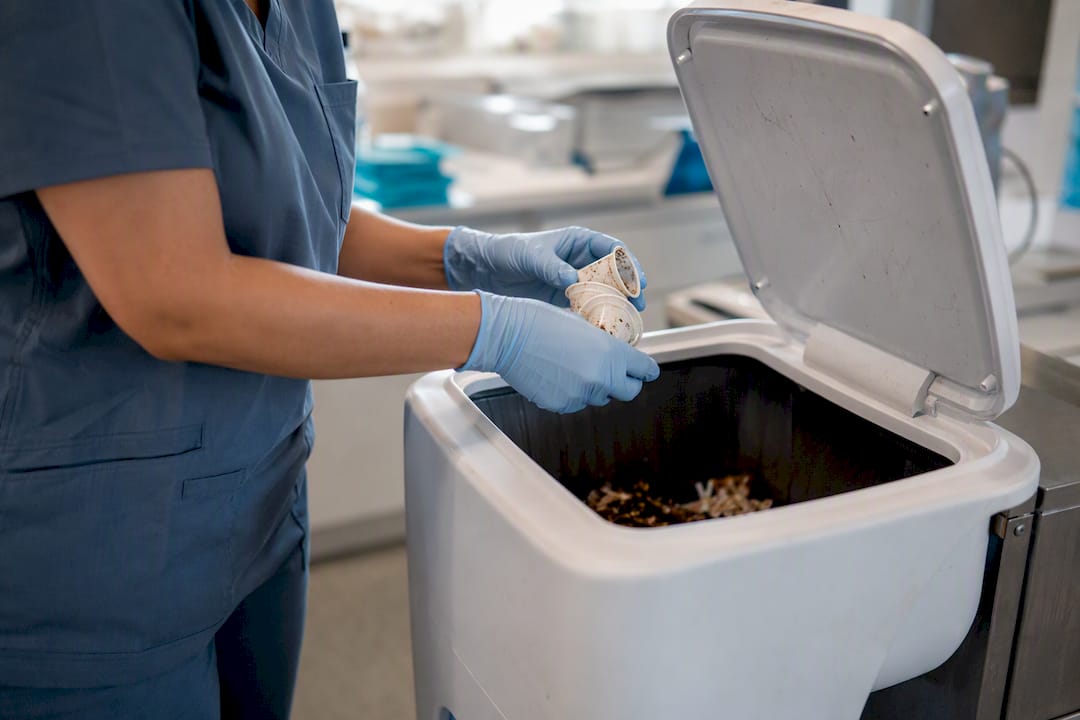
Biodegradable medication cups and sugarcane-based bioplastics. Common in outpatient and bedside care where reuse isn’t practical. These reduce petroleum-based plastic volume without adding a laundering burden.
Recycled-content packaging. Lower environmental footprint on the outer layer without touching sterility of the product inside. Easiest category to adopt with zero clinical risk.
Low-VOC table paper and drape alternatives. Matters most in enclosed procedure rooms with limited ventilation, where off-gassing from standard materials is a real air-quality factor.
The trade-off that trips up most procurement teams: reusables need laundering capacity and storage space, while compostables need a verified industrial composting stream. Skip either infrastructure check, and the “sustainable” swap just shifts the waste problem instead of solving it.
Which Certifications Actually Verify Sustainability Claims?
A logo on a product page means nothing unless you know what it’s actually testing for. Certifications split into two useful categories: whole-product lifecycle labels and material-specific compostability marks.
Type I ecolabels are the gold standard because they assess the entire lifecycle, not just one attribute. The Nordic Swan Ecolabel verifies resource efficiency, non-toxic materials, and reduced climate impact for medical devices made of plastic or silicone, using independent lifecycle assessment rather than a manufacturer’s self-declaration.
For disposables and packaging specifically, look for:
BPI (Biodegradable Products Institute) certification, which confirms industrial compostability under North American composting standards.
TUV Austria / OK Compost (Commercial), which certifies composting completion within roughly 180 days in a commercial facility. Not a home compost pile.
Green Seal, useful when evaluating low-VOC cleaning and institutional products tied to your facility’s supply list.
Cradle to Cradle Certified, a registry for products assessed on circularity and material health.
For finding vetted products in the first place, Practice Greenhealth’s labels and certifications guidance and the Greenhealth Approved product listings function as the industry’s primary clearinghouses. Verify credentials directly against the certifying body’s own registry, never against a vendor’s marketing page.
How Should Procurement Teams Source and Pilot These Products?
Sustainable procurement fails most often when a facility jumps from spec sheet straight to full rollout. A staged process catches problems while they’re still cheap to fix.
Define specs first. Set clinical requirements (barrier level, sterility, fluid resistance) alongside sustainability requirements (certification type, end-of-life pathway) before you contact a single vendor.
Build a shortlist and request documentation. Ask for material composition sheets, certification certificates, and end-of-life disposal instructions in writing, not verbally.
Run a small clinical pilot. A short duration pilot, involving one unit or department, with defined endpoints: infection rates, staff comfort feedback, and disposal-stream verification (did the compostable item actually reach a composting facility, or did it end up in landfill?).
Evaluate the pilot on hard numbers. Cost per use, waste volume diverted, and staff handling time, compared against your current baseline product.
Scale with contracts updated to match. Train staff on any handling differences and renegotiate waste-hauling contracts if you’re adding a compostable stream.
Build your RFP around specific vendor questions: full material composition, current certification documents (not expired ones), explicit end-of-life instructions, written disclosure on PFAS content, and evidence of supply continuity during shortages. A vendor comparison checklist built around these questions catches greenwashing before it reaches your shelves.
Pro Tip: Track your composting pilot’s actual disposal outcome, not just the purchase. A “compostable” gown that ends up in a landfill because your regional hauler doesn’t accept medical-adjacent compostables delivers zero environmental benefit and wastes the pilot’s data.
Does Going Green Compromise Infection Control?
It doesn’t have to, but only if you verify claims instead of trusting labels. Sustainability and infection control aren’t competing goals. They’re two separate testing requirements that both need documentation before a product reaches a patient.
Ask vendors for barrier-performance data tied to AAMI level classifications and biocompatibility references under ISO 10993 where relevant to the product category. Peer-reviewed research on healthcare waste consistently flags lifecycle assessment and infection-control trade-offs as the two factors clinical teams underweight when switching to reusables or compostables. Require independent test reports, not internal vendor data, for:
Barrier testing results specific to fluid and microbial penetration
Sterility claims backed by an accredited lab, not a marketing sheet
Reuse cleaning validation, if the product is a reusable gown or drape requiring laundering
For audits, keep three files current: the certification documents themselves, your pilot performance data, and your waste-stream contracts with disposal pathways spelled out in writing. Auditors and accreditation bodies want to see the paper trail, not just the outcome.
What Should Procurement Actually Measure?
Numbers convince budget committees. Vague sustainability language doesn’t. Track five metrics from day one of any pilot:
Cost per use, not sticker price. A reusable gown costing more upfront often wins on a per-wear basis.
Total cost of ownership (TCO), including laundering, storage, and replacement rate.
Waste volume diverted from landfill, measured in pounds or cubic feet per month.
CO2e per unit or per procedure, where your vendor can provide lifecycle data.
Staff handling time, since reusables that take longer to don or launder erode savings elsewhere.
A rough illustration: swapping single-use isolation gowns for a certified reusable version in a typical moderate-volume unit can show total cost of ownership improvement over time once laundering costs stabilize, though the exact break-even point depends heavily on your facility’s procedure volume and laundering contract rates.
Health care’s carbon footprint is substantial enough that procurement decisions carry real weight at the sector level. Health Care Without Harm’s climate footprint analysis makes the case that purchasing choices, multiplied across thousands of facilities, are one of the more direct levers a hospital system has for cutting emissions.
Where Should Buyers Source Verified Products?
Start with the registries built for this exact purpose, not a general web search. Practice Greenhealth listings and Greenhealth Approved product pages give you pre-vetted options with documentation already attached. Cross-check any biobased material claim against ISCC or ISCC PLUS feedstock traceability where the vendor claims a bio-based origin, and always request independent test reports rather than accepting a spec sheet at face value.
Ecolabel registries (Nordic Swan, Green Seal, C2C Certified) for whole-product or material verification
Practice Greenhealth and Greenhealth Approved for pre-vetted supplier and product lists
Direct vendor documentation requests: traceability records, certification renewal dates, and test reports
Queenssurgical fits into this sourcing map as a practical supply partner rather than a certification body. The platform’s comprehensive catalog spanning gloves, masks, gowns, and wellness products gives procurement teams a single point of contact for both standard clinical items and pilot-quantity orders of newer product lines, which matters when you’re testing a compostable alternative in one unit before a system-wide switch. For disposal-pathway context outside acute care, partner resources like Stop Oral Care’s breakdown of zero-waste disposal illustrate how compostable claims play out once a product actually leaves the building.
Pro Tip: Ask any prospective supplier, including Queenssurgical, for supply continuity data during shortage periods. A certified sustainable product that goes out of stock for six weeks forces a return to conventional disposables anyway, erasing the environmental gain.
How Do Regulations Affect Eco-Friendly Supply Choices?
Regulatory compliance doesn’t relax because a product is compostable or reusable. Every device or consumable that touches a patient still has to clear the same clinical thresholds, and sustainability claims add a second layer of scrutiny rather than replacing the first.
Reusable items entering a laundering cycle typically fall under stricter documentation requirements than single-use disposables, because reuse introduces a validation question single-use products never face: does this specific cleaning and sterilization protocol reliably restore the barrier properties on cycle 40 the way it did on cycle 1? Facilities need written reuse-validation data from the manufacturer, not an assumption based on the fabric’s original spec sheet.
Compostable materials introduce a different compliance wrinkle. A product can be legitimately industrial-compostable and still trigger a mismatch with your facility’s regulated medical waste stream if it was used in a procedure requiring red-bag disposal. Regulatory waste-handling rules generally govern based on how the item was used, not what it’s made of, so a compostable gown contaminated during a bloody procedure still gets treated as regulated medical waste in most jurisdictions. That single point trips up more sustainability pilots than any material-science question.
Building compliance checks into your procurement checklist upfront, rather than discovering the gap during a pilot, saves both budget and credibility with your infection-control committee. Keep certification files and disposal-pathway documentation together specifically because auditors will ask how a “green” product was actually handled after use, not just what it was made of.
What Do Real Procurement Pilots Show?
The pattern across facilities that have run structured sustainability pilots is consistent: the wins come from narrow, well-measured swaps, not sweeping formulary overhauls attempted all at once.
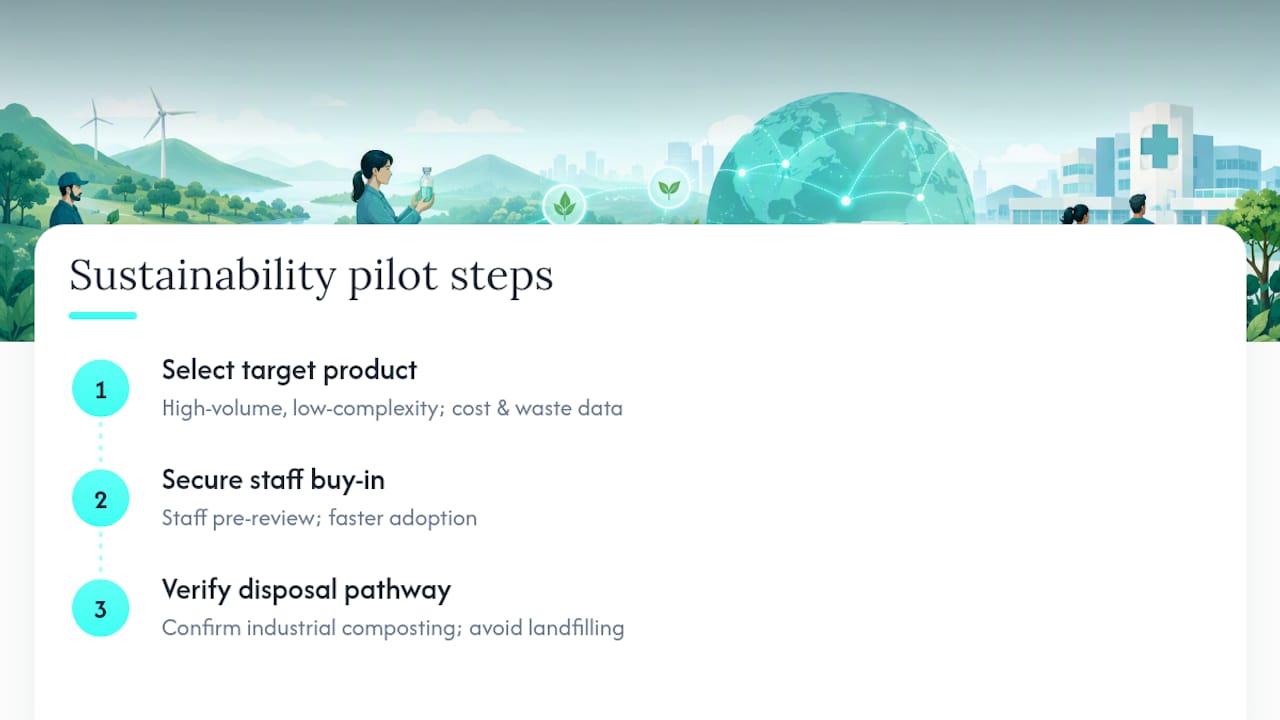
A typical successful pilot targets one high-volume, low-complexity product category first, isolation gowns or medication cups tend to work well, because the clinical stakes are lower than surgical instrumentation and the volume is high enough to generate meaningful cost and waste data within 30 to 60 days. Facilities that skip straight to complex categories like surgical drapes or sterile packaging without piloting simpler items first tend to see slower staff adoption and murkier ROI numbers, because too many variables change at once.
The recurring success factor isn’t the material science. It’s staff buy-in secured before the switch, not after. Units where nursing staff and infection-control leads reviewed the pilot data and disposal protocol in advance report smoother rollouts than units where a new gown simply showed up in the supply closet with a memo. The second recurring factor is disposal-pathway verification: pilots that confirmed their compostable stream actually reached an industrial composting facility, rather than assuming it did, caught contract gaps early and avoided the credibility hit of a “sustainable” program that quietly landfilled its own pilot products.
Facilities layering a consumables versus durable equipment lifecycle review into the pilot design tend to catch cost surprises, like unexpected laundering contract fees, before they undermine the whole business case.
A procurement officer’s honest priority list
If I had 90 days, I’d pilot one product, verify one certification chain against the issuing body directly, and rewrite one waste contract to match. Skip the formulary-wide rollout. Clinical buy-in and disposal verification matter more than the material itself.
A Practical Next Step for Your Procurement Team
The certifications and pilot frameworks above tell you what to verify. Where you actually order from matters just as much, and that’s where Queenssurgical earns its place in the conversation. Rather than juggling separate vendors for standard clinical gowns, gloves, and the newer sustainable lines you’re testing, Queenssurgical’s catalog lets you consolidate both under one account, with wholesale pricing for larger purchasing organizations and retail flexibility for smaller pilots.
That matters most during a compostable or reusable pilot, when you need small quantities fast without committing to a full-scale contract before your data comes in. If your pilot calls for a standard isolation gown as a baseline comparison against a compostable alternative, the CPE thumb loop isolation gown gives you that clinical benchmark in the same order as any newer sustainable line you’re testing. For bedside skin-integrity supplies that round out a wellness-focused pilot, the DynaShield skin protectant cream shows the depth of the catalog beyond disposables alone. Browse the current inventory and place a pilot-quantity order to see how a consolidated supplier fits your next procurement cycle.
Frequently Asked Questions
What exactly qualifies as eco-friendly medical supplies? Products that reduce environmental impact through reuse, industrial compostability, recycled content, or verified low-toxicity materials, confirmed by a recognized certification rather than a vendor’s own marketing claim.
Are compostable medical supplies actually safe for clinical use? Yes, when the specific product carries clinical validation (barrier testing, sterility data) alongside its compostability certification. Compostable and clinically safe are two separate claims that both need independent verification.
How much more do sustainable medical supplies typically cost? It varies by category. Reusable items often cost more upfront but win on cost per use over time, while recycled-content packaging usually carries little to no price premium. Run the total cost of ownership calculation before assuming a swap is more expensive.
Which certification should procurement trust most? Type I ecolabels like Nordic Swan offer the broadest lifecycle verification. For disposables specifically, BPI and TUV Austria OK Compost Commercial confirm actual industrial compostability, which matters more than a generic “eco” label.
Does switching to reusable gowns increase infection risk? Not when reuse validation data backs the specific cleaning and sterilization protocol your facility uses. The risk comes from skipping that validation step, not from the reusable format itself.
Sources
Nordic Swan Ecolabel — criteria for medical devices in plastic or silicone
Practice Greenhealth — Where to find sustainable products / labels and certifications
NIH / NCBI article on healthcare waste, lifecycle assessment and infection-control trade-offs
Health Care’s Climate Footprint — Health Care Without Harm (No Harm)
Recommended
Comments