2 Log Surface Gains From UV in Clinics: Evidence and Safe Steps
- Qubit Technology
- 22 hours ago
- 10 min read
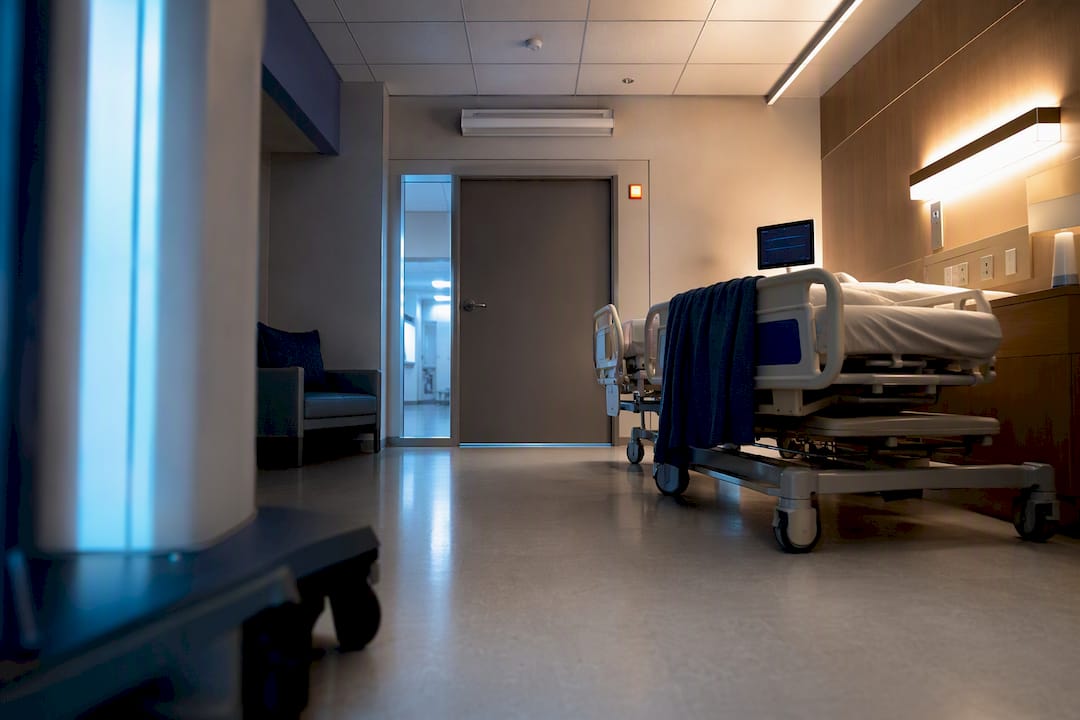
UV sterilization in clinics works as a bioburden reducer, not a standalone sterilant. It cuts environmental contamination when layered onto manual cleaning, hand hygiene, and PPE, using one of four device classes: conventional 254 nm UV-C, pulsed xenon, far-UVC at 222 nm, or UVC LEDs. Every deployment carries an occupancy or exposure control requirement, and no unit should run unvalidated.
TL;DR:
UV sterilization effectively reduces surface bioburden when layered with manual cleaning but does not guarantee a direct reduction in infection rates without proper deployment.
Pulsed xenon UV (PX-UV) has shown specific reductions in Clostridioides difficile infections in high-risk settings like ICUs, while far-UVC at 222 nm allows for use in occupied spaces but requires more real-world evidence.
UV dose validation varies significantly based on surface type, organism, and environmental factors, making standardized protocols unreliable across different clinics.
Proper safety controls, such as interlocks and signage, are essential for conventional UV-C devices in unoccupied rooms, although far-UVC may safely operate in occupied spaces with monitoring.
A comprehensive UV program must include precise room prep, validation, staff training, and ongoing maintenance, with budgets that account for equipment, validation supplies, and service agreements.
Table of Contents
What Device Types and Wavelengths Work Best in Clinical Settings?
Does UV Sterilization Actually Reduce Infections in Clinical Settings?
What Is the Step-by-Step Process for a UV Disinfection Cycle?
How Should UV Fit Into a Clinic’s Infection Prevention Program?
How Queenssurgical Supports Clinics Deploying UV Disinfection
What Device Types and Wavelengths Work Best in Clinical Settings?
The wavelength you pick determines whether the device runs while the room is empty or while people are still in it. That single distinction drives most procurement decisions in clinics right now.
Conventional 254 nm UV-C is the workhorse. Mobile whole-room units get wheeled into a patient room after discharge for terminal disinfection, while fixed upper-room UVGI installations run continuously above head height in corridors or waiting areas. The tradeoff: 254 nm UV-C damages the retina and skin at close range, so occupied-space use is off the table for the whole-room version.
Pulsed xenon (PX-UV) fires broad-spectrum UV in rapid bursts rather than a steady beam, which shortens cycle times considerably compared to continuous mercury-vapor units. It has shown measurable reductions in Clostridioides difficile infection rates in high-risk units like ICUs.
Far-UVC at 222 nm is the newest entrant, and its appeal is straightforward: at this wavelength, UV light does not penetrate past the outer dead layer of skin or the tear film of the eye, which opens the door to disinfecting spaces while staff and patients are present, though this safety profile is primarily supported by controlled or simulated settings rather than extensive real-world use. UVC LEDs offer portable, targeted disinfection for small equipment or high-touch surfaces, though current LED arrays still trail mercury-vapor lamps on output intensity and penetration depth.
Where each fits in practice:
Terminal cleaning after discharge: mobile 254 nm UV-C units, run room by room.
Continuous air disinfection in occupied corridors or waiting rooms: upper-room UVGI or far-UVC fixtures.
HVAC and duct disinfection: in-duct UV-C lamps paired with existing airflow systems.
Spot disinfection of equipment, keyboards, or shared devices: handheld UVC LED wands.
High-risk unit turnover (ICU, isolation rooms): PX-UV for its shorter cycle time.
Does UV Sterilization Actually Reduce Infections in Clinical Settings?
Systematic reviews are consistent on one point and split on another. UV-C reliably reduces environmental bioburden and functions as an effective adjunct to manual cleaning, measured across dozens of studies using surface cultures and ATP testing. Whether that translates into fewer actual infections is a murkier picture, and any clinic evaluating a purchase should understand why.
The gap between “cleaner surfaces” and “fewer infections”: reviewers consistently find strong evidence for reduced bioburden but describe HAI reduction data as mixed and dependent on how the device was deployed, not just whether it was used.
The clearest clinical outcome data comes from PX-UV in intensive care settings, where multiple facilities reported reductions in C. difficile infection rates after adding pulsed xenon cycles to terminal cleaning protocols. Far-UVC has a different kind of evidence base right now. In a simulated operating room study, ceiling-mounted 222 nm fixtures achieved 1.8 to 2.3 log10 reductions of MRSA contamination on surfaces after 16 hours. That is a real, sizable reduction, but it comes from a simulation, not a live clinical ward, so treat it as a strong signal rather than a settled clinical outcome.
The heterogeneity problem runs through nearly every review on this topic. Studies test different devices, different cycle lengths, different room geometries, and different endpoints (some measure colony-forming units, others measure infection rates directly), which makes cross-study comparison unreliable. Reviews of UVGI deployments point to this variability as the reason no consensus dose or protocol has emerged industry-wide.
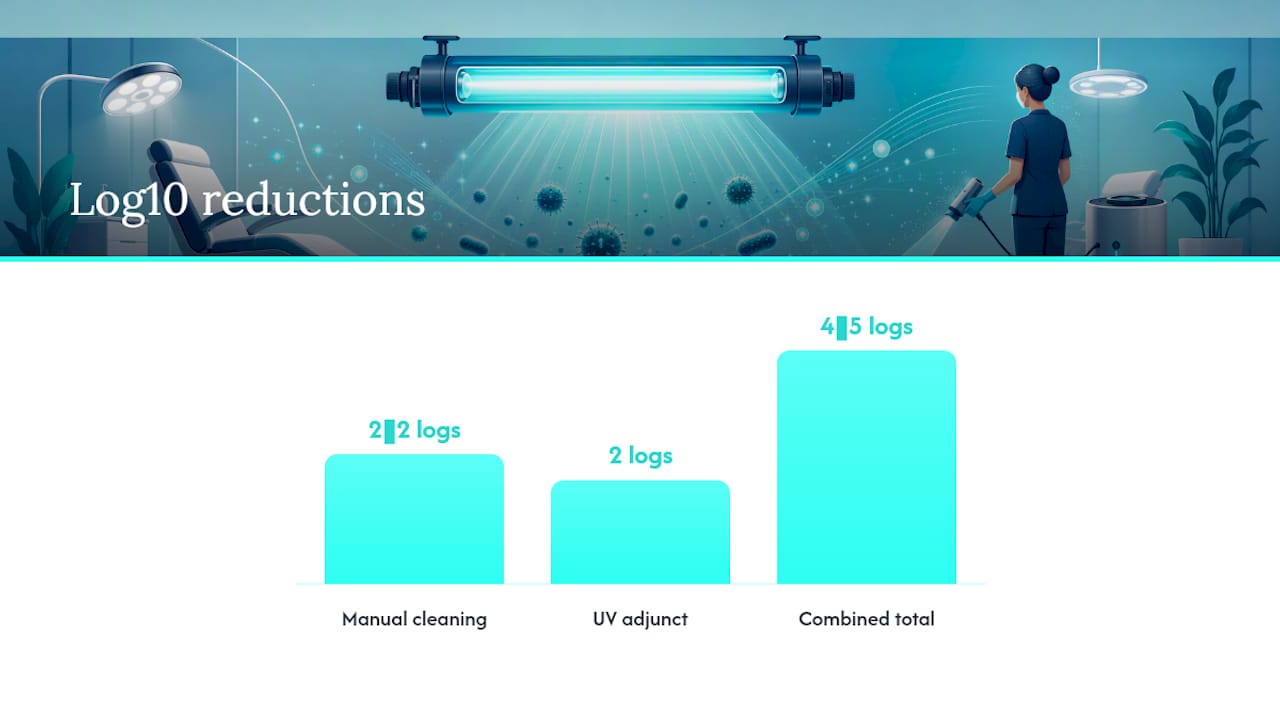
For clinic administrators, the practical translation is this: a 2 log10 reduction sounds impressive, and it is, but it means 99% of the tested organism was eliminated, not 100%. Log reductions compound with manual cleaning rather than replace it. A device that delivers 2 logs on top of cleaning that already achieves 2 to 3 logs gets you meaningfully closer to a clean baseline. A device running alone, on an unclean surface, gets you far less than the marketing suggests.
How Do You Keep Staff and Patients Safe During UV Cycles?
Conventional 254 nm UV-C poses real, well-documented risks: photokeratitis (essentially sunburn of the cornea) and skin erythema after even brief unshielded exposure. That risk profile is exactly why whole-room UV-C units are designed for empty-room use only, and why CDC/NIOSH guidance on germicidal UV emphasizes engineering and administrative controls over reliance on personal vigilance alone.
Minimum safety controls every clinic should have in writing:
Motion-sensor interlocks that shut the lamp off if a door opens mid-cycle.
Illuminated warning signage at every entry point, visible before the door opens.
A documented vacancy-verification step (visual room check plus a headcount) before activation.
Remote start and stop capability so the operator never enters an active cycle.
UV-blocking eyewear and skin coverage for any authorized re-entry during a paused cycle.
Far-UVC changes this calculus somewhat. Because 222 nm light can’t penetrate the outer skin layer or the eye’s tear film, early research suggests a meaningfully lower exposure risk, which is what enables occupied-space deployment in the first place. Still, most of that evidence comes from controlled or simulated settings rather than years of real-world occupied use, so pair any far-UVC rollout with occupational health monitoring rather than treating the safety profile as settled science.
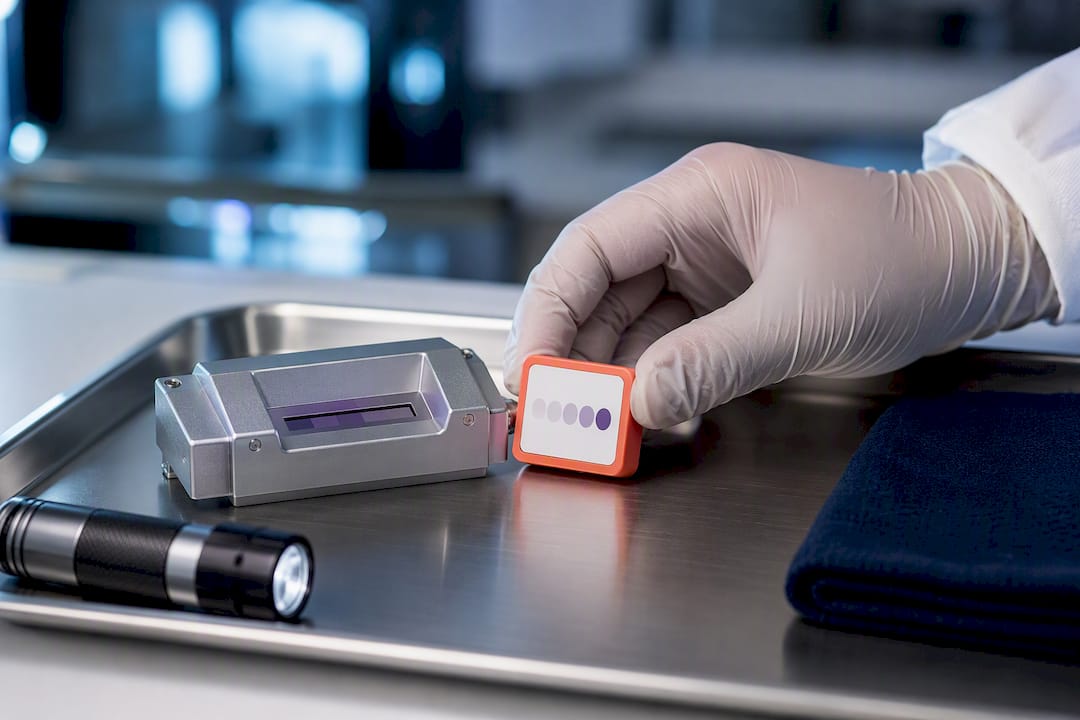
Ongoing monitoring matters as much as the initial install. Colorimetric dose indicators, UV output sensors, and a routine lamp inspection schedule catch degradation before it becomes a silent gap in coverage.
Pro Tip: Log every UV cycle the same way you’d log a sterilizer run: date, room, device ID, cycle duration, and operator initials. When an infection cluster shows up later, that log is what tells you whether UV coverage was actually part of the room’s disinfection history.
What Is the Step-by-Step Process for a UV Disinfection Cycle?
A UV cycle only works if the room prep matches the device’s assumptions. Skipping steps here is the most common reason clinics see disappointing results from equipment that tested well in the manufacturer’s lab.
Clear and prepare the room. Remove or bag linens, trash, and any organic soil, since UV can’t penetrate through debris. Shield light-sensitive materials, medications, and rubber or certain plastic items known to degrade under UV exposure.
Lock down access. Close and lock all doors, post signage, and confirm the room is empty with a visual sweep, not just a verbal check-in.
Position the unit (or units). Place the device to minimize shadowing from beds, carts, and cabinetry. Rooms with complex geometry or multiple alcoves often need two or three device positions run sequentially rather than one central placement.
Run the manufacturer-specified cycle. Follow the rated cycle time exactly. Cutting a cycle short to save time undermines the log-reduction numbers the vendor’s validation data is based on.
Document the run. Record cycle duration, device position(s), and any interruptions in the same log referenced above.
Manage adjacent airflow. Confirm HVAC settings haven’t been altered in a way that draws air from the treated room into an occupied space before verification is complete.
Verify before releasing the room. Use colorimetric dose indicators placed at pre-identified shadow-prone spots, and periodically confirm with ATP swabs or environmental cultures rather than trusting the “cycle complete” light alone.
Shadow zones deserve special attention during placement:
Underneath bed rails and behind headboards.
Inside bathroom alcoves and behind privacy curtains.
Backs of cabinet doors and drawer fronts left open during the cycle.
Floor areas directly beneath wheeled equipment.
How Is UV Dose Measured and Validated in Practice?
UV dose is measured in millijoules per square centimeter (mJ/cm²), and it’s the single most misunderstood number in vendor sales materials. A higher dose generally produces a greater log reduction, but the relationship depends heavily on the target organism, the surface material, and ambient humidity, which is exactly why no universal dose standard exists across devices or manufacturers.
For scale, compiled data on SARS-CoV-2 suggest a median dose of roughly 3.6 mJ/cm² to achieve 90% inactivation on surfaces, with values reaching 10 mJ/cm² depending on substrate and conditions. That range alone tells you why a single “kill time” claim printed on a spec sheet can’t be trusted across every room and every organism a clinic actually cares about.
Clostridioides difficile spores are the conservative benchmark most infection preventionists validate against, since they’re markedly more UV-resistant than vegetative bacteria or most enveloped viruses. If a device demonstrates an adequate log reduction against C. difficile spores, it’s a reasonable proxy for performance against easier targets.
NIST’s guidance recommends validating whole-room UV-C performance using multiple test carriers distributed widely throughout a simulated patient room to capture the effect of shadowing and geometry rather than relying on a single point measurement near the device.
Validation tools clinics should actually use:
Colorimetric dose indicator cards placed at multiple points, including known shadow zones.
Biological indicator carriers (following NIST’s carrier placement approach) for periodic, rigorous verification.
Independent third-party validation data from the vendor, not just in-house marketing claims.
Re-validate any time the room layout changes, after major device maintenance, and whenever a new device model gets introduced, even if it replaces an identical unit in the same room.
What Are the Biggest Limitations of UV Sterilization?
Shadowing is the single biggest reason UV cycles underperform their rated log reduction. Any surface the light can’t directly reach, behind equipment, inside drawers, under bed rails, gets none of the disinfection benefit regardless of cycle length. Multiple device positions and reflective wall or ceiling surfaces help close these gaps, but they never eliminate them completely.
Material and environmental factors compound the problem:
Certain plastics, rubber gaskets, and some upholstery fabrics degrade or discolor with repeated UV exposure.
High humidity can reduce UV-C germicidal efficiency against some organisms.
Heavy organic soiling blocks UV penetration entirely, which is why UV never substitutes for manual cleaning.
Porous or textured surfaces harbor organisms in crevices that line-of-sight UV simply can’t reach.
UVC LED arrays currently produce lower output intensity than mercury-vapor lamps, limiting effective range and cycle speed.
Pulsed xenon systems, despite fast cycles, still require multiple pulses at multiple angles in geometrically complex rooms.
How Should UV Fit Into a Clinic’s Infection Prevention Program?
UV technology belongs inside the infection prevention program, not bolted onto the side of it. It works as an adjunct that follows manual cleaning, hand hygiene compliance, and standard PPE protocols, never as a replacement for any of them.
The most defensible placements in a typical workflow: terminal cleaning after discharge from any room, targeted use in high-risk zones like ICUs and isolation rooms, and surge deployment during an active outbreak investigation.
Track these operational metrics to know whether the program is actually working:
Environmental bioburden trends via periodic ATP or culture sampling.
HAI rate trends over rolling quarters, not single-month snapshots.
Device uptime and the percentage of scheduled cycles that pass post-cycle validation.
Staff competency checks tied to documented training, refreshed annually at minimum.
Document every training session and every validation pass or fail. Surveyors and accreditation bodies will ask for this paperwork, and “we do it every time” isn’t an answer without a log behind it.
What Should Clinics Budget for UV Sterilization Equipment?
Capital purchase makes sense for high-volume facilities running multiple cycles daily; a rental or service-contract model often fits smaller clinics better, since it bundles maintenance and lamp replacement into a predictable monthly cost instead of a large upfront outlay.
Ask any vendor these questions before signing anything:
Can you provide independent, third-party validation data, not just internal testing?
What are the safety interlock specifications, and are they field-serviceable?
What’s the expected lamp or LED replacement interval, and what does that part cost?
What service response time is guaranteed under the contract?
What’s the real cycle time for a standard patient room, door to door?
Ongoing costs beyond lamp replacement include validation supplies (colorimetric cards, biological indicators) and any service contract fees, both of which should factor into a true cost-per-cycle calculation rather than sticker price alone.
Quick Checklist Before You Deploy UV in Your Clinic
Before any UV device runs its first live cycle, confirm the vendor has supplied independent validation data, documented safety interlocks, and a clear service commitment.
Independent log-reduction data, not vendor marketing claims alone.
Written vacancy and interlock procedures posted at the point of use.
A maintenance and re-validation schedule tied to calendar dates, not “as needed.”
A clear escalation path to infection prevention or occupational health for any exposure incident.
Decision Point | Rule of Thumb |
Room is occupied during cycle | Far-UVC only, with occupational monitoring |
Empty room, full terminal clean | Whole-room 254 nm UV-C |
Small equipment, keyboards, high-touch spots | Handheld UVC LED |
High-risk unit, fast turnover needed | Pulsed xenon (PX-UV) |
Any device, any room | Re-validate after layout change or major maintenance |
An Infection-Control Lead’s Take on Vendor Claims
Most UV sales pitches lead with a log-reduction number pulled from a lab that doesn’t resemble your actual rooms. The number isn’t fabricated, it’s just measured under conditions your facility won’t replicate. Ask for validation data collected under conditions close to your own room geometry, and re-test on-site before trusting any device to carry weight in your infection prevention program. Pair that skepticism with solid equipment evaluation resources and you’ll spot inflated claims faster than any spec sheet comparison will show you.
— QB
How Queenssurgical Supports Clinics Deploying UV Disinfection
UV cycles only deliver their promised reduction when the room around them is prepped correctly, and that means PPE, barrier products, and validation supplies stay stocked and ready between cycles. Queenssurgical supplies the consumables that make an adjunct UV program actually function day to day: isolation gowns, barrier sleeves, and disposable protective wear that protect staff during manual pre-cleaning and post-cycle re-entry.

Browse the CPE thumb loop isolation gowns and disposable face masks that round out a full infection-control bundle alongside your UV protocol, and check the cleaning, disinfection, and sterilization breakdown for the log-reduction benchmarks referenced throughout this guide. If your clinic is building out a UV program and needs a reliable supply partner for the PPE and consumables that support it, request a quote from our team and we’ll help you stock the right products for your setup.
This article is general information, not a substitute for advice from a qualified doctor. Consult a qualified healthcare professional about your own circumstances before acting on anything here.
Sources
Recommended
Comments