Stop Adhesive Failures: Surgical Drape Materials for Procurement Teams
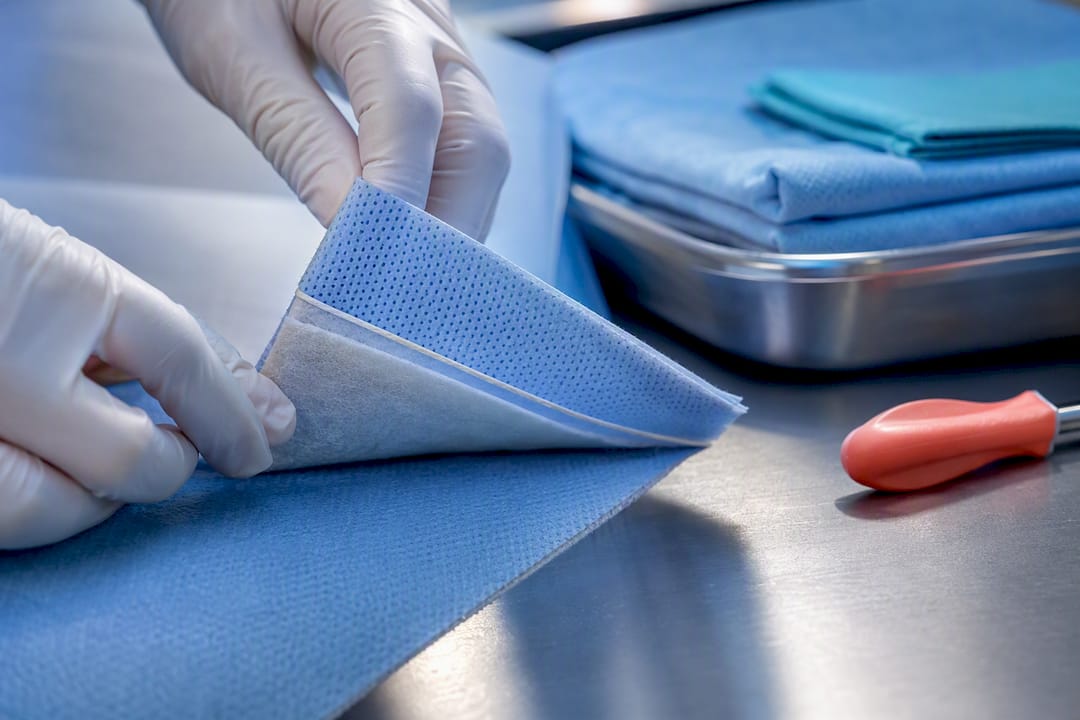
Surgical drape materials fall into four working categories: reusable woven textiles, nonwoven disposables like SMS, polyolefin films such as polyethylene and polypropylene, and specialty membranes like ePTFE or polyurethane for high-risk cases. The procurement decision that matters most isn’t picking a “best” material. It’s matching the drape’s barrier rating and adhesive system to the specific fluids, duration, and critical zone of the procedure at hand.
TL;DR:
Matching barrier ratings and adhesives to specific fluids, procedure duration, and critical zones is more important than choosing a particular drape material type.
Hydrostatic pressure, synthetic blood, and microbial penetration tests are key laboratory measures of barrier performance, but adhesive compatibility often causes clinical failures.
Polyolefin film drapes require specially formulated pressure-sensitive adhesives to prevent peel failure and fluid seepage during procedures.
Reusable drapes only maintain performance when laundering and sterilization cycles are validated; lifecycle environmental impact depends heavily on sterilization energy use versus single-use waste.
Proper application techniques, skin drying, correct storage, and supplier testing are critical operational factors that influence drape effectiveness and procedural safety.
Table of Contents
Surgical Drape Fabrics and Material Families Explained
Every drape on the market traces back to one of four base constructions, and each one solves a different clinical problem.
Woven, reusable textiles are still around for a reason. Tightly woven polyester or cotton blends can survive hundreds of autoclave and laundering cycles when the laundering process is properly validated, and many low-fluid procedures don’t need anything more aggressive. The catch is that barrier performance degrades with wear, so a facility running reusables without cycle tracking is gambling on fabric it can’t actually verify.
Nonwoven disposables dominate high-volume ORs. Spunbond and meltblown layers combine into SMS (spunbond-meltblown-spunbond) laminates that balance breathability with fluid resistance, which is why SMS constructions are common in single-use drapes across general surgery.
Film plastics like polyethylene and polypropylene deliver near-total fluid impermeability. They show up most often as incise drapes and fenestration reinforcement, usually laminated to a nonwoven backing for comfort and drape-ability.
Specialty membranes built from ePTFE or polyurethane earn their premium in orthopedics, cardiac, and other long, high-fluid cases where a single strike-through failure is unacceptable.
Woven textiles: reusable, cost-predictable, requires validated laundering
SMS nonwovens: standard disposable choice, good breathability-to-barrier ratio
Polyolefin films: highest fluid impermeability, usually paired with adhesive zones
ePTFE/PU membranes: premium barrier for extended or high-risk procedures
How Barrier Performance and Strike-Through Resistance Are Tested
A drape’s barrier rating isn’t a marketing claim. It comes from specific lab tests, and knowing what they measure changes how you read a supplier’s datasheet.
Hydrostatic pressure testing measures how much water column a fabric withstands before leaking, which approximates real strike-through resistance under surgical pressure. Synthetic blood penetration tests go further, checking whether a viral-sized challenge can pass through under simulated pressure and friction, the same logic behind medical gown barrier levels. Microbial penetration testing evaluates whether bacteria can migrate through the material when it’s wet, which matters most in the critical zone around the incision.
By the Numbers: 3M’s drape selection framework is built around six core principles: patient isolation, fluid barrier integrity, maintaining a sterile field, keeping the skin surface at the incision sterile, fluid control, and equipment draping. Every material choice should trace back to one of these six.
Two properties get overlooked in barrier discussions but matter just as much operationally:
Linting: fiber shed from woven or low-grade nonwoven drapes can contaminate the surgical field or interfere with implant sites.
Flammability: drapes near electrosurgical or laser equipment should meet recognized flammability standards (commonly referenced against CFR 16 Part 1610 test methods) to reduce OR fire risk.
Why Adhesives Fail on Polyethylene and Polypropylene Drapes
This is the failure mode purchasing teams underestimate most. Polyethylene and polypropylene are low-surface-energy (LSE) plastics, meaning their molecular structure gives standard adhesives almost nothing to grip. Disposable drapes built on these polyolefin films need specifically engineered pressure-sensitive adhesives rather than generic tape formulations, or you get edge lift and fluid seepage mid-procedure.
Adhesive families break down into a few practical options:
Standard acrylic PSAs — cost-effective, adequate on paper and fabric substrates, unreliable on LSE films.
Silicone-based adhesives — gentler on skin, often used where repeated repositioning is needed.
Engineered thin-film PSAs — formulated specifically to bond to polyolefins, the right call for incise drapes over film-based fenestrations.
Double-coated tapes — used to join dissimilar layers within a laminate, not typically the patient-contact adhesive itself.
Pro Tip: Never accept a supplier’s general adhesion claim at face value. Request lot-specific adhesion test data and run your own simulated peel test under OR temperature and humidity before signing a volume contract.
Disposable vs. Reusable Drapes: What the Lifecycle Data Shows
Single-use disposables win on consistency. Every drape comes off the line with the same barrier rating, with zero laundering variability to introduce risk. Reusable woven or ePTFE/PU systems can match that performance, but only when the laundering and sterilization cycle is documented and validated. A facility skipping that validation step is running blind on barrier integrity.
A life cycle assessment from the Chainge consortium compared representative reusable systems (ePTFE/PU blends) against disposable systems (PP film/SMS) across 1,000 uses, tracking manufacturing, laundering energy, sterilization, and landfill outcomes.
The findings cut against the intuitive assumption that “reusable always wins environmentally.” Lifecycle differences hinge more on laundering and sterilization energy draw than on raw material mass alone.
Disposables concentrate their environmental cost into single-use material waste
Reusables shift cost into water, energy, and chemical use across repeated laundering cycles
Tape and adhesive components on reusable drapes often need periodic replacement, adding a repair-cycle cost most budgets don’t track
Neither system is categorically greener. The right answer depends on your sterilization infrastructure, laundering contract terms, and actual utilization volume.
A Procurement Checklist for Evaluating Surgical Drape Materials
Run every new drape line through this sequence before it hits your standing order.
Match the procedure profile. Define the critical zone size, expected fluid volume, and procedure duration first. A two-hour dermatology case and a six-hour orthopedic case need different barrier ratings entirely.
Request material and adhesive test data. Ask for hydrostatic pressure results, synthetic blood test results, and adhesion data specific to the drape’s incise zone, not just the base fabric.
Confirm lot traceability and sterilization method. You need to be able to trace a failed batch back to its manufacturing lot and know exactly how it was sterilized.
Run a sample trial under OR conditions. Simulate the actual application, including skin prep chemistry, before committing to volume.
Review supply-chain resilience. Confirm the supplier can maintain consistent lot quality at your order volume, not just on a sample run.
A broader procurement framework for OR consumables can help standardize this process across other supply categories too.
OR Handling Tips That Affect Drape Performance
Material quality only gets you halfway. Application technique accounts for a surprising share of real-world drape failures.
Use one-handed delivery techniques with full-width liner handles to avoid tearing the liner during placement.
Dry the skin thoroughly after prep. Adhesive drapes and incise films bond poorly to residual moisture, regardless of adhesive quality.
Supplement high-tension areas (joints, flexion points) with surgical tape rather than relying on the drape’s edge adhesive alone.
Store drapes at stable temperature and humidity. Both film plastics and adhesive layers degrade faster than most staff assume when stored near heat sources or in high-humidity supply rooms.
Pro Tip: Check drape stock rotation like you would check any perishable. Adhesive performance and film flexibility both decline as shelf life expires, even in unopened sterile packaging.
How Queenssurgical Supports Drape Procurement Decisions
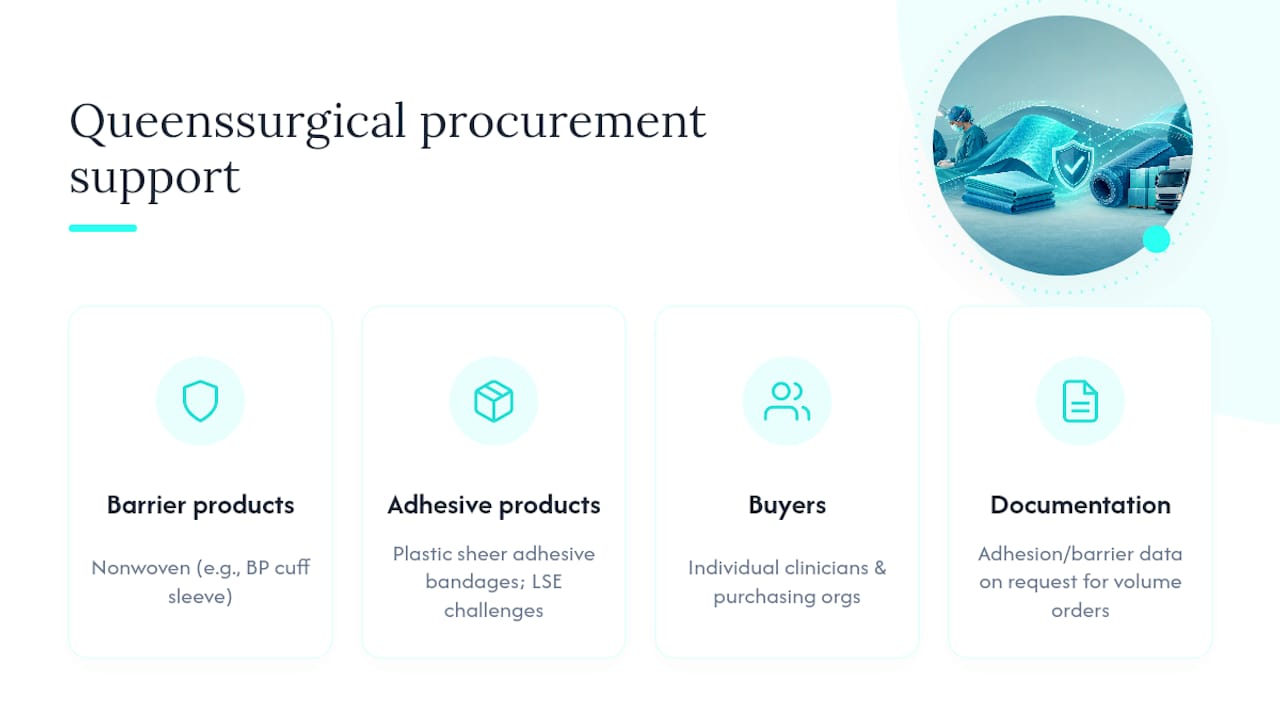
Queenssurgical stocks nonwoven barrier products, including items like the BP cuff barrier sleeve, alongside adhesive products such as plastic sheer adhesive bandages that illustrate the same LSE adhesive challenges covered above. The catalog serves both individual clinical buyers and larger purchasing organizations across the Americas, with product-level documentation available on request for facilities that need adhesion and barrier data before committing to volume orders.
What Actually Drives a Good Drape Decision
The industry spends a lot of energy debating which base material is “best,” and that’s the wrong fight. Woven, nonwoven, film, and membrane materials all perform well when matched correctly to procedure demands. The real point of failure, over and over, is the adhesive interface, not the substrate underneath it.
Conventional procurement guidance leans hard on barrier ratings and largely ignores adhesive compatibility until something lifts mid-procedure. That’s backwards. A drape with excellent hydrostatic pressure numbers is worthless if the incise adhesive can’t hold on a low-surface-energy film under OR humidity. Purchasing teams should weight adhesion test data and sample trials at least as heavily as the base barrier spec, maybe more.
On the sustainability question, skip the assumption that reusable automatically means greener. The lifecycle math depends on your sterilization infrastructure and laundering energy costs, not a simple material comparison. Facilities without a validated laundering program have no business defaulting to reusables on environmental grounds alone. Get the adhesive right, verify your lifecycle assumptions with real data, and the material family choice mostly takes care of itself.
— QB
Get Barrier and Adhesive Data Before You Order
Reading a datasheet only gets a procurement team so far. Queenssurgical gives clinical buyers and purchasing managers direct access to product-level documentation and sample requests, so you can confirm adhesion and barrier performance before committing to a standing order, not after a failure shows up mid-procedure.

Beyond drapes and barrier products, the catalog covers the adjacent supplies that round out a procedure’s protective setup, including the CPE thumb loop isolation gown for staff protection and DynaShield skin protectant cream for prepping skin ahead of adhesive drape application, which directly affects how well an incise film bonds. Both individual clinicians and larger purchasing organizations across the Americas can order at wholesale or retail volume. If your facility is evaluating a new drape line, request samples and current test documentation from Queenssurgical’s catalog before your next order cycle.
This article is general information, not a substitute for advice from a qualified doctor. Consult a qualified healthcare professional about your own circumstances before acting on anything here.
Sources
Recommended
Comments