Types of Wellness Program Medical Supplies: 2026 Guide
Selecting the right types of wellness program medical supplies is one of the most consequential decisions a healthcare coordinator makes. Get it wrong, and you’re looking at compliance gaps, wasted budget, and supplies that sit unused. Get it right, and you reduce absenteeism, protect staff, and build a program that actually delivers measurable health outcomes. This guide breaks down every major supply category, the compliance standards that govern them, and the selection criteria that separate effective programs from expensive ones.
Table of Contents
Key takeaways
Point | Details |
Compliance drives selection | OSHA and ANSI/ISEA standards define minimum supply requirements for workplace wellness programs. |
DME vs. disposables | Durable medical equipment must last at least 3 to 5 years; knowing the difference affects coverage and budget. |
Kit class matters | Class A and Class B first aid kits serve different workforce sizes and risk levels. |
Protective apparel is non-negotiable | Isolation gowns, face shields, and skin protectants are core wellness program supplies, not optional add-ons. |
Personalization improves ROI | Data-driven, personalized supply selection improves health outcomes more than generic wellness perks. |
1. Types of wellness program medical supplies: criteria for selection
Before you order a single item, you need a framework. The types of wellness program medical supplies you choose must satisfy regulatory requirements, match your workforce’s actual risk profile, and hold up under real-world use.
Start with compliance. OSHA requires adequate first aid supplies in any workplace not in close proximity to a medical clinic, referencing the ANSI Z308.1 2021 standard as the benchmark. That standard is not a suggestion. It defines minimum item counts, product classifications, and packaging requirements.
Beyond compliance, consider these evaluation criteria:
Durability and shelf life: Disposables have expiration dates. Durable medical equipment has a minimum useful lifetime. Mixing up these categories leads to either premature replacement costs or expired supplies sitting in kits.
Classification: Is the item durable medical equipment or a consumable? That distinction affects insurance coverage, replacement schedules, and procurement strategy.
User applicability: A pulse oximeter is useful in a clinical wellness setting. It may be overkill in a low-risk office environment. Match supplies to the actual population you serve.
Cost-effectiveness: Higher upfront cost on a durable item often beats repeated disposable purchases over a 12-month cycle.
Replaceability: Some specialty items require advance ordering of up to 30 days due to logistics processing times. Build that lead time into your procurement calendar.
Pro Tip: Before finalizing your supply list, audit your incident reports from the past 12 months. The supplies you actually needed tell a more honest story than any generic checklist.
2. First aid kits and essential workplace supplies
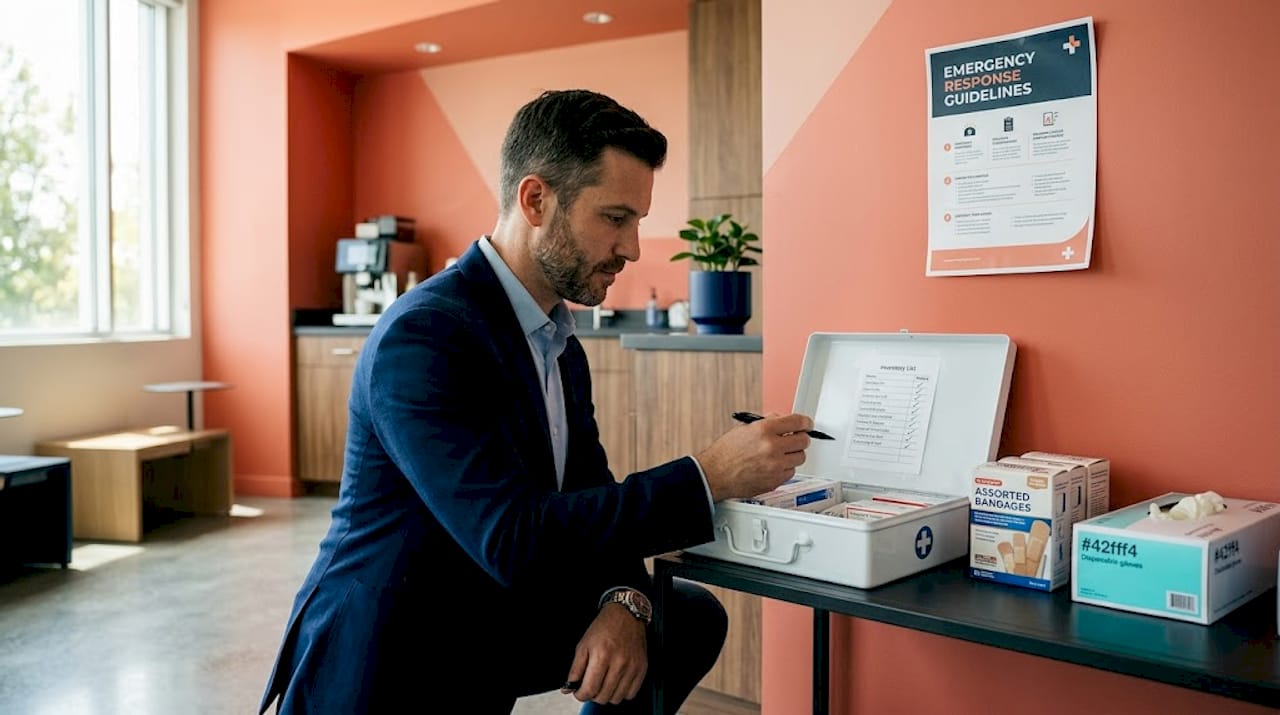
First aid kits are the foundation of any wellness program. But not all kits are equal, and choosing the wrong class for your workforce size creates both compliance risk and practical gaps.
Class A vs. Class B kits
The ANSI/ISEA Z308.1 standard divides workplace first aid kits into two classes based on risk level and workforce size.
Feature | Class A | Class B |
Target environment | Low-risk, general workplaces | High-risk or industrial settings |
Piece count (example) | 116 pieces for up to 10 employees | 94 pieces for up to 25 people |
Advanced trauma items | Not included | Includes CAT tourniquets, SAM splints |
Typical use | Offices, clinics, retail | Manufacturing, construction, healthcare |
A Class B kit for 25 people includes 94 pieces, while a smaller kit for up to 10 employees contains 116 pieces because the piece count reflects item variety and specificity, not just quantity. Class B kits also include advanced trauma items such as CAT tourniquets and SAM splints, which are directly relevant to healthcare workplace wellness programs where staff may encounter higher-acuity situations.
Core items you should verify are present in any compliant kit:
Burn dressings and burn cream
Antiseptic wipes and wound closure strips
Instant cold packs
Trauma pads
Nitrile examination gloves
Eye wash solution
CPR face shield
Pro Tip: Choose kits with wall-mountable waterproof cases and full-color first aid guides. These features improve actual usage rates during emergencies, not just storage compliance.
For a deeper look at what belongs in a compliant kit, the ANSI/ISEA standards overview at Queenssurgical is a practical reference.
3. Durable medical equipment supporting wellness programs
Durable medical equipment occupies a different category than consumables, and that distinction has real financial and operational implications for your program.
To qualify as DME, a device must last at least 3 years under normal use. Medicare’s standard pushes that threshold higher. Medicare Part B covers DME with patients responsible for 20% coinsurance after the deductible, and equipment replacement eligibility is tied to a 5-year useful lifetime.
CPAP machines are the most common DME category in employee and veteran wellness programs. The VA provides CPAP equipment and all replacement supplies at no cost to eligible veterans, with tightly regulated replacement intervals:
Supply item | Replacement interval |
Mask cushions | Monthly |
Tubing | Every 3 months |
Disposable filters | Twice per month |
CPAP machine | Approximately every 5 years |
These VA replacement schedules are not flexible. Coordinators managing veteran wellness programs need to track these cycles proactively. Missing a replacement window can shift costs to the patient unexpectedly.
Practical DME management advice:
Build a replacement calendar for every DME item in your program at the point of issue
Document the issue date and expected replacement date in your supply management system
For specialty items like custom prosthetic socks, plan 30 days ahead because these are not stocked by standard logistics centers
Audit DME inventory quarterly to catch items approaching end of useful life before they fail
Pro Tip: Tracking DME replacement cycles proactively prevents the most common and avoidable out-of-pocket cost surprises for both patients and programs.
4. Protective apparel and safety supplies
Protective apparel is not a pandemic-era afterthought. It is a permanent, non-negotiable category of wellness program supplies for any healthcare setting.
Isolation gowns are the first line of defense against cross-contamination in clinical wellness environments. CPE thumb loop isolation gowns, for example, provide full-coverage protection while allowing freedom of movement for staff conducting screenings, vaccinations, or wellness assessments. Face shields add a second layer of protection during procedures where splash risk exists.
Key protective supply categories to include in your program:
Isolation gowns: Fluid-resistant, disposable, and available in thumb-loop designs that stay in place during extended use
Face shields: Full-face coverage for high-exposure tasks; pair with masks rather than replacing them
Examination gloves: Nitrile preferred for latex-sensitive populations; size variety matters more than most coordinators realize
Surgical masks and N95 respirators: Tiered protection levels for different risk environments within the same facility
Biohazard waste bags: Sharps containers, red bag waste, and regulated medical waste disposal are infection control requirements, not optional
Skin protectant creams belong in this category too. Staff who wear gloves for extended periods are at real risk of contact dermatitis. A barrier cream applied before gloving reduces irritation and keeps staff comfortable and productive throughout a full shift.
Sourcing ANSI-compliant protective apparel from established distributors matters. Off-brand gowns that fail fluid resistance testing create liability exposure and undermine the wellness program’s credibility with the staff it is supposed to protect.
5. Diagnostic and monitoring equipment
Wellness programs that stop at first aid kits miss a significant opportunity. Diagnostic and monitoring tools turn a reactive supply kit into a proactive health program.
The most impactful monitoring tools for workplace wellness programs include:
Pulse oximeters: Non-invasive, fast, and highly effective for early detection of respiratory issues. Particularly relevant in post-COVID wellness programs where lingering cardiopulmonary effects remain a concern.
Blood pressure monitors: Hypertension is often asymptomatic. Regular on-site monitoring catches at-risk employees before a cardiac event does.
Glucose meters and lancets: Critical for programs serving populations with high diabetes prevalence. Pair with test strips and a clear replacement protocol.
Digital thermometers: Basic but high-utility, especially in programs that include infectious disease screening components.
Body composition scales: Relevant for weight management and metabolic health programs where tracking trends over time is part of the intervention.
The key with diagnostic equipment is calibration and maintenance. A blood pressure monitor that reads 10 points high is worse than no monitor at all because it generates false confidence. Build calibration checks into your quarterly supply audit.
6. Preventive health and hygiene supplies
Preventive health supplies are the category most often underfunded and underappreciated. They are also the category with the clearest direct link to reduced absenteeism and lower healthcare utilization.
Hand hygiene supplies sit at the top of this list. Alcohol-based hand sanitizer dispensers, antimicrobial soap, and paper towel systems are not glamorous, but wellness program supplies that prevent transmission of illness deliver measurable ROI. A Harvard meta-analysis found that functional wellness supplies and compliance-driven programs lead to meaningful reductions in both medical costs and absenteeism.
Vaccination and immunization supplies also belong here. Syringes, needles, alcohol prep pads, bandages, and sharps disposal containers are the infrastructure behind any on-site flu shot or wellness vaccination program. If your program offers immunizations, these supplies need their own dedicated inventory track.
Personal protective hygiene items round out this category. Think disposable gowns for patient-facing screenings, sterile drapes for minor procedure stations, and tongue depressors for throat assessments during wellness checks. These items are inexpensive individually but create a professional, safe environment that builds staff trust in the program.
7. Selection guidance and common pitfalls
Choosing between supply options comes down to four variables: cost, compliance, durability, and fit for your specific program population.
Supply type | Cost tier | Compliance requirement | Durability | Best for |
Class A first aid kit | Low | ANSI Z308.1 | Moderate | Small, low-risk workplaces |
Class B first aid kit | Moderate | ANSI Z308.1 | Moderate | Healthcare, industrial settings |
CPAP and DME | High upfront | Medicare/VA regulated | 3 to 5 years minimum | Chronic condition management |
Protective apparel | Low per unit | ANSI/OSHA | Single use | All clinical wellness settings |
Diagnostic equipment | Moderate to high | Varies by device | 3 to 7 years | Proactive health screening |
Prioritization strategy depends on program size and goals. A program serving 50 employees in a clinical setting needs Class B kits, diagnostic monitoring tools, and a full protective apparel inventory. A 10-person administrative office can operate effectively with a Class A kit and strong hand hygiene infrastructure.
The most common pitfall coordinators fall into is buying supplies based on price alone. A low-cost isolation gown that fails fluid resistance testing is not a bargain. A pulse oximeter without calibration support becomes a liability.
Pro Tip: Reserve premium wellness items like fitness trackers or high-end ergonomic tools for milestone recognition. Durable, functional supplies should be standard issue broadly, while premium items drive engagement when given selectively.
For practical sourcing guidance, the efficient sourcing tips at Queenssurgical offer a structured approach to procurement that healthcare coordinators can apply directly.
My take on getting wellness supply selection right
I’ve reviewed a lot of wellness program supply lists over the years, and the pattern I see most often is this: coordinators start with a template and never question it. They inherit a supply list from a predecessor, add a few items when something goes wrong, and call it done.
What I’ve learned is that the regulatory framework is actually your friend here, not a bureaucratic hurdle. When you understand ANSI Z308.1 and the DME classification rules upfront, you stop second-guessing every purchase. You have a standard to point to. That clarity saves money and prevents the reactive buying that inflates supply budgets without improving outcomes.
The supply category I see most consistently overlooked is skin protectants. Staff who develop contact dermatitis from extended glove use miss shifts, reduce their compliance with PPE protocols, and cost the organization far more than a case of barrier cream would have. It is a small, inexpensive item with outsized impact.
My other hard-won observation: shifting from generic perks to personalized, data-driven supplies is where programs start generating real ROI. Knowing that 30% of your workforce has hypertension risk changes your monitoring equipment priorities entirely. That kind of specificity is what separates a wellness program that gets renewed from one that gets cut.
— QB
Stock your wellness program with Queenssurgical
Queenssurgical carries the full range of medical supplies your wellness program needs, from ANSI-compliant first aid kits and diagnostic equipment to protective apparel and specialty wellness items. Whether you are outfitting a clinical wellness center or a multi-site employee health program, Queenssurgical offers competitive pricing on products that meet industry standards across the Americas.
The product catalog includes CPE thumb loop isolation gowns for clinical wellness environments and DynaShield skin protectant cream for staff comfort and PPE compliance. Queenssurgical serves both individual healthcare providers and larger purchasing organizations, with weekly offers that make budget-conscious procurement practical. Browse the full catalog and find the supplies your program is missing.
FAQ
What are the main types of wellness program medical supplies?
The main types include ANSI-compliant first aid kits, durable medical equipment like CPAP machines, protective apparel, diagnostic monitoring tools, and preventive hygiene supplies. Each category serves a distinct function within a wellness program.
What is the difference between Class A and Class B first aid kits?
Class A kits serve low-risk environments and general workplaces, while Class B kits include advanced trauma items like tourniquets and splints for higher-risk settings such as healthcare and industrial facilities. Both must meet ANSI/ISEA Z308.1 standards.
How often does durable medical equipment need to be replaced?
Medicare ties DME replacement eligibility to a 5-year useful lifetime, while VA replacement schedules vary by item. CPAP masks and cushions replace monthly, tubing every 3 months, and the machine itself approximately every 5 years.
Does OSHA require specific medical supplies in the workplace?
Yes. OSHA requires adequate first aid supplies under 29 CFR 1910.151(b) for workplaces not near a medical clinic, with ANSI Z308.1 2021 serving as the compliance standard for item counts and classifications.
Why are skin protectant creams included in wellness program supplies?
Skin protectant creams prevent contact dermatitis in staff who wear gloves for extended periods, reducing missed shifts and improving PPE compliance. They are a low-cost supply with direct impact on staff health and program effectiveness.
Recommended
Comments