Top types of medical products to retail for providers

Procurement managers and clinical directors across the Americas face a real tension when building a retail medical product assortment: patient needs are diverse, regulatory requirements are unforgiving, and the market keeps shifting under your feet. Understanding the types of medical products to retail is not just a purchasing exercise. It determines billing eligibility, compliance exposure, and whether your facility becomes a trusted care destination or a liability. This guide cuts through the noise with a structured look at the major product categories, the criteria that should drive your decisions, and the practical trade-offs every informed procurement leader needs to know.
Table of Contents
Durable medical equipment: Respiratory and mobility essentials
Over-the-counter kits and medical-grade personal care products for retail
Innovative medical devices reshaping retail with AI and mechanical barriers
Comparison table: Major types of medical products for retail
Choosing the right medical products to retail: Tailored recommendations
The unseen challenges and future of retail medical product selection
Key Takeaways
Point | Details |
Understand key selection criteria | Evaluating medical products requires knowing regulatory classifications, clinical endorsements, and integration potentials. |
Prioritize durable respiratory equipment | Oxygen devices and humidifiers make up nearly two-thirds of durable medical equipment orders due to high clinical demand. |
Leverage specialized OTC and personal care items | Medical-grade skincare and targeted OTC kits yield higher retail margins and meet evolving patient needs. |
Embrace innovative integrated devices | Products combining wearables and AI create adaptive solutions that differentiate healthcare retail offerings. |
Compliance prevents costly errors | Understanding FDA device classes and Medicare documentation rules is essential for legal retail operations. |
Key criteria for selecting medical products to retail
Before you add a single SKU to your inventory, you need a clear framework. Not every product that looks appealing on a supplier catalog belongs in your retail mix. The decision starts with understanding the rules that govern what you can legally sell, claim, and bill.
FDA device classification is the non-negotiable starting point. FDA device classifications determine the regulatory pathway a product must follow, which directly affects your legal exposure and permissible marketing claims. Class I devices carry minimal regulatory burden. Class II devices, which cover most medical equipment retail options like blood pressure monitors and surgical gloves, require premarket notification (510(k)). Class III devices involve the highest risk and the most rigorous premarket approval process.
For facilities retailing durable medical equipment (DME), CMS documentation requirements for Medicare billing are equally critical. Incomplete face-to-face encounter records or missing certificates of medical necessity can trigger claim denials and audits. Getting this wrong is expensive.
Beyond compliance, here are the criteria that separate strong retail medical products from weak ones:
Clinical endorsement. Products recommended by pharmacists, dermatologists, or relevant specialists carry built-in trust with patients and staff.
Reimbursement eligibility. Can the product be billed to Medicare, Medicaid, or private payers? This dramatically affects demand at the patient level.
Digital integration. Products that connect to apps or remote monitoring platforms extend clinical value and patient engagement.
Storage and shelf-life practicalities. Especially relevant for smaller clinics with limited storage capacity.
When evaluating your medical supply procurement strategy, rank these criteria by your facility’s specific context. A rural urgent care center has very different priorities than a 500-bed hospital system.
Pro Tip: Before committing to a new product line, request the manufacturer’s 510(k) clearance number or PMA approval letter. Verifying this yourself takes five minutes and eliminates a major compliance blind spot.
With these criteria in mind, let’s explore the major medical product types to consider for retail.
Durable medical equipment: Respiratory and mobility essentials
DME represents the backbone of medical supplies for retail in most clinical settings. These are products patients use repeatedly at home under medical supervision, which means demand is steady, reimbursement pathways are established, and clinical relevance is clear.
Respiratory devices lead the category by volume. Oxygen concentrators and humidifiers account for nearly two-thirds of all DME orders placed by providers, a figure that reflects aging patient populations and rising chronic respiratory disease rates across North America and Latin America. Pairing oxygen devices with respiratory standards-aligned accessories like non-rebreather masks and nebulizer kits increases per-patient value and supports treatment adherence.
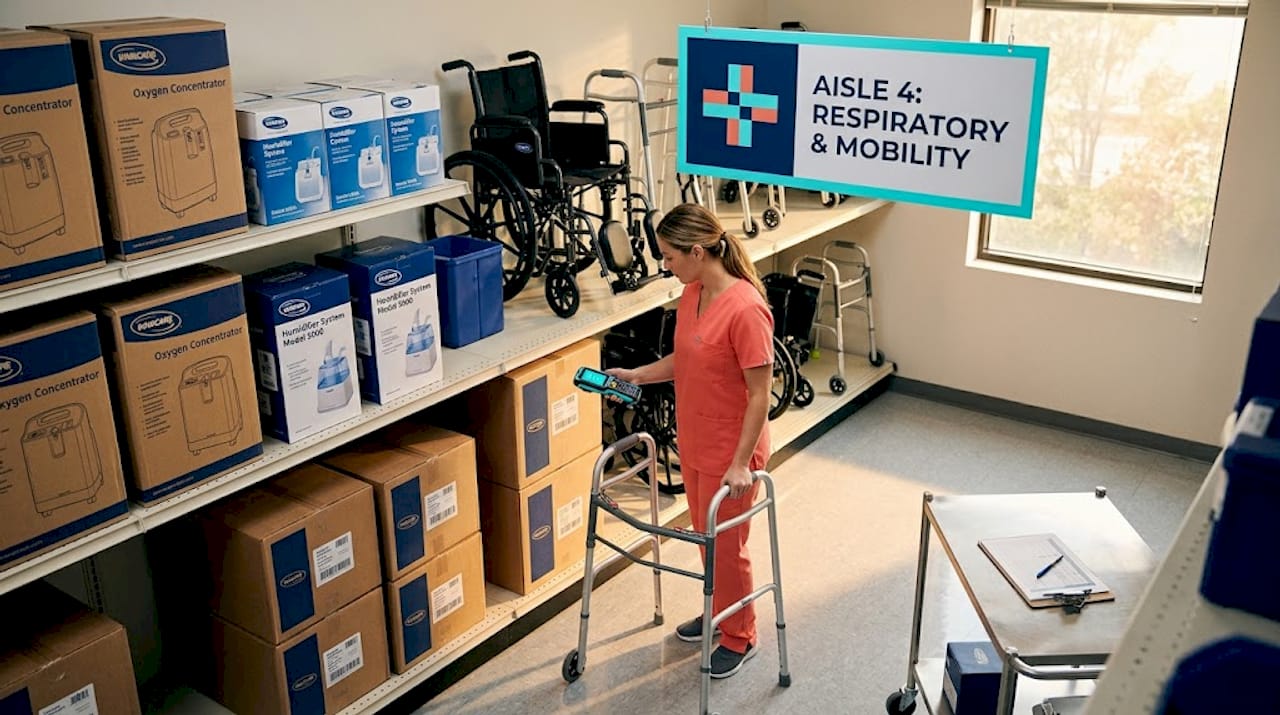
Mobility aids form the critical secondary tier. Hospital beds, wheelchairs, walkers, and transfer aids collectively address a patient population that is only growing. These products have lower turnover than consumables but generate meaningful revenue when properly bundled and billed.
DME Category | Clinical Use | Regulatory Class | Patient Demand |
Oxygen concentrators | COPD, sleep apnea, post-surgical recovery | Class II | Very high |
Humidifiers (medical) | Respiratory therapy, home care | Class II | High |
Manual wheelchairs | Mobility impairment, post-surgical | Class II | High |
Hospital beds (adjustable) | Home care, rehabilitation | Class II | Moderate |
Nebulizers | Asthma, COPD management | Class II | High |
Key retail considerations for DME:
CMS compliance rules require documented face-to-face encounters for most high-value DME items.
Suppliers must be enrolled as DMEPOS (durable medical equipment, prosthetics, orthotics, and supplies) suppliers with CMS to bill Medicare.
Bundling a non-rebreather mask or tubing set with oxygen equipment increases order value while improving clinical completeness.
Stocking DME well also signals to referring physicians that your facility is a capable care partner, not just a point-of-sale outlet. When you position yourself as a trusted medical supply source, referral volume for DME-related prescriptions tends to follow.
Pro Tip: Negotiate consignment arrangements for high-cost mobility items like power wheelchairs. This preserves cash flow while keeping your product range broad enough to serve diverse patient needs.
Next, we turn to consumer-facing over-the-counter medical products and personal care items that complement durable medical equipment in retail settings.
Over-the-counter kits and medical-grade personal care products for retail
The fastest-growing segment of healthcare products to sell at the clinic level is not equipment. It is the specialized OTC kit and medical-grade personal care category. These products offer higher margins, simpler stocking logistics, and a direct response to what today’s patients are actively seeking.
Specialized OTC kits and medical-grade personal care brands recommended by pharmacists and dermatologists are reshaping retail inventory strategies across healthcare settings. A UTI emergency relief kit launched at major retail chains is a textbook example: it bundles diagnostic strips, an analgesic, and hydration guidance in a single purchase, meeting an urgent need while commanding a premium price point.
The medical-grade skincare category operates on a different trust mechanism. Medical-grade skincare formulations earn their designation through ingredient purity and clinical-level concentrations, not formal FDA regulatory classification. Brands like CeraVe and La Roche-Posay have built dominant clinic-retail positions precisely because dermatologists actively recommend them by name during patient consultations.
Why this matters for procurement:
Products with documented pharmacist or dermatologist endorsement convert faster at point-of-sale because the recommendation is already embedded in the patient relationship.
High-margin OTC kits require minimal compliance infrastructure compared to DME, making them ideal for smaller clinics.
Bundling OTC kits with medicated topical patches or nutritional supplements extends basket size without adding logistical complexity.
The retail positioning for these products is straightforward: if a credentialed clinician in your facility is recommending it verbally, it should be available for purchase before the patient leaves.
Beyond traditional products, innovative devices with advanced technology increasingly influence retail medical offerings.
Innovative medical devices reshaping retail with AI and mechanical barriers
This is where the best medical products for stores in 2026 are starting to separate from the pack. Two distinct technology vectors are worth your attention: mechanical barrier hemostatic products and AI-powered wearables.
FDA-cleared hemostatic gels like Traumagel represent a genuinely new class of wound care retail product. Rather than relying on systemic clotting factors, these gel-based barriers create a physical seal at the wound site, stopping bleeding rapidly with no heat and minimal patient discomfort. The clinical appeal is immediate. The retail appeal is equally strong because the products address a universally relevant need with a visible, easy-to-demonstrate mechanism.
AI-integrated wearables are a more complex bet, but the direction is clear. Integrated device ecosystems combining sensors, machine-learning algorithms, and wearable hardware are shifting medical retail from passive product sales to ongoing patient engagement platforms. Cardiac monitors, continuous glucose devices, and smart spirometers all fall here.
When evaluating innovative devices for retail, consider:
Regulatory class. Many AI-integrated devices are Class II or Class III, carrying higher compliance burden.
Clinical evidence. Peer-reviewed validation matters more here than in OTC categories, because clinicians need confidence before recommending.
Ecosystem lock-in. Devices that require proprietary apps or subscriptions create long-term revenue but may raise patient access questions.
Wound care product adjacencies. Stocking traditional wound care alongside advanced hemostatic options gives patients a full continuum of choices.
Pro Tip: When a new device category gets significant coverage in major industry publications, that is often a signal that clinical adoption is six to eighteen months behind. Stock small quantities early to build staff familiarity before demand peaks.
With the major product categories covered, a side-by-side comparison helps clarify which types best fit different healthcare retail contexts.
Comparison table: Major types of medical products for retail
FDA device classifications interact differently with each product type, and that single variable affects procurement strategy more than almost any other factor.
Product type | Regulatory class | Typical margin | Compliance burden | Best retail context |
Durable medical equipment | Class II (most) | Moderate (10-25%) | High (CMS/Medicare docs) | Hospitals, rehab centers |
Specialized OTC kits | Class I or OTC drug | High (30-50%) | Low to moderate | Clinics, pharmacies |
Medical-grade personal care | Class I or cosmetic | High (40-60%) | Low | Clinics, wellness centers |
Innovative AI/wearable devices | Class II-III | Variable | Moderate to high | Tech-forward hospitals |
Wound care and hemostatics | Class II | Moderate to high | Moderate | Urgent care, surgical centers |
Key takeaways from this comparison:
OTC kits and personal care items offer the best margin-to-compliance ratio, making them ideal starting points for facilities new to retail.
DME requires the most administrative infrastructure but delivers reliable, insurance-backed revenue.
Innovative devices carry higher acquisition costs but position your facility as a forward-thinking care provider.
Consult the medical supply distributor overview to see how these categories map to available product lines before finalizing your assortment.
Finally, let’s offer practical recommendations tailored to typical healthcare retail scenarios.
Choosing the right medical products to retail: Tailored recommendations
Knowing the product categories is one thing. Knowing which mix is right for your specific context is where most procurement decisions either succeed or fail.
Small and independent clinics should prioritize high-margin OTC kits and endorsed personal care lines. Storage constraints and limited administrative bandwidth make DME compliance burdensome unless you have dedicated billing staff.
Mid-size outpatient centers can support a balanced mix: a core DME offering for respiratory and mobility needs alongside OTC and personal care retail lines. This combination maximizes revenue per patient visit.
Large hospital systems have the compliance infrastructure to support full DME inventories, innovative device trials, and specialty kit programs simultaneously. Here the focus should shift to negotiating volume pricing and ensuring product ecosystem compatibility.
Telehealth-integrated facilities have an especially strong case for stocking AI wearables and remote monitoring devices. Bundling retail products with digital services boosts patient loyalty and opens recurring revenue streams.
All facility types must verify local regulatory requirements in their specific country or state. Rules vary significantly across the Americas, and what clears FDA may still face additional local registration requirements in markets like Brazil or Mexico.
Pro Tip: Run a quarterly audit of your retail product performance using three metrics: units sold, margin per unit, and patient-initiated requests. Products scoring low on all three are taking up shelf space that a better-suited item could occupy.
Building trusted supply partnerships early in your planning process gives you access to compliance documentation, bulk pricing, and product expertise before you commit budget.
The unseen challenges and future of retail medical product selection
Here is what most procurement guides will not tell you: the biggest errors in medical retail are not about picking the wrong product. They are about misunderstanding what category that product actually belongs to.
A device that looks like a Class I wellness product but meets the FDA definition of a Class II diagnostic tool creates real legal and billing exposure. Misclassifying device categories is not a hypothetical risk. It leads to denied claims, FDA warning letters, and in serious cases, product removal and fines. Procurement managers who treat device classification as a procurement formality rather than a core due diligence step are the ones who get burned.
The second blind spot is the undervaluation of clinical endorsement infrastructure. Stocking a product without ensuring your clinical staff can speak credibly about it is shelf waste. Patients do not buy medical products the way they buy consumer goods. They buy on trust, and trust in a clinical setting flows from the practitioner relationship.
The future the data points to is clear. Integrated physical-digital product ecosystems are outperforming standalone hardware across every device category studied. The wearable that syncs to a patient portal, alerts the care team to anomalies, and generates a billing event is categorically more valuable than the same device sold in isolation. Procurement managers who evaluate products purely on acquisition cost and shelf price are optimizing for the wrong variable.
The advice we give based on watching procurement cycles across the Americas: go beyond the catalog. Evaluate each product’s regulatory class, clinical evidence base, ecosystem compatibility, and documentation requirements before it enters your retail mix. Price matters, but compliance and clinical utility are what determine whether a product stays in your assortment long-term. You can find practical guidance on these considerations throughout the Queens Surgical blog.
Reliable medical supply solutions from Queens Surgical
When you need a single source for diverse, compliant, and clinically vetted medical products, Queens Surgical covers the full spectrum of what facilities across the Americas require. From FDA-compliant durable medical equipment and respiratory supplies to endorsed personal care lines and advanced wound care, the catalog is built for procurement managers who need both breadth and confidence.
Queens Surgical stocks everything from protective gear like CPE isolation gowns and face shields to specialized topical solutions like DynaShield skin protectant. Every product comes with the documentation and product specifications your compliance team needs. Visit Queens Surgical to explore weekly offers, request bulk pricing, and connect with a procurement specialist who understands your clinical environment.
Frequently asked questions
What are the main types of medical products healthcare providers should consider for retail?
Providers should consider durable medical equipment like oxygen devices, specialized OTC kits, medical-grade personal care items, and innovative AI wearables. Oxygen devices and humidifiers alone account for nearly two-thirds of DME orders, while specialized OTC kits and personal care recommended by health professionals are the fastest-growing retail segment.
Why is understanding FDA device classification important for medical product retail?
FDA classifications determine regulatory controls, permissible marketing claims, and reimbursement eligibility, all of which directly affect legal liability. Misunderstanding device classes can result in denied claims, compliance violations, and lost revenue for healthcare providers.
How can innovative medical devices improve retail offerings in healthcare settings?
Innovative devices that integrate AI, wearables, and remote monitoring provide adaptive patient support and clinical differentiation that static products cannot match. Ecosystems combining sensors and algorithms represent the next evolution of retail medical device value.
What role do pharmacist and dermatologist endorsements play in retail medical product selection?
These endorsements are among the strongest trust signals in medical retail, converting passive patient awareness into active purchase decisions. Pharmacist and dermatologist recommendations directly influence which OTC and personal care brands succeed in clinical retail environments.
How can procurement managers ensure compliance when retailing durable medical equipment?
Managers must verify FDA device classification, confirm DMEPOS supplier enrollment with CMS, and maintain complete Medicare documentation for every qualifying order. Strict Medicare documentation requirements for DME, including face-to-face encounter records, are non-negotiable for avoiding audits and reimbursement denials.
Recommended
Comments