Ordering medical supplies online safely: the healthcare buyer's guide
- Qubit Technology
- May 15
- 8 min read

Counterfeit surgical gloves that fail mid-procedure. Expired isolation gowns with no lot numbers. Masks that arrive with no regulatory markings and a return address that traces back to a freight forwarder. These are not hypotheticals. For procurement specialists managing supply chains at clinics and hospitals, ordering medical supplies online safely is one of the highest-stakes decisions in the sourcing workflow. The risks are real, the regulatory requirements are specific, and the margin for error is zero. This guide gives you a practical, step-by-step framework to evaluate, order, and verify online medical supply purchases with confidence.
Table of Contents
Understanding risks and preparing for safe online medical supply procurement
Key steps to execute safe online ordering of medical supplies
Verification and quality assurance after receiving medical supplies online
Rethinking online medical supplies procurement: lessons from practice
Trusted sourcing solutions with Queens Surgical for safe online medical supplies
Key Takeaways
Point | Details |
Risks of counterfeit products | Ordering medical supplies online risks counterfeit and unauthorized products that can compromise patient safety. |
Verify supplier legitimacy | Always confirm supplier licenses and product approvals through official regulatory databases before purchasing. |
Follow structured ordering steps | Implement a step-by-step procurement process including initial test orders to ensure reliability and compliance. |
Thoroughly inspect deliveries | Check packaging, product codes, and documentation upon receipt to detect counterfeit or substandard items promptly. |
Leverage trusted partners | Use dependable suppliers like Queenssurgical offering verified, compliant products to simplify safe medical supply acquisition. |
Understanding risks and preparing for safe online medical supply procurement
Before you place a single order, you need to understand exactly what you are up against. The online medical supply market is not a controlled environment. It includes authorized distributors, gray market resellers, and outright fraudulent operators, often presenting identical storefronts.
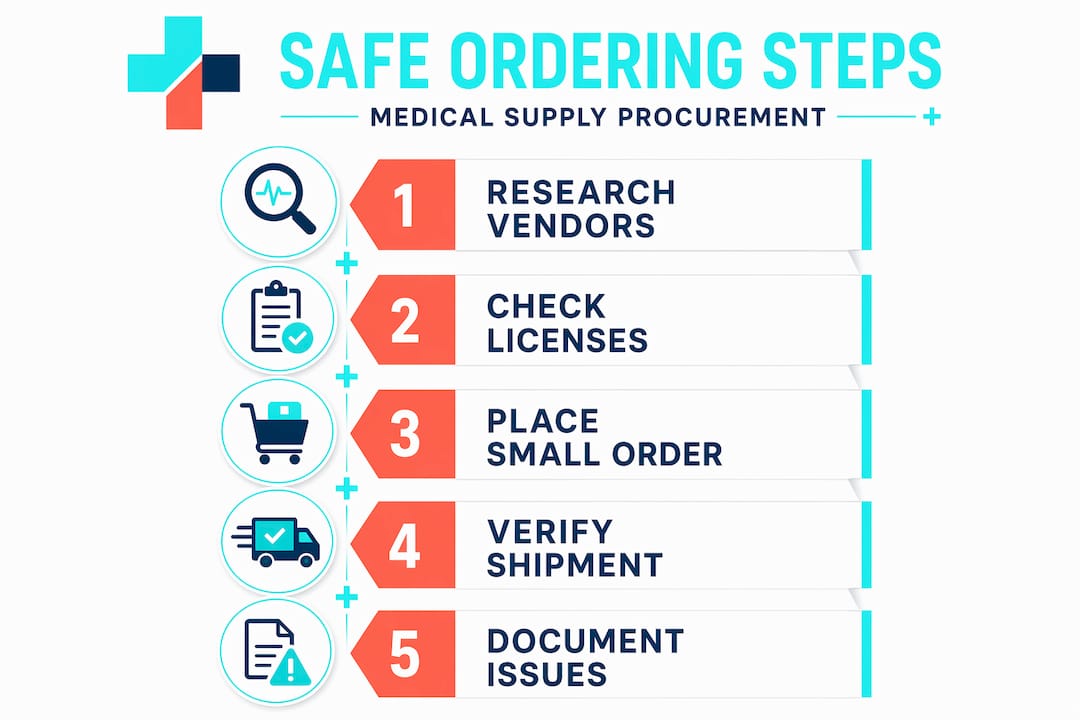
Health Canada blocked 59% of inspected packages in a 2026 operation targeting online health products, seizing 4% that contained suspected counterfeit or unauthorized items. That is not a fringe problem. That is a systemic one. And the WHO has flagged that up to 1 in 10 medicines in low- and middle-income countries may be substandard or falsified, with online sales driving a significant share of unsafe distribution.
The preparatory phase is where most procurement teams underinvest. They focus on price comparison and lead times while skipping the verification steps that protect patients and the organization legally. Here is what the preparation phase must include.
Regulatory frameworks to know before buying:
FDA requirements (U.S.): Safe online pharmacies require a licensed pharmacist, a physical U.S. address, a telephone number, and valid prescriptions. Any supplier that cannot meet these basics is a red flag.
Health Canada licensing: Medical devices sold in Canada must hold valid licenses verifiable through the Medical Devices Active Licence Listing (MDALL) database.
Drug Identification Numbers (DIN): Pharmaceutical products sold in Canada carry a DIN. If it is missing or unverifiable, do not order.
FDA 510(k) clearance: Medical devices sold in the U.S. must be cleared or approved. Verify clearance numbers before purchase.
Pre-order checklist for procurement specialists:
Confirm the supplier holds a valid distributor or manufacturer license in the relevant jurisdiction
Verify product authorization status through official databases (MDALL, FDA 510(k), NDC directory)
Confirm the supplier’s physical address and contact information are publicly verifiable
Check whether the product class requires a prescription or special handling
Review the supplier’s return and dispute resolution policies before ordering
Risk category | What to watch for | Verification tool |
Counterfeit products | Missing lot numbers, unusual packaging, no regulatory markings | FDA 510(k) database, MDALL |
Unauthorized sellers | No license number, no physical address, no phone | FDA warning letters list |
Substandard quality | Vague product specs, no expiration dates | NDC directory, product labeling standards |
Regulatory non-compliance | Missing DIN, no 510(k) clearance | Health Canada MDALL, FDA databases |
For a deeper look at sourcing guidelines for healthcare providers, reviewing established frameworks before you build your internal checklist will save significant time.
Pro Tip: Build a pre-approved supplier list with verified license numbers stored in your procurement system. Requiring buyers to select only from this list eliminates ad hoc sourcing from unverified vendors.
Key steps to execute safe online ordering of medical supplies
With your preparation complete, execution becomes a matter of following a disciplined process rather than making judgment calls under time pressure. The goal is to remove subjectivity from ordering decisions.
Step-by-step ordering process:
Confirm supplier licensing. Before adding a vendor to your approved list, verify their license through official regulatory databases. For devices, Class II-IV devices require active licenses verifiable through Health Canada’s MDALL before purchase.
Verify device clearance. Counterfeit medical devices may not provide the claimed protection. Always cross-reference the product’s 510(k) or PMA number in the FDA database before ordering.
Require valid prescriptions where applicable. For prescription-only medical products, confirm the supplier has proper pharmacist oversight and prescription validation processes in place.
Place a test order first. For any new vendor, order a small quantity before committing to volume. Evaluate packaging integrity, delivery time, labeling accuracy, and how quickly their support team responds to questions.
Scrutinize pricing. A price that is 40% below market rate is not a deal. It is a warning sign. Counterfeit products are almost always cheaper because the cost of quality materials and regulatory compliance is absent.
Document everything. Keep purchase orders, order confirmations, invoices, and supplier communications in a centralized, auditable system. This is not optional for facilities subject to regulatory inspection.
Red flags to watch during the ordering process:
No clear return or refund policy for defective products
Payment methods limited to wire transfer or cryptocurrency
Supplier cannot provide a Certificate of Conformance or quality documentation
Website lacks HTTPS encryption (check for the padlock in the browser bar)
No verifiable customer service contact beyond a generic email form
Reviewing trusted medical supply sources before onboarding new vendors gives your team a practical benchmark for what legitimate supplier credentials and product documentation should look like.
Pro Tip: When evaluating a new supplier’s responsiveness, send a pre-purchase inquiry about a specific product’s regulatory documentation. How quickly and completely they respond tells you more about their operational standards than any marketing copy on their website.
For teams building out their sourcing procedures from scratch, practical surgical supplies sourcing tips provide a solid operational foundation to work from.
Verification and quality assurance after receiving medical supplies online
Delivery is not the finish line. It is the beginning of the verification phase. A product that passes the ordering checklist can still arrive compromised. Physical inspection upon receipt is a non-negotiable step in safe online health supplies ordering.
Post-delivery verification checklist:
Inspect outer packaging for signs of tampering, moisture damage, or resealing
Confirm all product labeling includes lot numbers, expiration dates, and manufacturer details
Verify NDC (National Drug Code) or UDI (Unique Device Identifier) codes against official databases
Compare product appearance (color, texture, markings) against manufacturer specifications
Confirm quantity matches the purchase order exactly
FDA recommends cross-checking NDC and UDI codes against official databases and reporting any discrepancies via MedWatch, the FDA’s safety reporting system. This step takes minutes and can prevent a contaminated batch from entering clinical use.
The consequences of skipping this step are documented. CDC reports severe illnesses caused by toxins from online-purchased medical supplies, reinforcing that procurement only from authorized providers is a patient safety requirement, not a preference.
“Unauthorized health products can be fake, mislabeled, expired, or contaminated. Receiving a shipment does not confirm legitimacy. Verification must happen at the point of receipt, not at the point of purchase.”
Handling suspected counterfeit or substandard supplies:
Situation | Immediate action | Reporting channel |
Packaging tampered or damaged | Quarantine entire batch | Notify supplier, document with photos |
NDC/UDI does not match database | Do not use, isolate product | FDA MedWatch, Health Canada reporting form |
Product appearance inconsistent | Quarantine, request CoC from supplier | Internal quality team, regulatory authority |
Missing lot number or expiration | Do not use | Supplier dispute, regulatory report |
Establishing a quarantine protocol before you need it is critical. When a suspicious batch arrives during a high-volume period, having a written procedure prevents the pressure of the moment from overriding safety judgment.

For teams looking to tighten their verification and sourcing tips processes, integrating post-delivery checks into your existing quality management system is the most effective path. Reviewing essential surgical supply categories also helps procurement teams understand which product types carry the highest verification requirements.
Pro Tip: Photograph every shipment from a new supplier before opening it. Date-stamped photos of packaging condition create an evidence trail that is invaluable if you need to file a dispute or regulatory report.
Rethinking online medical supplies procurement: lessons from practice
Here is the uncomfortable truth most procurement guides skip: the biggest risk in buying medical supplies online is not the fraudulent seller you can spot from a mile away. It is the supplier who passes every surface-level check but has never been tested under real conditions.
A license number in a database tells you a company was compliant at the time of registration. It tells you nothing about their current inventory practices, their cold chain management, or whether the product they ship today matches the sample they sent last quarter. That gap between documented compliance and actual operational quality is where most procurement failures happen.
Procurement specialists should start with small test orders to verify supplier reliability before scaling purchases. This is standard advice, but the reason it works goes deeper than most teams realize. A test order is not just about checking product quality. It is about stress-testing the supplier relationship: how they communicate, how they handle a question about documentation, and whether their delivery process matches their promises.
The other lesson that rarely makes it into formal guidance: regulatory compliance should be embedded in your procurement workflow, not treated as a separate audit function. When compliance checks happen after the fact, they catch problems too late. When they are built into the ordering process itself, including supplier selection, product verification, and delivery inspection, they become a natural part of how your team operates rather than a burden imposed on top of it.
Procurement teams also have more leverage than they typically use. Suppliers who want your business will provide Certificates of Conformance, lot traceability documentation, and regulatory clearance numbers if you ask for them as a condition of purchase. The teams that get this information are the ones who require it. The teams that do not are the ones who find out the hard way that it was never available.
For teams building this kind of practical sourcing expertise into their operations, the investment pays off in fewer compliance incidents, fewer supply disruptions, and a procurement record that holds up under scrutiny.
Trusted sourcing solutions with Queens Surgical for safe online medical supplies
Applying everything in this guide requires a supplier who makes verification easy, not a barrier. Queens Surgical is built for exactly that.
Queens Surgical supplies licensed, quality-verified medical products across the Americas, serving clinics, hospitals, and healthcare facilities that need reliable sourcing without the compliance guesswork. Their catalog includes certified products like fluid-resistant isolation gowns and biohazard medical waste bags, both critical categories where product integrity directly affects patient and staff safety. Every product comes with the documentation your procurement team needs: lot numbers, regulatory clearance details, and verifiable supplier credentials. Dedicated customer support is available to assist with procurement questions, product specifications, and order management. When you need a supply partner who meets the standards this guide describes, Queens Surgical is where to start.
Frequently asked questions
How can healthcare facilities confirm the authenticity of medical supplies bought online?
Verify devices using Health Canada’s MDALL database and the FDA’s 510(k) system, cross-check NDC and UDI codes on packaging against official records, and purchase only from suppliers with verifiable licenses and physical contact information.
What are the risks of ordering medical supplies from unverified online sources?
Unauthorized health products can be fake, mislabeled, expired, or unsafe, putting patients at direct risk and exposing healthcare facilities to legal, financial, and regulatory liability.
What steps should procurement specialists take if they suspect counterfeit medical supplies?
Quarantine the items immediately and report suspected counterfeit devices to Health Canada via the Medical Devices Problem Reporting form or to the FDA through MedWatch, and do not use the products until verification is complete.
Are there protections available if delivered medical supplies are defective or never arrive?
FTC rules require sellers to ship within 30 days when no timeframe is stated, and credit card payments provide dispute resolution protections that give healthcare buyers a practical recourse against non-delivery or defective shipments.
What are best practices for initial ordering from new online medical supply vendors?
Start with small test orders from new suppliers to evaluate product quality, packaging integrity, delivery accuracy, and customer support before committing to volume purchasing agreements.
Recommended
Comments