Instrument Milk Uses: A Sterile Processing Operations Guide
- Qubit Technology
- 3 hours ago
- 7 min read
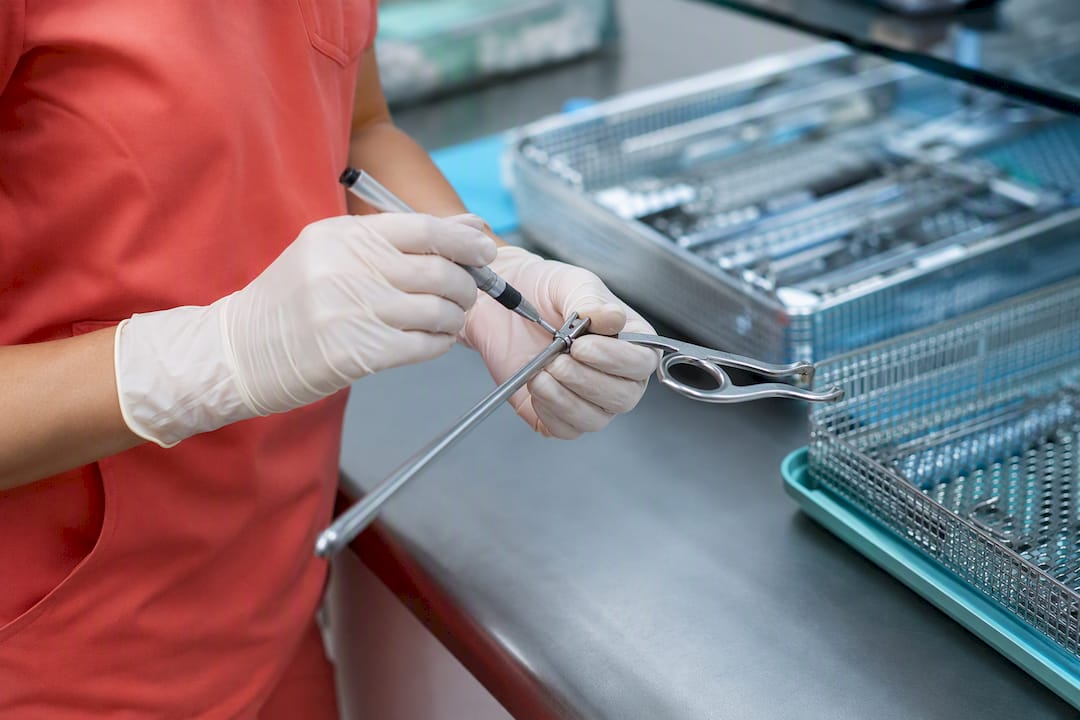
Instrument milk is a water-soluble, steam-permeable lubricant emulsion used after the final rinse to restore joint movement in articulated surgical instruments. It is not an oil. Three uses drive its place in reprocessing:
Restoring smooth, resistance-free movement in box locks, hinges, and ratchets
Protecting metal surfaces from friction corrosion during repeated autoclave cycles
Cutting repair and replacement costs by extending working instrument life
Apply it only after the final rinse, and always confirm the instrument’s IFU permits lubrication before you dip or spray a single tray.
TL;DR:
Proper dilution of instrument milk between 1:10 and 1:20 with deionized or distilled water is crucial for effective steam permeability and preventing residue buildup.
It is essential to apply lubrication only after the final rinse and to avoid rinsing afterward, as rinsing washes away the lubricant film.
Use immersion baths for high-volume or multi-instrument loads, and targeted sprays for delicate or single-use instruments to save concentrate and ensure proper coverage.
Regularly replace lubrication baths daily in high-throughput departments, and verify automated dosing systems through calibration checks to prevent gaps and inconsistencies.
Always verify both the instrument’s and lubricant’s instructions for use to avoid damage or sterilization failures caused by incompatible products or improper application.
Table of Contents
What Are the Main Instrument Milk Uses in Sterile Processing?
Instrument milk exists because standard lubricants fail inside an autoclave. It works as an oil-in-water emulsion, usually built on polyethylene glycol (PEG) or a comparable water-soluble base, so steam can pass straight through the lubricant film during sterilization instead of being blocked by it.
You can spot correctly formulated concentrate by how it behaves when diluted: a clear or amber concentrate should turn cloudy white in the bath. That clouding is a visual confirmation the product is built to be steam-penetrable and safe for autoclaving, not a defect to worry about.
The instruments to avoid entirely:
Mineral oil and petroleum-based lubricants, which coat surfaces in a way that resists steam penetration
Silicone sprays, often marketed for “smooth action” but not validated for autoclave compatibility
Any grease-based product not labeled water-soluble
AAMI and AORN guidance is consistent on this point: non-steam-permeable lubricants can trap moisture and residue against the metal, and under sustained autoclave heat that trapped film can carbonize, leaving a baked-on layer that blocks sterilization on the next cycle.
Which Instruments Actually Need Lubrication?
Not every tray needs a milk bath. Instruments with metal-on-metal movement under load are the priority; flat blades, solid retractors, and single-piece tools generally don’t benefit from routine lubrication and treating them anyway just wastes concentrate.
High-priority groups include:
Box-lock instruments (hemostats, needle holders, scissors) where the pin joint takes repeated stress
Rongeurs and bone instruments with sliding or ratcheting mechanisms
Multi-part forceps and clamps with hinges exposed to detergent and rinse cycles
Lubrication has one correct position in the reprocessing sequence: clean, final rinse, lubrication, dry, inspect, function test, package. Skipping ahead (lubricating before the final rinse) leaves detergent residue trapped under the lubricant film. Skipping the function test afterward means you’re packaging instruments you haven’t actually confirmed work.
As for frequency, most instruments with active joints should be lubricated every cycle. Instruments that feel stiff, squeak, or show resistance during the function test need it regardless of where they fall in the normal rotation. When in doubt, the joint tells you.
Which Application Method Fits Your Volume and Instrument Type?
Three methods dominate sterile processing departments, and each fits a different scenario.
Immersion milk bath: the standard for mixed trays and high-volume loads. Instruments go in, joints open, and the whole set gets even coverage in one step. The tradeoff is concentrate consumption and the need to log bath changes for audit purposes.
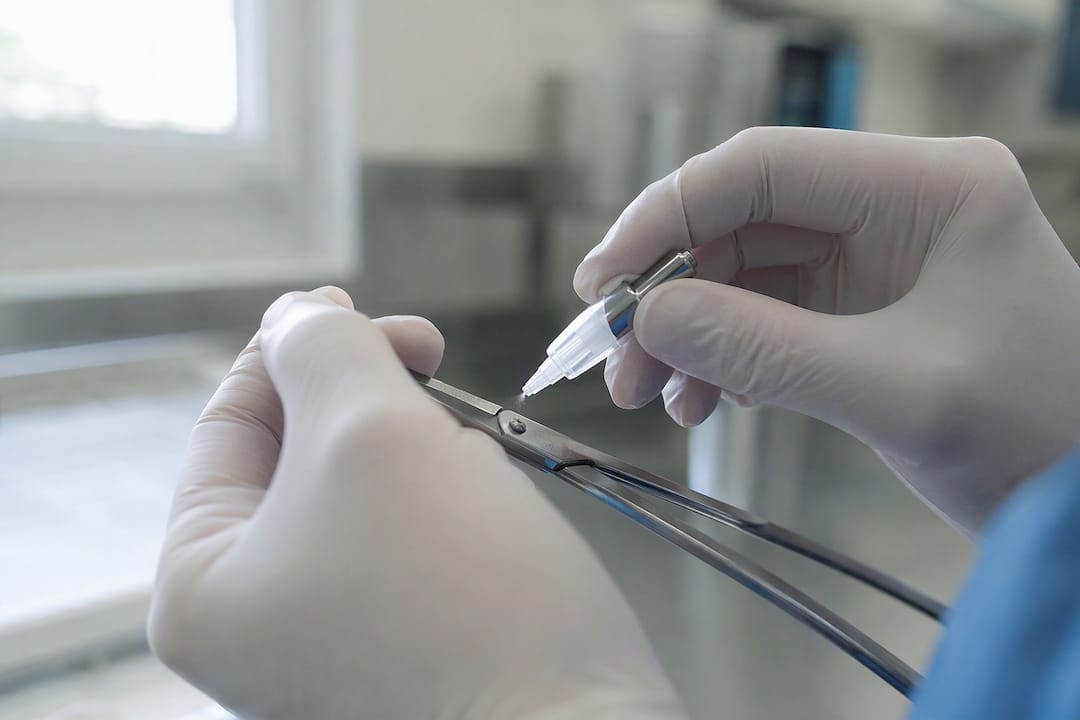
Targeted spray or pen: better for single delicate instruments, post-repair items, or anything that shouldn’t be fully submerged. Spray applicators work well on the sterile side of processing where a full bath setup isn’t practical.
Washer-disinfector dosing: scales well for departments running constant volume, since it folds lubrication into the final rinse cycle automatically, removing a manual step entirely.
Automated dosing sounds like a “set it and forget it” upgrade, but it isn’t. Pumps need calibration checks, and dosing lines need periodic verification that concentrate is actually flowing, not just that the cycle completed.
Pro Tip: Don’t lubricate an entire tray by default. Reserve the bath for instruments with real joint movement and use a spray pen for the exceptions. It saves concentrate and keeps your dilution ratio from drifting as fast.
What’s the Correct Dilution and Drying Protocol?
A protocol only works if every shift follows the same numbers. Here’s what to standardize:
Dilute concentrate at roughly 1:10 to 1:20, following the specific product’s IFU rather than eyeballing it
Use deionized, distilled, or reverse-osmosis water. Tap water minerals interact with the emulsion and cause residue
Immerse for 30 to 60 seconds, opening box locks and hinges so the solution reaches the pin
Drain instruments after removal. Do not rinse. Rinsing washes away the lubricant film you just applied, defeating the entire step
Air-dry or towel-dry before inspection and function testing. Never package a wet instrument
Bath replacement matters more than most departments treat it. A bath used across multiple shifts without replacement stops being a treatment and starts being a contamination source. High-throughput departments should replace baths daily or per shift rather than stretching one batch across a full day’s caseload.
Pro Tip: Log bath mix dates on the container itself, not just in a binder. A dry-erase label on the basin means anyone on shift can check freshness without hunting for a log sheet.
Parameter | Typical Range |
Dilution ratio | 1:10 to 1:20 concentrate to water |
Immersion time | 30 to 60 seconds |
Water type | Deionized, distilled, or reverse osmosis |
Bath replacement | Daily, or per shift in high-volume rooms |
When Should You Skip Lubrication Entirely?
Instrument milk isn’t universal, and applying it without checking two documents first is how departments end up damaging expensive instruments or failing sterilization loads.
Check the instrument’s own IFU first. Some ophthalmic instruments and certain implants explicitly forbid lubrication, and instruments with tungsten carbide inserts or braze lines may need adjusted treatment to avoid flooding the joint area with fluid it wasn’t designed to hold.
Then check the lubricant’s own IFU for sterilization compatibility. Not every water-soluble lubricant is validated across steam, dry heat, ethylene oxide, and low-temperature methods equally, so confirm the product matches your facility’s sterilization pathway.
If an instrument’s IFU forbids lubrication, skip it and follow the manufacturer’s stated maintenance path instead
If a joint stays stiff or grinds after correct lubrication and a full immersion cycle, that instrument needs repair evaluation, not a second dose of milk
Document any instrument routed for repair so procurement can track recurring failure patterns by model
Why Do Instruments Show Residue or Corrosion After Lubrication?
Most complaints about instrument milk are actually process failures, not product failures. Three patterns show up repeatedly:
White residue almost always traces back to over-concentration or hard water. Check your dilution ratio first, then confirm you’re using deionized or distilled water rather than tap.
Brown or orange discoloration signals corrosion that predates the lubrication step. Lubricant can free up a stiff joint temporarily, but it does not reverse pitting that’s already formed on the metal.
Automated dosing gaps usually trace to an empty canister or an uncalibrated pump rather than a bad batch of concentrate. A quick weekly check of canister levels and dosing line output catches this before it becomes a pattern across dozens of trays.
A correctly diluted, fresh bath shouldn’t leave residue at all when the process is followed. Residue is a signal to check the process, not a reason to switch products.
What Procurement and SPD Teams Should Prioritize
The instrument milk debate isn’t really about the product. It’s about whether your department treats lubrication as a routine step or an afterthought squeezed in before packaging. Routine, correctly applied lubrication measurably extends instrument life and cuts the frequency of repair tickets, which is the real cost lever procurement teams underestimate.
Buy lubricants with documented IFUs and confirmed sterilization compatibility, not whatever’s cheapest per gallon. Pair that with reliable dosing hardware if you’re automating, and make sure staff training includes the drain-don’t-rinse rule specifically, since it’s the step most often skipped under time pressure.
— QB
Sourcing Instrument Care Consumables Through Queens Surgical
Queens Surgical stocks the instrument-care consumables that make this protocol actually workable at scale, not just lubricating jelly in bulk, but sterile single-use options like the DynaLube Lubricating Jelly packet for targeted, single-instrument application where a full bath isn’t practical.
![cta_image]
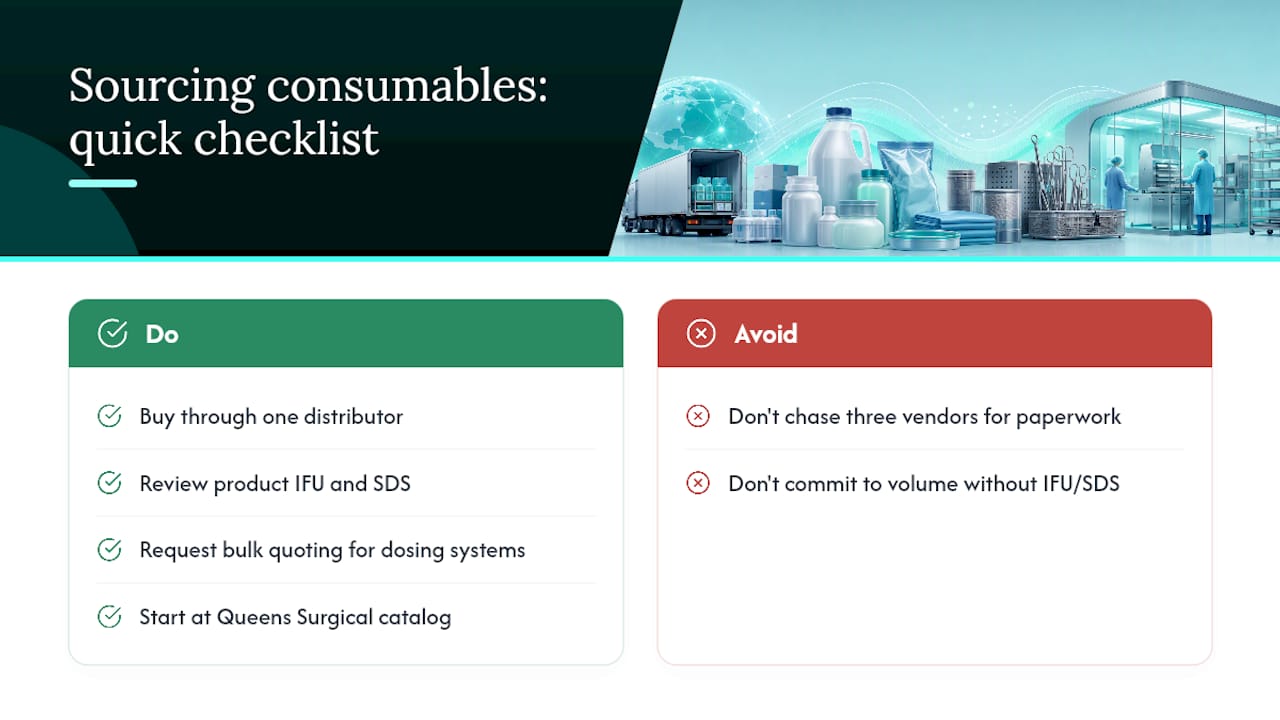
Whether you’re stocking box locks and utility sterilizer forceps or comparing dosing hardware for a washer-disinfector upgrade, buying through one distributor means fewer purchase orders and one point of contact for IFU and SDS documentation instead of chasing three vendors for paperwork. Review the product IFU and SDS before you commit to volume, and if you’re outfitting a multi-room SPD, request bulk quoting directly for dosing systems and concentrate. Start at the Queens Surgical product catalog to compare current instrument-care stock and place your first order.
Key Takeaways
Instrument milk works because its water-soluble, steam-permeable formula lubricates joints without blocking sterilization, but only when dilution, water quality, and IFU checks are followed correctly.
Point | Details |
Use water-soluble only | Never substitute mineral, silicone, or petroleum lubricants; they block steam and can carbonize. |
Sequence matters | Lubricate after the final rinse, before drying, inspection, and the function test. |
Follow dilution ranges | Mix at roughly 1:10 to 1:20 and immerse instruments for 30 to 60 seconds. |
Drain, don’t rinse | Rinsing after lubrication removes the protective film you just applied. |
Source documented consumables | Queens Surgical supplies IFU-documented lubricants and single-use packets for procurement teams. |
Sources
Recommended
Comments