Drop Shipping Medical Equipment Guide for Entrepreneurs
- Qubit Technology
- 1 day ago
- 8 min read

Dropshipping medical equipment means selling non-prescription, consumer-grade healthcare products online without holding inventory, where suppliers ship orders directly to your customers. This business model suits entrepreneurs who want low startup costs and flexible inventory without the overhead of a warehouse. The right drop shipping medical equipment guide covers product selection, supplier vetting, regulatory compliance, and fulfillment logistics. Get those four pillars right, and you have a legitimate, scalable business in one of the most recession-resistant product categories in ecommerce.

Which medical equipment products are best suited for dropshipping?
The safest and most profitable products for medical equipment dropshipping are non-invasive, over-the-counter items. First-aid kits, disposable gloves, masks, pill organizers, support braces, and mobility aids are the most viable categories for dropshipping in 2026. These products require no prescription, carry low liability, and are easy to describe accurately without making medical claims.
Prescription devices, controlled substances, and invasive medical equipment are off-limits. Selling them without proper licensing exposes you to FDA enforcement, platform bans, and civil liability. The line is clear: if a product requires a prescription or a licensed practitioner to administer, it does not belong in a standard dropshipping store.
Use this table to evaluate any product before adding it to your catalog:
Product type | Complexity | Regulatory risk | Dropshipping suitability |
Disposable gloves and masks | Low | Low | Excellent |
First-aid kits and bandages | Low | Low | Excellent |
Pill organizers and dispensers | Low | Low | Excellent |
Support braces and compression wear | Medium | Medium | Good |
Mobility aids (walkers, canes) | Medium | Medium | Good |
Blood pressure monitors | Medium | Medium | Good with disclaimers |
Prescription devices | High | Very high | Not suitable |
Invasive surgical tools | Very high | Very high | Not suitable |
Pro Tip: Bundle related products to increase average order value. Pairing first-aid kits with gloves or thermometers with hand sanitizers meets recurring consumer needs and lifts revenue per transaction.
Focus your catalog on fast-moving medical supply items with consistent demand. Gloves and masks, for example, sell year-round and spike during flu season and public health events.
How do you find and vet reliable medical equipment suppliers?
Supplier quality determines your store’s reputation. A single bad shipment of defective gloves or mislabeled braces can generate chargebacks, negative reviews, and regulatory scrutiny. Verifying supplier certifications and preparing contingency plans for fulfillment are the two actions that separate reliable operators from those who fail within a year.
Follow these steps when evaluating any supplier:
Confirm FDA registration. Any supplier selling medical devices in the United States must be registered with the FDA. Ask for their registration number and verify it on the FDA’s public database.
Check for ISO certification. ISO 13485 is the international quality management standard for medical device manufacturers. A supplier without it is a red flag.
Request 510(k) documentation where applicable. For Class II medical devices, the FDA requires a 510(k) clearance number. Ask for it before listing the product.
Review integration capabilities. Your supplier must connect with your ecommerce platform. Integration with Shopify or WooCommerce is standard and reduces manual processing errors that cause fulfillment mistakes.
Order sample shipments. Test the packaging, labeling accuracy, and delivery speed before committing to a supplier relationship.
Build a backup supplier list. Supply disruptions happen. Having a secondary source for your top-selling SKUs protects your customers and your revenue.
When sourcing wholesale medical equipment suppliers, request actual documentation rather than relying on marketing claims. A legitimate supplier will provide certifications without hesitation.
Pro Tip: Request a sample order for your top five products before going live. Evaluate the unboxing experience from a customer’s perspective. Clear instructions and intact packaging drive repeat purchases and reduce return rates in medical dropshipping.
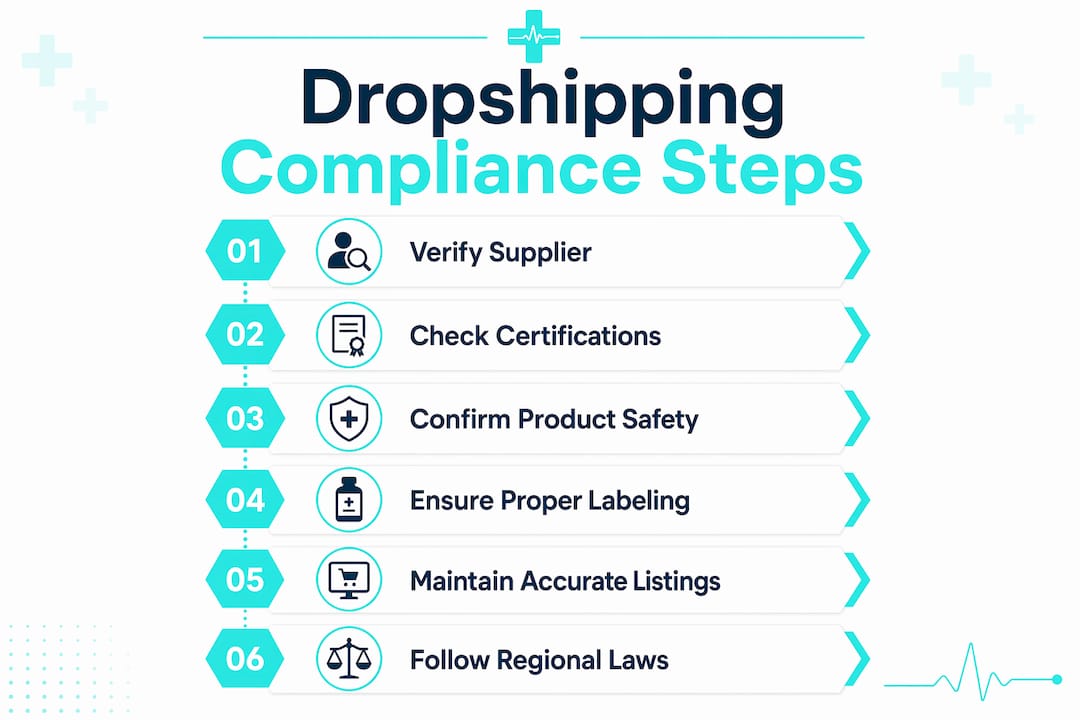
What compliance rules apply to medical equipment dropshipping?
Dropshipping medical supplies is legal when sellers comply with product safety, labeling, advertising, and regional tax regulations. Problems arise mainly from unauthorized health claims and inaccurate product descriptions. Both are avoidable with the right approach.
The FDA regulates medical devices sold in the United States under 21 CFR Part 820 and related guidance. Over-the-counter products sold online still fall under FDA oversight for labeling and advertising. You cannot claim a product treats, cures, or prevents a disease unless the FDA has cleared that claim. Violating this rule triggers warning letters, product seizures, and potential store shutdowns.
Key compliance requirements for your store:
Accurate product descriptions. Every listing must reflect the product’s actual function. Do not copy manufacturer marketing language that includes unverified health claims.
Clear disclaimers. Add a site-wide disclaimer stating that your products are not intended to diagnose, treat, cure, or prevent any disease.
Correct labeling. Products shipped to U.S. customers must carry English-language labels with usage instructions, manufacturer information, and any required warnings.
Sales tax compliance. Medical products have varying tax treatment by state. Some states exempt medical supplies from sales tax; others do not. Use a tax compliance tool or consult a tax professional.
Realistic shipping timelines. Overpromising delivery dates on health products creates disputes and damages trust. Post accurate timelines and update them when disruptions occur.
Treat your dropshipping store as a healthcare-adjacent business, not a generic ecommerce operation. The moment you list a medical product, you accept responsibility for its accuracy, safety, and legal compliance. Shortcuts in this niche carry consequences that generic product categories do not.
For a deeper look at permitted marketing claims, review the retail medical compliance requirements that apply to online sellers in 2026. Understanding what you can and cannot say in product listings is the single most important compliance skill for this business model.
How should you handle fulfillment for a medical dropshipping business?
Fulfillment in medical dropshipping carries higher stakes than in most ecommerce categories. Customers buying health products expect accurate orders, intact packaging, and reliable delivery windows. Customers in medical supplies expect higher transparency, including clear usage instructions, size charts, and shipping timelines, than buyers in other ecommerce niches. That expectation shapes every fulfillment decision you make.
Automated fulfillment platforms reduce the manual errors that damage customer trust. CJdropshipping enables streamlined order syncing and reduces shipping delays, which is critical during healthcare demand spikes like flu season or public health emergencies. Connecting your store to an automation platform from day one prevents the bottlenecks that kill growing stores.
Fulfillment method | Speed | Cost | Control | Best for |
Manual processing | Slow | Low upfront | High | Very small stores, testing phase |
Automated dropshipping platform | Fast | Moderate | Medium | Growing stores with multiple SKUs |
Third-party logistics (3PL) | Fast | Higher | High | High-volume stores with branded packaging |
Best practices for medical dropshipping fulfillment:
Set shipping expectations on every product page, not just at checkout.
Use suppliers who offer tracking numbers for every shipment.
Build a returns policy that accounts for health and hygiene restrictions on opened products.
Communicate proactively when orders are delayed rather than waiting for customer complaints.
Pro Tip: If your supplier offers same-day or next-day shipping on high-demand items like gloves or masks, feature that prominently on your product pages. Speed is a genuine differentiator in the medical supply category.
Dropshipping reduces your direct control over packaging quality. Neglecting the unboxing experience increases return rates and erodes the trust that medical buyers place in your store. Audit your supplier’s packaging at least once per quarter by ordering as a customer would.
Key Takeaways
Successful medical equipment dropshipping requires product compliance, verified suppliers, accurate listings, and reliable fulfillment working together from the start.
Point | Details |
Start with OTC products | Disposable gloves, masks, and first-aid kits carry low regulatory risk and consistent demand. |
Verify supplier credentials | Confirm FDA registration, ISO 13485 certification, and 510(k) numbers before listing any product. |
Avoid unauthorized health claims | Inaccurate descriptions and unverified medical claims are the leading cause of legal problems in this niche. |
Automate fulfillment early | Connecting to an order-syncing platform reduces errors and protects customer trust during demand spikes. |
Treat compliance as ongoing | Tax rules, labeling requirements, and FDA guidance change. Review your store’s compliance at least twice per year. |
What I’ve learned from watching medical dropshipping businesses succeed and fail
Most entrepreneurs who struggle with medical equipment dropshipping make the same mistake. They treat it like a general ecommerce store and assume the products sell themselves. They do not. Medical buyers are more skeptical, more detail-oriented, and quicker to leave a store that feels untrustworthy than buyers in almost any other category.
The stores that succeed invest in product descriptions that read like they were written by someone who actually uses the products. They include size charts for braces, material specifications for gloves, and usage instructions for pill organizers. Trust and accuracy significantly influence purchase decisions in health-related categories. That is not a soft observation. It is the difference between a 2% conversion rate and a 5% one.
The second pattern I see is supplier shortcuts. New sellers pick the cheapest supplier with the fastest shipping and skip the certification checks. Six months later, they are dealing with a product recall, a wave of returns, or an FDA inquiry. Requesting and verifying quality certifications and regulatory registrations instead of relying on marketing claims is the single action that separates durable businesses from short-lived ones.
Professional branding matters more in this niche than in most others. A credible, clean website design with transparent disclaimers and realistic claims builds long-term buyer confidence. Generic templates and exaggerated health claims trigger immediate buyer suspicion. Spend the money on a clean design and accurate copy before you spend it on advertising.
The entrepreneurs who build lasting medical dropshipping businesses treat the operation like a healthcare-adjacent business from day one. They know their products, their suppliers, and their compliance obligations. That mindset is not optional in this niche. It is the foundation.
— QB
Queenssurgical: a trusted source for your medical supply catalog
Building a medical dropshipping catalog starts with finding a distributor whose products are certified, consistently available, and suited for resale across the Americas.
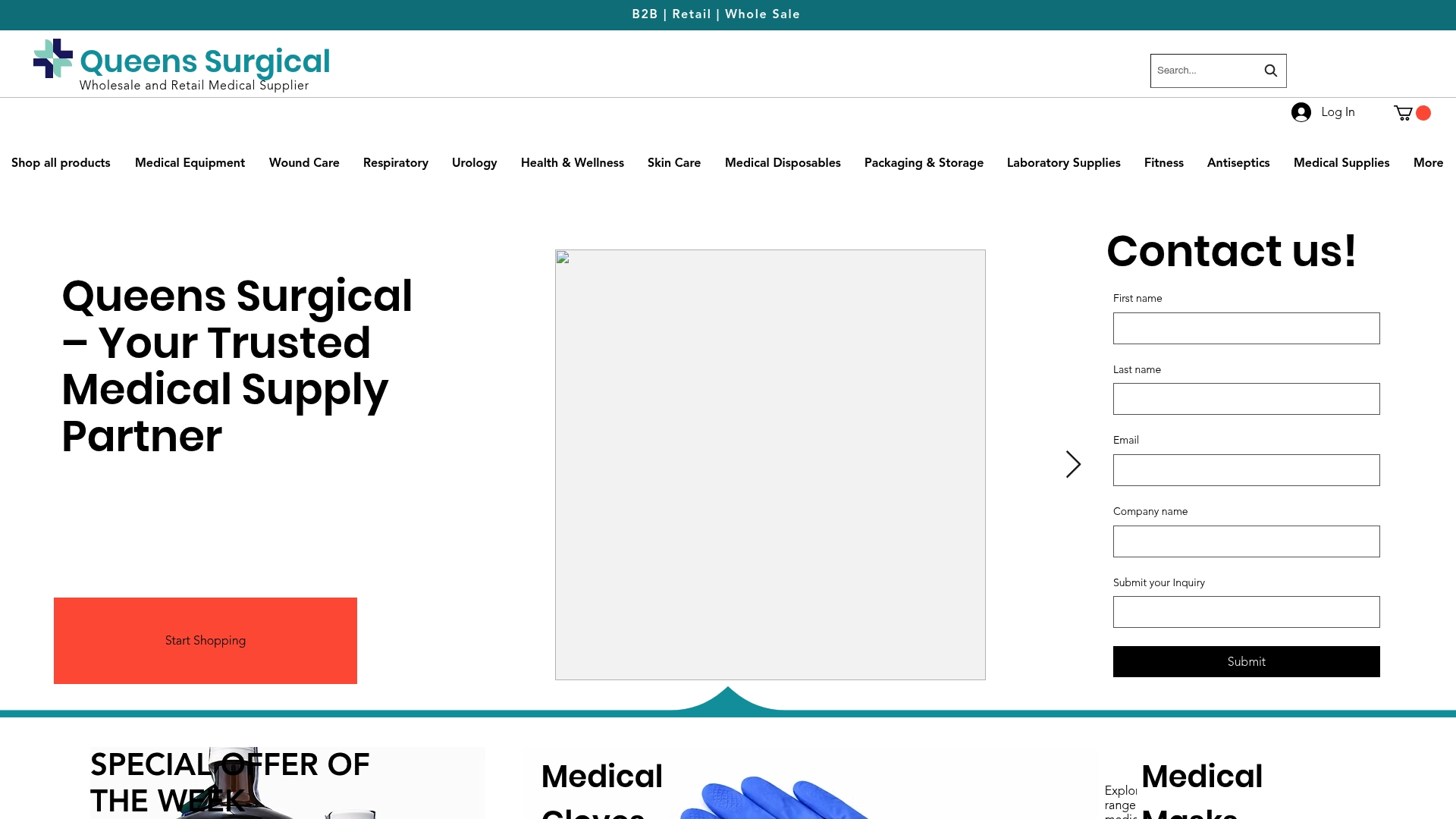
Queenssurgical supplies a wide range of certified medical products, from nitrile examination gloves to instruments and wellness items, all meeting industry quality standards. The platform serves both wholesale and retail buyers, making it a practical sourcing partner for entrepreneurs building a dropshipping catalog. You can submit a payment request directly through the Queenssurgical site to move quickly on orders. Contact Queenssurgical to discuss product sourcing, volume pricing, and partnership options for your medical dropshipping business.
FAQ
What products can I legally dropship as medical equipment?
Non-prescription, over-the-counter products such as disposable gloves, masks, first-aid kits, support braces, and pill organizers are legal to dropship without specialized licenses. Prescription devices and invasive medical tools require regulatory authorization and are not suitable for standard dropshipping stores.
Do I need FDA approval to sell medical supplies online?
You do not need FDA approval to sell over-the-counter medical supplies, but your products and listings must comply with FDA labeling and advertising rules. Making unauthorized health claims or selling unregistered medical devices violates federal law.
How do I verify that a medical equipment supplier is legitimate?
Ask for the supplier’s FDA registration number, ISO 13485 certification, and 510(k) documentation for any Class II devices. Verify the registration number directly on the FDA’s public database rather than accepting the supplier’s word.
What is the biggest compliance risk in medical dropshipping?
The leading compliance risk is making unauthorized health claims in product descriptions. Stating that a product treats, cures, or prevents a disease without FDA clearance triggers enforcement action and can result in product seizures or store shutdowns.
How do I handle returns for medical supply dropshipping?
Build a returns policy that accounts for hygiene restrictions on opened medical products. Clearly state which items are non-returnable once opened, and work with your supplier to define the return process before you receive your first customer complaint.
Recommended
Comments