Durable Medical Equipment Explained for Caregivers

Durable medical equipment (DME) is defined as medically necessary, reusable equipment prescribed for repeated use in the home to support individuals living with illness, injury, or disability. Under 42 CFR 414.202, the Centers for Medicare and Medicaid Services (CMS) sets five specific criteria every device must meet to qualify. Understanding what is durable medical equipment explained through those criteria is the fastest way to know what your insurance will cover, what your provider must document, and what you can expect to pay.
What is durable medical equipment, and how is it defined?
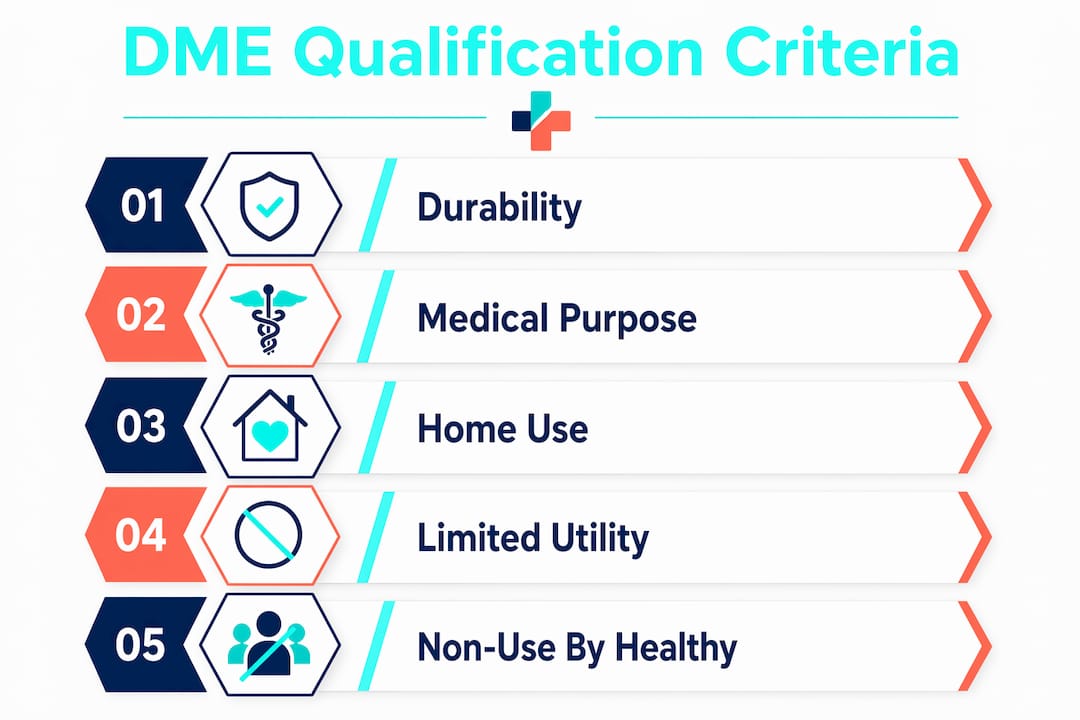
DME is equipment that meets all five Medicare qualification criteria simultaneously. Miss one criterion and the device does not qualify, which means coverage is denied. The five criteria, as defined in 42 CFR 414.202, are:
Durable: The item withstands repeated use over time.
Medical purpose: The item serves a medical function, not general comfort.
Home use: The item is appropriate for use in the home, not only in a hospital or skilled nursing facility.
Not useful to healthy individuals: A person without illness or injury would have no practical need for it.
Minimum lifespan: The item is expected to last at least three years.
A standard hospital bed rented for home recovery meets all five. A heating pad sold at a pharmacy does not, because healthy people use them too. That distinction matters every time you file a claim.
The Social Security Act gives CMS the authority to enforce these definitions. Medicaid programs in each state follow similar logic but may apply different thresholds. Private insurers and TRICARE define DME similarly but require caregivers to check plan-specific authorization rules before ordering.
What are the common types and examples of durable medical equipment?
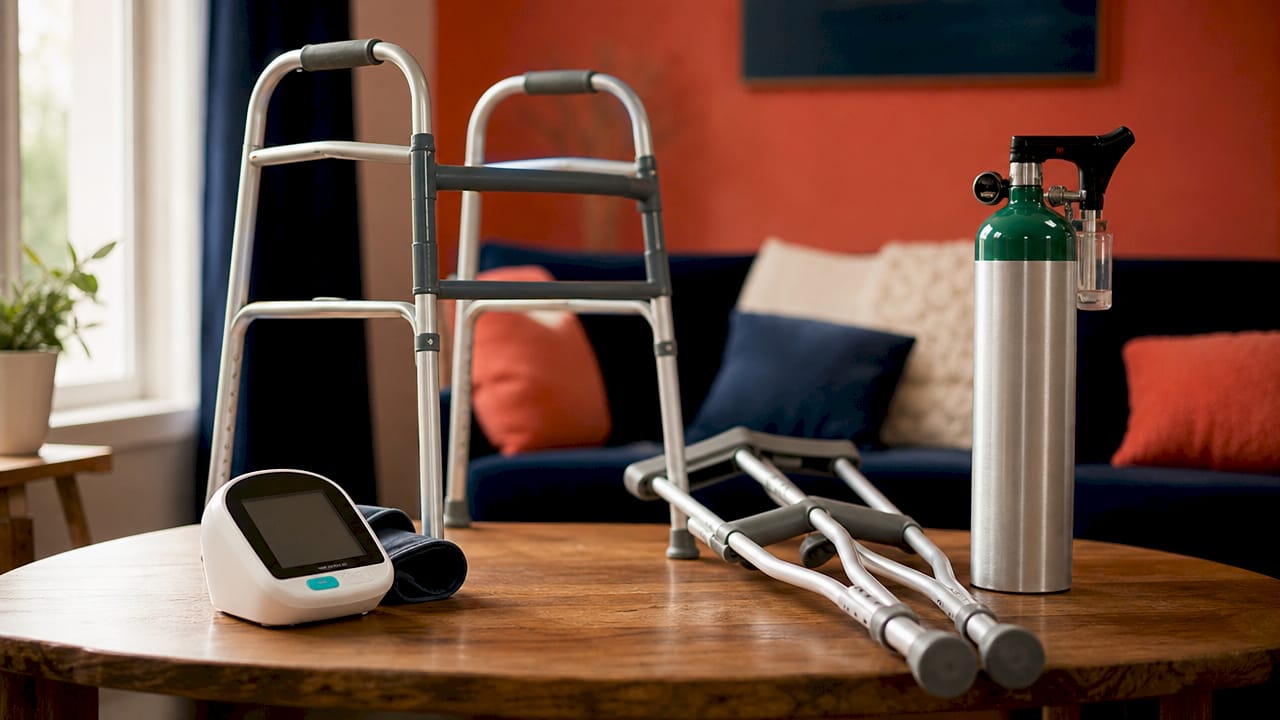
Most DME is designed to support mobility and daily living in the home. The categories below cover the devices caregivers and patients encounter most often.
DME Category | Common Examples | Primary Function |
Mobility aids | Walkers, crutches, manual wheelchairs | Assist movement and balance |
Power mobility | Power wheelchairs, scooters | Enable independent movement for limited mobility |
Respiratory equipment | CPAP, BiPAP, oxygen concentrators, nebulizers | Support breathing at home |
Beds and positioning | Hospital beds, pressure-relief mattresses | Manage positioning and skin integrity |
Transfer devices | Patient lifts, transfer boards | Assist safe movement between surfaces |
A few distinctions matter here. Home modifications like grab bars and ramps are not DME. Disposable supplies like bandages and gloves are not DME either. DME is specifically the reusable, prescribed device itself. Understanding the difference between consumables and durable equipment prevents ordering errors and billing confusion.
Power wheelchairs represent one of the most misunderstood categories. A scooter prescribed for “community mobility” does not qualify under Medicare because the coverage requirement specifies home use. The prescription must state the device is needed for use in the home. That single word changes everything about whether a claim is approved or denied.
How does DME coverage work under Medicare and other insurance?
Medicare Part B covers 80% of the Medicare-approved amount for DME after the annual deductible is met. The patient is responsible for the remaining 20%, plus any difference if the supplier does not accept assignment. That cost structure makes supplier selection a financial decision, not just a clinical one.
Medicare divides DME into payment categories, and the category determines how you pay:
Inexpensive or routinely purchased items: Paid outright at purchase. Examples include canes and blood glucose monitors.
Capped rental items: Monthly payments for 13 months, after which ownership transfers to the patient automatically.
Oxygen equipment: Covered under a separate rental structure with distinct rules and timelines.
Complex rehabilitative equipment: Power wheelchairs and similar devices follow their own prior authorization process.
After ownership transfers on a capped rental item, Medicare stops paying monthly fees. The patient then owns the equipment outright. Replacement for wear and tear requires at least five years of possession plus new documentation proving continued medical necessity. That five-year rule surprises many caregivers who assume replacement is straightforward.
Medicaid coverage varies by state and often covers a broader range of items than Medicare, but income and eligibility rules differ significantly. TRICARE follows its own approval process, and private insurers may require prior authorization even for items Medicare covers without it.
Pro Tip: Ask your provider to write the prescription with the phrase “for use in the home” explicitly included. Medicare requires that exact language for home-use documentation. A vague order is one of the most common reasons claims are denied.
What criteria does equipment need to meet to qualify as DME?
Each of the five CMS criteria carries real weight in the approval process. Understanding them helps caregivers ask the right questions before equipment is ordered.
Durability means the item is built for repeated use, not single use. A reusable nebulizer qualifies. A single-use inhaler does not. The three-year expected lifespan is a hard threshold, not an estimate.
Medical purpose excludes items that primarily serve comfort or convenience. An adjustable recliner does not qualify even if a doctor recommends it. A hospital-grade adjustable bed does qualify because it serves a specific clinical function like pressure relief or positioning for respiratory conditions.
Home use is where many claims fail. The item must be appropriate for use in a home setting, not exclusively in a clinical environment. Equipment that requires a licensed technician to operate in a hospital does not automatically qualify for home DME coverage.
Not useful to healthy individuals is the criterion that excludes most consumer wellness products. A CPAP machine has no practical use for someone without sleep apnea. A walker has no practical use for someone without a mobility limitation. That specificity is what separates DME from general health products.
Multi-component devices add another layer of complexity. Each component is assessed separately to determine DME eligibility. A power wheelchair qualifies as DME. The cushion attached to it may be classified as an accessory and billed under a different code. Non-durable components within a larger system may be excluded from DME coverage entirely, even though they are part of the same product.
Pro Tip: When a provider prescribes a multi-component device, ask for a breakdown of each component and its billing code. Knowing which parts qualify as DME and which are classified as accessories prevents unexpected out-of-pocket costs.
How do caregivers select, maintain, and replace DME effectively?
Selecting the right DME starts with three questions: What is the specific medical need? Can the patient use this device safely at home? Does the home environment accommodate it? A power wheelchair, for example, requires doorways wide enough for clearance and floors that allow safe navigation. Ordering before assessing the home leads to equipment that sits unused.
Safety is the most important factor when considering used or refurbished equipment. Refurbished medical equipment can be a cost-effective option, but only when it comes from a supplier who documents inspection, sanitization, and functional testing. Never accept used respiratory equipment like CPAP machines without verified cleaning records. Contaminated equipment creates infection risk that outweighs any cost savings.
Maintenance responsibilities depend on whether the equipment is rented or owned. For rented items, the supplier is typically responsible for repairs and maintenance during the rental period. For owned equipment, the patient or caregiver handles upkeep. That distinction is worth confirming in writing before signing any rental agreement.
Best practices for DME maintenance and replacement:
Keep all original documentation, including the prescription and delivery receipt.
Schedule annual reviews with the prescribing provider to confirm continued medical necessity.
Report damage or malfunction to the supplier immediately, especially for rented items.
Replacement requires new medical orders verifying that the need still exists.
Track the five-year ownership timeline for wear-and-tear replacement eligibility.
Store equipment according to manufacturer instructions to preserve function and warranty.
Pro Tip: Keep a dedicated folder, physical or digital, with every document related to your DME: the original prescription, insurance approval letters, delivery receipts, and service records. When replacement time comes, that paper trail is what gets the claim approved.
Key Takeaways
Durable medical equipment requires meeting all five CMS criteria simultaneously, and coverage depends entirely on documentation, supplier selection, and understanding your specific insurance plan.
Point | Details |
Five criteria must all be met | Durability, medical purpose, home use, limited utility to healthy individuals, and a three-year lifespan are all required. |
Medicare covers 80% after deductible | Patients pay the remaining 20% plus any non-assignment difference, making supplier choice a financial decision. |
Capped rentals transfer ownership at 13 months | After 13 monthly payments, the equipment becomes the patient’s property automatically. |
Replacement requires five years and new orders | Wear-and-tear replacement is not approved until five years of possession, with new medical necessity documentation. |
Documentation drives approval or denial | Vague prescriptions and missing “in the home” language are the most common reasons DME claims are denied. |
Why DME deserves more attention before a crisis hits
Most caregivers I speak with encounter DME for the first time during a discharge from a hospital or after a fall. That reactive timing creates pressure. Decisions get made fast, documentation gets rushed, and equipment sometimes arrives that does not fit the home or the patient’s actual needs.
DME is not only for severe medical crises. A walker ordered proactively for someone with early balance issues can prevent the fall that leads to a hip fracture and a hospital stay. That is not a small thing. The cost of a walker is a fraction of the cost of emergency care, and the impact on dignity and independence is enormous.
The insurance complexity around DME is real, and it discourages people from pursuing equipment they genuinely need. I have seen caregivers give up on a power wheelchair claim after one denial, not realizing that the denial was about a single word in the prescription, not the patient’s actual need. Advocacy matters here. Push back on denials. Request itemized explanations. Ask the provider to revise the order with specific language.
DME is one of the clearest examples in healthcare where the gap between what patients need and what they receive comes down to paperwork, not clinical judgment. Closing that gap is worth the effort.
— QB
Medical supplies and equipment at Queenssurgical
Caregivers managing home health needs require reliable access to quality medical products, not just the major DME items but the full range of supplies that support daily care.
Queenssurgical stocks a broad catalog of medical supplies across the Americas, serving both individual caregivers and healthcare facilities. From protective gear like isolation gowns and face masks to specialty tools used in clinical and home care settings, the platform offers competitive pricing with straightforward ordering. Whether you are stocking a home care setup or sourcing supplies for a clinic, Queenssurgical provides the product range and procurement support to keep care running without interruption.
FAQ
What is the definition of durable medical equipment?
Durable medical equipment is medically necessary, reusable equipment prescribed for home use that meets five CMS criteria: durability, medical purpose, home appropriateness, limited utility to healthy individuals, and a minimum three-year expected lifespan.
What qualifies as durable medical equipment under Medicare?
Medicare classifies an item as DME only when it meets all five criteria defined in 42 CFR 414.202. Common qualifying examples include wheelchairs, hospital beds, CPAP machines, walkers, and oxygen equipment.
How does Medicare pay for durable medical equipment?
Medicare Part B covers 80% of the approved amount after the annual deductible. Payment structure depends on the item category: some are purchased outright, while capped rental items are paid monthly for 13 months before ownership transfers to the patient.
Can I buy used durable medical equipment?
Used or refurbished DME can be safe and cost-effective when purchased from a supplier who documents inspection and sanitization. Respiratory equipment like CPAP machines requires verified cleaning records before use.
How long before I can replace durable medical equipment?
Medicare requires at least five years of possession before approving wear-and-tear replacement. A new medical order confirming continued necessity is also required at the time of the replacement request.
Recommended
Comments