Why Sample Evaluation Matters in Healthcare Procurement
- Qubit Technology
- 4 days ago
- 9 min read
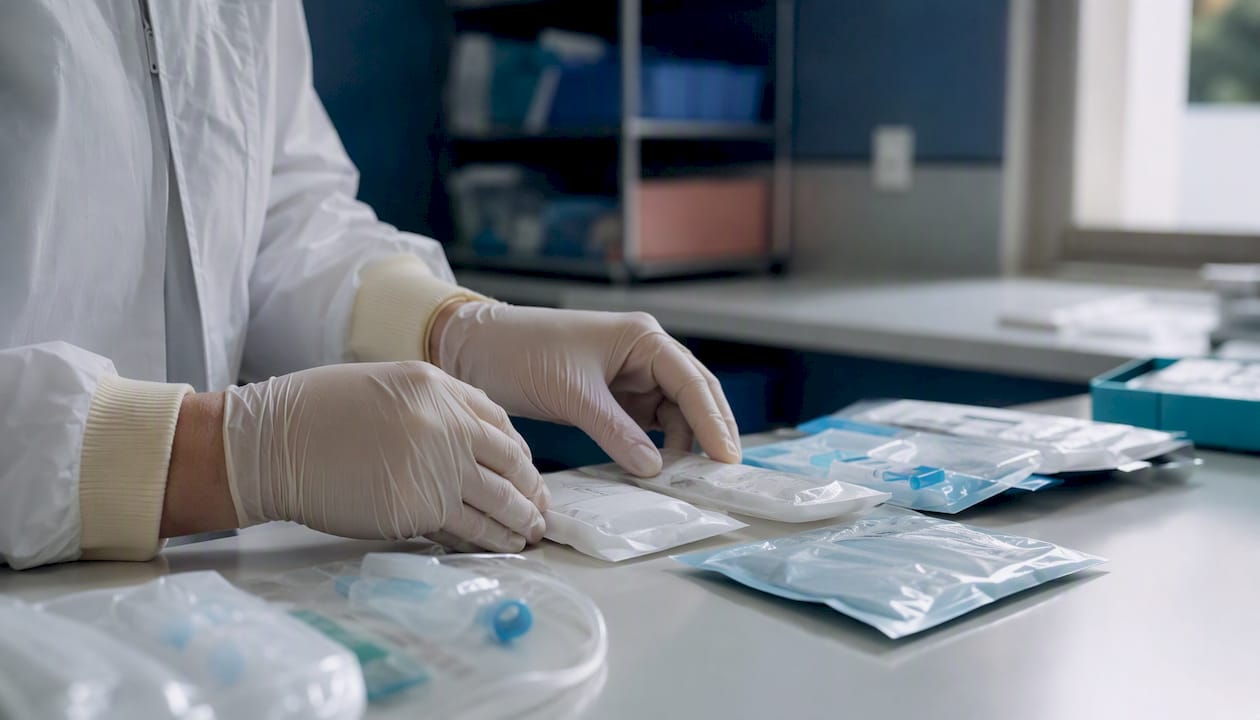
Sample evaluation is the single most reliable way to prevent clinical failures, protect patients, and build a procurement record that holds up under audit. Three risks drive that claim: first, a product that passes a paper specification can still fail at the point of care, harming patients or disrupting workflows. Second, under FAR 14.202-4, a required bid sample that fails can render a bid non-responsive, exposing the contracting officer to protest risk if sample requirements were poorly drafted. Third, the sample you test may not represent the production lot, and sampling uncertainty can dominate overall measurement error/07%3A_Obtaining_and_Preparing_Samples_for_Analysis/7.01%3A_The_Importance_of_Sampling) in ways that tighter lab methods cannot fix.
The immediate implication: define measurable acceptance criteria and establish an auditable trail before you accept or waive samples, not after.
Patient-safety/fit-for-use risk: Specifications describe dimensions and materials; they rarely capture how a glove tears under tension or how a gown restricts a nurse’s range of motion.
Legal/contract risk: FAR 14.202-4 limits when samples can be required and ties non-compliance to bid responsiveness.
Measurement/representativeness risk: A single sample from a prototype batch may not reflect production variability, making a “pass” misleading.
Key Takeaways
Sample evaluation in healthcare procurement prevents clinical failures, satisfies FAR requirements, and produces an audit-ready record — but only when acceptance criteria are defined before samples arrive.
Point | Details |
Define criteria first | Set quantitative pass/fail thresholds before samples arrive to prevent post-hoc rationalization. |
FAR 14.202-4 governs bid samples | Required samples that fail render a bid non-responsive; document every waiver in the contract file. |
Sampling uncertainty can dominate | Replicate sampling reduces s_samp more effectively than tighter lab methods when variability is high. |
Involve clinical end users | Nurses and techs catch ergonomic and workflow failures that bench tests and specifications miss. |
Queenssurgical supports the process | Lot data, clear specs, and sample availability across the catalog support traceable evaluation records. |
Table of Contents
Why does sample evaluation matter to healthcare procurement decisions?
How do you build a structured, audit-ready evaluation framework?
How does sampling representativeness affect your procurement decision?
When should you require samples, and when can you waive them?
Queenssurgical makes sample-based procurement straightforward
Why does sample evaluation matter to healthcare procurement decisions?
Sample testing reduces clinical and operational risk by validating fit-for-use under actual conditions, not just against a written spec. That distinction is sharper in healthcare than in almost any other procurement category.
Take single-use consumables. A glove that meets ASTM D6319 tensile strength requirements on paper can still fail a nurse’s dexterity test during a procedure. The high-demand consumables categories that cycle through hospitals fastest, including gloves, gowns, and drapes, are also the ones where lot-to-lot variability is highest and where a poor fit creates both safety and waste problems.
Diagnostic kits carry a different failure mode: lot-to-lot reagent variability that shifts sensitivity or specificity. A sample from lot A may pass; lot B, shipped six months later, may not. Without a sample evaluation protocol that requires lot-level QC evidence, procurement teams have no mechanism to catch that drift before it reaches the lab.
Small devices, from infusion pumps to handheld instruments, surface ergonomic issues that no specification captures. Lab techs and nurses who use equipment for eight-hour shifts notice grip fatigue, button placement, and screen glare in ways that engineers and procurement officers simply don’t. Excluding end users from sample testing is one of the most common and costly oversights in healthcare procurement.
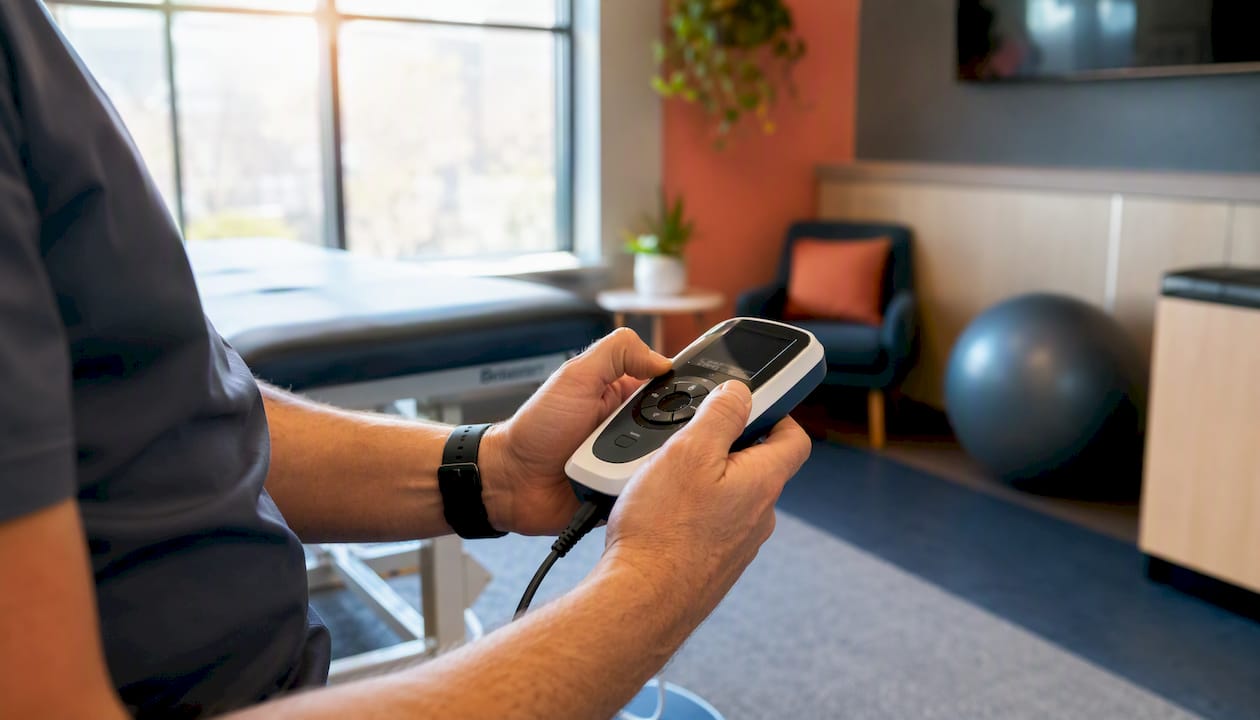
The downstream costs of skipping this step include product recalls, emergency reorders, staff workflow disruption, and, in the worst cases, adverse patient events. None of those costs appear in the original purchase order.
What U.S. procurement rules govern sample requirements?
The governing federal rule is FAR 14.202-4, which permits bid samples only when product characteristics cannot be fully described in the specification. Requiring samples unnecessarily adds cost and time; failing to require them when characteristics are subjective or safety-critical creates a different exposure. A required sample that fails makes the bid non-responsive, so the language in your solicitation must be precise.
Solicitation checklist for sample requirements:
State whether samples are required, invited, or waived, and the justification for each.
Specify the number of units, lot size, and any packaging requirements.
List the exact characteristics to be examined and the pass/fail criteria for each.
Address unsolicited samples: whether they will be considered and under what conditions.
Include return or disposal instructions and who bears the cost.
State waiver conditions and document the rationale in the contract file.
When samples are required, document the justification in the contract file. When a waiver is used, document that too. Contracting officers who skip this step face protest risk if a losing bidder challenges the award. Before finalizing solicitation language, pass the sample clause to legal counsel with a summary of the characteristics being tested and the pass/fail thresholds. That handoff is what makes the clause enforceable and minimizes supplier dispute risk after award. For practical contract negotiation support, vendor contract negotiation resources can help medical practices draft enforceable sample clauses.
How do you build a structured, audit-ready evaluation framework?
Define acceptance criteria before samples arrive. Testing against criteria you wrote after seeing the sample is not evaluation; it is rationalization.
Framework steps:
Define use-case and DQOs. What decisions will this product support? What performance thresholds are clinically meaningful?
Specify acceptance criteria. Quantitative where possible: tensile strength, particulate count, dimensional tolerances, reagent sensitivity.
Sample receipt and chain-of-custody. Record lot ID, date received, condition on arrival, and who took custody.
Test methods. Combine bench tests with clinical simulation. Involve end users.
Replicate testing and SRMs. Run multiple tests per criterion; use standard reference materials where available.
Consolidate and moderate scores. Aggregate evaluator scores; resolve outliers through structured discussion.
Final decision and contract condition. Document the decision with rationale and tie bulk delivery quality to the sample in every material respect.
Sample evaluation record template:
Field | What to record |
Lot ID | Supplier lot number and batch code |
Sample source | Prototype, production run, or warehouse stock |
Date received | Receipt date and condition on arrival |
Operator | Name and role of evaluator |
Test protocol | Method reference and version |
Quantitative results | Measured values for each criterion |
Pass/fail per criterion | Explicit pass or fail against each threshold |
Clinical user comments | Structured feedback from end users |
Verifier initials | Clinical lead, QA, and procurement sign-off |
Evaluators should confirm calibration status of any test equipment, document environmental conditions during testing, and obtain sign-off from the clinical lead, QA officer, and procurement manager before the record is closed. UK government bid evaluation guidance reinforces that evaluation criteria must be proportionate, unambiguous, and directly mapped to the information requested in the solicitation.
How does sampling representativeness affect your procurement decision?
Eurachem’s guidance on measurement uncertainty makes a point that most procurement teams underestimate: uncertainty from sampling can be the dominant contributor to overall measurement uncertainty, exceeding the uncertainty introduced by the analytical method itself. A sample that passes every bench test may still mislead you if it came from a non-representative batch.
The practical split is between sampling variance (s_samp) and analytical method variance (s_meth). When s_samp is large, investing in a more precise lab instrument does almost nothing to improve decision confidence. The fix is in the sampling strategy, not the lab.
Concrete mitigation steps:
Use standard reference materials (SRMs) when available to anchor test results to a known standard.
Perform replicate sampling and analysis across multiple units from the same lot.
Require suppliers to provide lot-history evidence: QC release data, process control charts, or certificates of analysis for prior shipments.
Include routine monitoring of sampling quality in contract terms, with defined triggers for re-evaluation.
Review ATSDR guidance on evaluating sampling data to document why your sampling data set is or is not representative for the intended use.
Pro Tip: When sampling uncertainty is likely high, run more replicates or increase sample count before tightening lab methods. More samples from the same lot will reduce s_samp more efficiently than a more precise instrument.
What are the most common ways sample evaluation fails?
The most predictable failure is confusing administrative defensibility with operational validation. A thick evaluation binder with signed forms and scoring matrices can give procurement teams confidence in a decision that was never actually tested against real clinical conditions. René Hartmann, a procurement consultant, has warned that process-heavy evaluations create a false sense of rigor when they prioritize administrative boxes over hands-on performance validation.
Other common pitfalls:
Prototype samples. Suppliers sometimes submit gold-plated prototypes that do not reflect production quality. Require evidence that the sample came from a production run, not a custom build.
Excluding end users. Clinical staff catch usability failures that procurement officers miss. Their absence from testing is a gap, not a time-saver.
Binary pass/fail without nuance. A product that scores 6/10 on ergonomics and 10/10 on sterility barrier is not the same as one that scores 8/8. Weighted criteria matter.
No post-award quality commitment. Passing a sample without binding the supplier to match that quality in bulk delivery creates a contractual gap that is expensive to enforce.
Separate organizational capability from solution fit. Assess whether a supplier has the quality systems, financial stability, and delivery capacity to perform, then assess whether this specific product meets clinical needs. Mixing the two in a single scoring sheet obscures both.
When should you require samples, and when can you waive them?
Require samples when product characteristics affecting safety or usability cannot be fully specified in writing, or when production variability risk is material. Waive when the supplier has a documented release history and the product category carries low clinical risk.
The Measure Evaluation sampling manual reinforces that sampling plans must be adapted to the evaluation objective, with methodology and limits documented from the start.
Decision criteria by category:
Gloves and gowns: Require samples for tactile sensitivity, fit, and barrier integrity testing. Lot-to-lot variability is real. See the consumables vs. durable equipment guide for category-specific framing.
Diagnostic kits: Require lot-level QC evidence and spot samples. Sensitivity drift between lots is a documented failure mode.
Low-risk disposables with a long proven history: Candidate for waiver if the supplier provides current certificates of analysis and the procurement team documents the rationale. Review supplier maturity considerations before waiving.
Complex devices: Run a pilot trial rather than a single-sample test. Ergonomic and workflow issues require extended use to surface.
Allocate sample evaluation costs in the procurement budget and set realistic timelines. A single-sample bench test may take days; a clinical pilot for a device may take weeks. Build that into the solicitation schedule.
What records make a procurement decision defensible?
A defensible decision requires a clear audit trail tying acceptance criteria, test records, evaluator sign-offs, and contract conditions together in one place.
Minimum contract file contents:
The RFP or IFB sample clause, including the characteristics examined and pass/fail thresholds.
Chain-of-custody records from sample receipt through testing and disposal.
Raw test data and replicate or lot comparisons.
Structured user feedback from clinical evaluators.
Moderation notes where evaluator scores diverged.
Final decision memo stating the rationale, who approved it, and the contract condition tying bulk delivery to sample quality.
Short solicitation language example for representativeness: “Samples shall be drawn from a production lot and accompanied by the supplier’s certificate of analysis for that lot. Bulk deliveries shall conform to the accepted sample in every material respect.”
Prepare a compact summary report for auditors or contracting officers: one page covering the criteria, the test results, the evaluators, and the decision. ATSDR guidance recommends documenting why a data set is or is not representative, which is exactly the framing auditors expect.
The cost of skipping one step
Pre-agreeing on pass/fail thresholds with clinical super-users before samples arrive is the single most effective change a procurement team can make to its sample program. Not after the demo, not after the scores are in. Before.
The reason is simple: when thresholds are set after testing, evaluators unconsciously anchor to what they saw. A product that impressed during the demo gets a threshold written around its performance. That is not evaluation; it is post-hoc justification. Setting thresholds in advance forces the team to articulate what “good” actually means in clinical terms, which is the harder and more valuable work.
Under real procurement timelines, this feels like a luxury. It is not. The time spent pre-agreeing on criteria is recovered many times over when the evaluation produces a clear, defensible result rather than a contested one. Speed and rigor are not opposites here. A well-structured sample evaluation, with criteria defined in advance and end users involved from the start, typically moves faster than an unstructured one because there are no post-evaluation arguments about what the scores mean.
Queenssurgical makes sample-based procurement straightforward
Healthcare procurement teams that have built the framework above still need a supplier who can support it. Queenssurgical provides product-level lot data, clear specifications, and sample availability across its catalog of medical gowns, protective equipment, and consumables, so your evaluation record starts with accurate, traceable information.
Requesting a sample through Queenssurgical takes three steps: select the product and lot you want evaluated, request a sample with your chain-of-custody requirements, and receive it with the documentation your evaluation template needs. For skin-contact products like the DynaShield Skin Protectant Cream, lot-level data is available to support your QA review. Browse the full catalog at Queenssurgical and submit your sample request directly from the product page.
Sources
These are the primary references behind this guide. Use them when preparing contract files or responding to auditors.
This article is general information, not a substitute for advice from a qualified doctor. Consult a qualified healthcare professional about your own circumstances before acting on anything here.
Recommended
Comments