Garmer Cotton Roll Holder: Specs and Ordering for U.S. Clinics
- Qubit Technology
- 2 days ago
- 9 min read
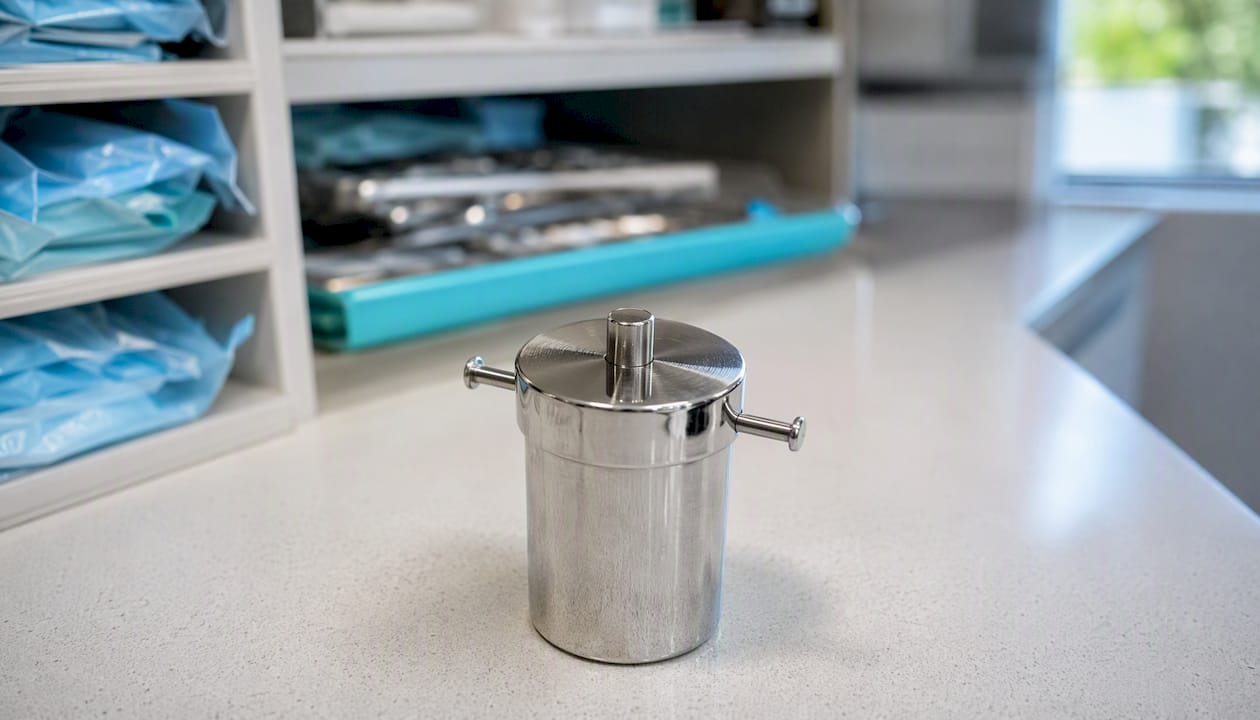
The Garmer cotton roll holder comes in two sizes: Junior (Size 1) for pediatric patients and Adult (Size 2) for standard adult dentistry. Both variants are sold as paired left and right sets, constructed from polished stainless steel, and described by suppliers as fully sterilizable. For U.S. clinics, Queenssurgical carries relevant dental instrument supplies and supports bulk ordering. If you need to confirm a specific SKU before placing an order, the fastest route is to contact Queenssurgical directly or browse the product catalog at Queenssurgical.
A few things worth knowing before you order:
The side-pin mechanism slides into the cotton roll from the side, which means it works with any roll length or diameter — no trimming required in most cases.
Adult and Junior sets are distinct SKUs; ordering the wrong size for a pediatric practice is a common procurement error.
The Centers for Disease Control and Prevention (CDC) and the American Dental Association (ADA) both classify reusable stainless-steel dental instruments as requiring full sterilization between patients, so “fully sterilizable” is not just a product claim — it is a compliance requirement.
Pro Tip: Order a spare set per operatory when you first stock Garmer holders. Sterilization cycle time means you will need a rotation to avoid downtime mid-session.
Key Takeaways
The Garmer cotton roll holder is a stainless-steel, fully sterilizable dental instrument available in Adult (Size 2) and Junior (Size 1) paired left/right sets, with a side-pin mechanism that fits any cotton roll length.
Point | Details |
Two size variants | Order Adult (Size 2) for standard patients and Junior (Size 1) for pediatric cases; both come as paired left/right sets. |
Side-pin mechanism | The pin engages the roll laterally, accepting any roll length or diameter without trimming. |
Sterilization requirement | Steam autoclave after every patient; follow CDC semicritical instrument guidelines for stainless-steel dental tools. |
Procurement documentation | Request a material spec or certificate of conformity from your supplier before adding to your reprocessing protocol. |
Queenssurgical ordering | Browse instruments and consumables or contact sales for bulk pricing at queenssurgical.net. |
Table of Contents
What are the full specs of the Garmer cotton roll holder?
The holder body is polished stainless steel throughout — no plastic components, no coated surfaces that can flake or corrode under repeated autoclave cycles. That material choice is deliberate: stainless steel tolerates the heat and pressure of steam sterilization without warping, and the polished finish resists protein adhesion, making pre-cleaning faster.
The side-pin engagement mechanism is the functional core of the design. The pin slides laterally into the cotton roll rather than clamping from above, which distributes retention force evenly and avoids crushing the roll. That geometry is also why the holder accepts any roll length — the pin position is not fixed to a specific roll diameter.
Variant | Pack Contents | Typical SKU Reference | Sterilization |
Adult (Size 2) | 1 left + 1 right holder | GM-5090003 (Henry Schein NZ); LGARMA (Matrix Dental); Benco 4860-902 | Fully sterilizable |
Junior / Child (Size 1) | 1 left + 1 right holder | Henry Schein AU junior listing | Fully sterilizable |
SKU numbers vary by distributor. Always confirm the part number with your supplier before placing a bulk order, since regional catalog codes differ even for the same physical product.
Pro Tip: When requesting a quote, ask the supplier for the material data sheet or certificate of conformity. This confirms autoclave compatibility for internal accreditation records — a step the ADA recommends for any reusable instrument added to your reprocessing protocol.
Which size fits your patients, and how do you place it correctly?
Adult (Size 2) handles the full range of adult dentistry: restorations, extractions, impressions, and any procedure where moisture control is critical. Junior (Size 1) is sized for smaller oral anatomy in pediatric patients, where an adult holder would sit uncomfortably or fail to retain the roll securely.
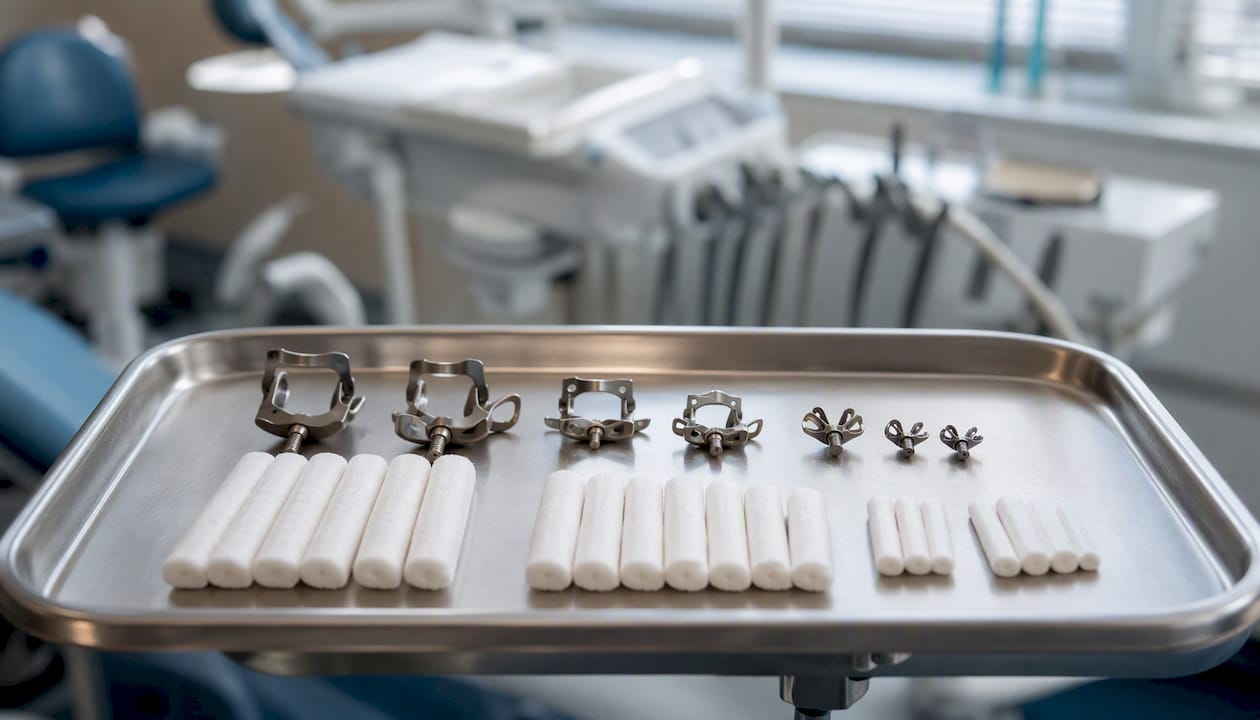
Left and right holders are not interchangeable. The pin angle and curve of the body are mirrored to follow the arch anatomy on each side. Supplying both in a paired set means the clinician can isolate either quadrant without reaching for a different instrument tray.
Step-by-step placement:
Select the correct size (Adult or Junior) and the correct side (left or right) of the quadrant being treated.
Load a cotton roll onto the holder by pressing the pin into the side of the roll until it seats firmly.
Position the holder in the patient’s mouth with the cotton roll resting in the mucobuccal fold, angled to cover the parotid duct opening.
Confirm the roll is stable by asking the patient to close slightly — the holder should not shift.
Proceed with treatment; check roll saturation at regular intervals and replace as needed without removing the holder from the mouth.
The pin-slides-into-the-cotton design means standard 1.5-inch and 2-inch rolls both seat without modification. For unusually short rolls, a slight diagonal insertion angle improves retention.
Pro Tip: Keep a pediatric and adult set on every tray setup rather than sorting by appointment type. Mixed-age schedules move faster when both sizes are already staged.
How do you sterilize a Garmer holder between patients?
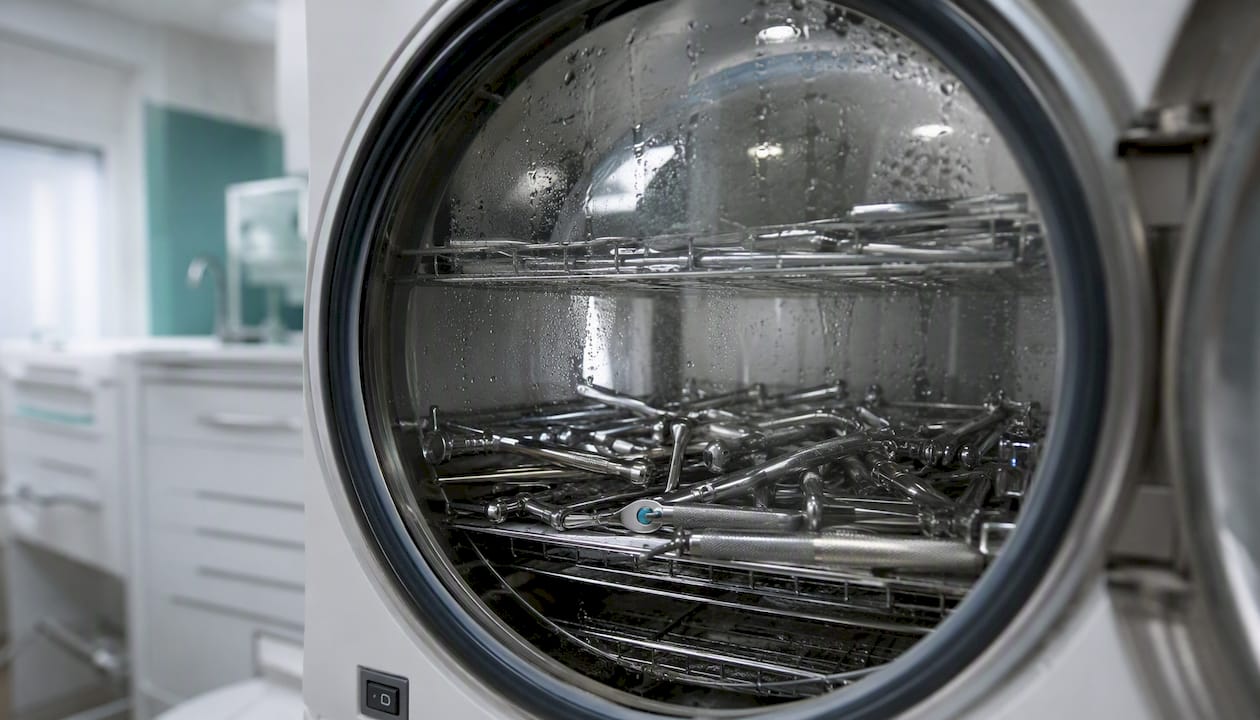
Multiple dental suppliers list Garmer holders as fully sterilizable, and stainless-steel construction makes that claim straightforward to validate. In practice, “fully sterilizable” means the instrument can complete a full steam autoclave cycle without damage — not just surface disinfection.
Recommended reprocessing workflow:
Pre-clean immediately after use: rinse under running water to remove gross debris, then place in an enzymatic soak or run through an ultrasonic cleaner for 5–10 minutes.
Rinse and inspect: rinse thoroughly after ultrasonic cleaning; check the pin for bending or debris lodged at the base.
Autoclave: run a standard steam sterilization cycle. Typical parameters for stainless-steel dental instruments involve steam sterilization cycles at high temperature for suitable durations, depending on the autoclave type — follow your autoclave manufacturer’s validated parameters.
Dry and store: allow instruments to dry fully before storage. Wet packaging promotes corrosion over time, even on stainless steel.
Regarding chemical compatibility, some stainless-steel dental instrument holders are described by suppliers as phenol- and glutaraldehyde-safe and steam-autoclavable. Apply that claim only where the specific supplier documentation for your Garmer holder confirms it — do not assume chemical compatibility across all stainless-steel instruments.
The CDC’s Guidelines for Infection Control in Dental Health-Care Settings classifies reusable dental instruments that contact mucous membranes as semicritical items requiring, at minimum, high-level disinfection — and sterilization when feasible. For a stainless-steel cotton roll holder, steam autoclave sterilization is both feasible and the standard of care.
Pro Tip: Pouch each holder individually with a chemical indicator strip before autoclaving. Label the pouch with the cycle date and lot number. This takes 30 seconds per instrument and gives you a complete processing record if your practice undergoes a JCAHO or state dental board inspection.
How U.S. clinics can order Garmer holders efficiently
Garmer holders appear in the catalogs of several U.S.-accessible dental distributors. Benco Dental lists the adult holder with a dedicated product detail page (item 4860-902), which makes it straightforward to add to an existing Benco account. Queenssurgical supports bulk ordering for clinics and purchasing organizations across the Americas and is the publisher’s recommended procurement option for U.S. buyers.
Procurement checklist before placing an order:
Confirm the correct size variant (Adult Size 2 or Junior Size 1) and the pack format (paired left/right set).
Request the part number and pack quantity in writing to avoid substitution errors.
Ask for a material spec or certificate of conformity if your practice requires documentation for autoclave validation.
For clinics running two or more operatories, order enough sets to maintain a rotation, ensuring sufficient instruments are available to cover sterilization cycle time; explore how EDA - AI Charting for Canadian Dentists can integrate clinical workflows for greater efficiency.
For high-volume consumable categories, ask about volume pricing tiers — most distributors offer breaks at 5 or 10 units.
Ordering steps for new accounts:
Identify the correct SKU for your patient mix (adult, pediatric, or both).
Contact your distributor’s sales team or use the online order portal to add the item.
Request a sample set before committing to a large quantity if you have not used Garmer holders before.
Confirm lead time — stainless-steel instrument sets sometimes carry a 5–10 business day lead time from specialty distributors.
Set a reorder point in your inventory management system based on sterilization cycle frequency and patient volume.
For clinics adding new instruments to their reprocessing protocol, request the supplier’s sterilization guidance or SDS before the first use. This protects the practice if a reprocessing audit requires documentation of validated parameters.
For clinics that also need a non-sterilizable cotton roll storage solution at the chairside, a press-type plastic cotton roll dispenser handles bulk storage and single-roll dispensing without requiring reprocessing — a practical complement to the stainless-steel holder, not a replacement.
Pro Tip: Pair your Garmer holder order with a stainless-steel dental tray so both instruments go through the same autoclave cycle together, simplifying your tray setup and reprocessing log.
How long does a Garmer holder last, and when should you replace it?
A well-maintained stainless-steel holder can last years in a busy practice. The limiting factors are almost always mechanical, not material: pin deformation from repeated loading, hinge wear, or surface pitting from aggressive chemical exposure.
Routine inspection checklist (run at each reprocessing cycle):
Pin straightness: a bent pin will not seat the cotton roll securely and risks patient discomfort.
Polish integrity: visible pitting or roughening on the body surface traps biofilm and signals the instrument should be retired.
Mechanism tightness: the holder should not flex or wobble when loaded with a cotton roll.
Corrosion: any rust spotting, even minor, is a retirement trigger — stainless steel that has begun to corrode will accelerate.
What not to do: avoid abrasive scrubbing pads or harsh chlorine-based cleaners on the polished surface. These degrade the finish faster than autoclave cycles do and create micro-scratches that harbor contamination.
Replacement triggers:
Visible corrosion or pitting anywhere on the body or pin.
Pin that no longer holds a cotton roll without manual pressure.
Any deformation that changes the fit in the patient’s mouth.
Repeated loosening of the mechanism after tightening.
Pro Tip: Assign each holder an inventory ID (a simple engraved number or color-coded pouch) and log sterilization cycles. High-volume practices will see wear faster than low-volume ones — the log tells you when an instrument is approaching end of life before it fails in the chair.
Why procurement teams standardize on stainless-steel holders
The operational case for Garmer holders is straightforward: a single pair of stainless-steel holders replaces hundreds of disposable cotton roll clamps over its service life. That reduces per-procedure consumable cost and simplifies reprocessing, since stainless-steel instruments follow the same autoclave workflow as the rest of the tray setup. Staff training is also easier when every instrument on the tray goes through the same cycle — no sorting, no separate handling protocols.
Paired left/right sets reduce chair-time adjustments. Clinicians reach for the correct holder by side rather than orienting a single ambidextrous tool, which matters in high-volume practices where seconds per procedure add up.
For procurement teams building a stocking plan:
Decide on the adult/junior split based on your patient demographic. A mixed practice typically stocks both; a pediatric-only practice can standardize on Junior Size 1.
Maintain a spare ratio of at least one extra set per operatory to cover instruments in the sterilization queue.
Review replacement needs annually based on your inspection logs rather than on a fixed replacement schedule.
Queenssurgical supplies dental instruments and consumables for U.S. clinics
Queenssurgical is a direct option for U.S. dental clinics and purchasing organizations that need reliable instrument and consumable supply without the complexity of large distributor accounts. The platform supports both individual orders and bulk purchasing, with a catalog that covers instruments, cotton consumables, masks, and a range of clinical supplies.

For procurement teams that need to consolidate orders, Queenssurgical’s bulk-order support means you can request volume pricing and confirm pack formats before committing. The surgical face masks and other PPE in the catalog round out a standard dental supply order alongside instrument sets. Browse the full catalog or contact the sales team at Queenssurgical to set up an account, request a quote, or confirm availability for Garmer-compatible instrument supplies.
Sources
For sterilization protocol validation, refer to the CDC Guidelines for Infection Control in Dental Health-Care Settings and your autoclave manufacturer’s validated cycle parameters. These are the primary references for any reprocessing audit or accreditation review.
Recommended
Comments