Why Product Authenticity Verification Matters in Retail

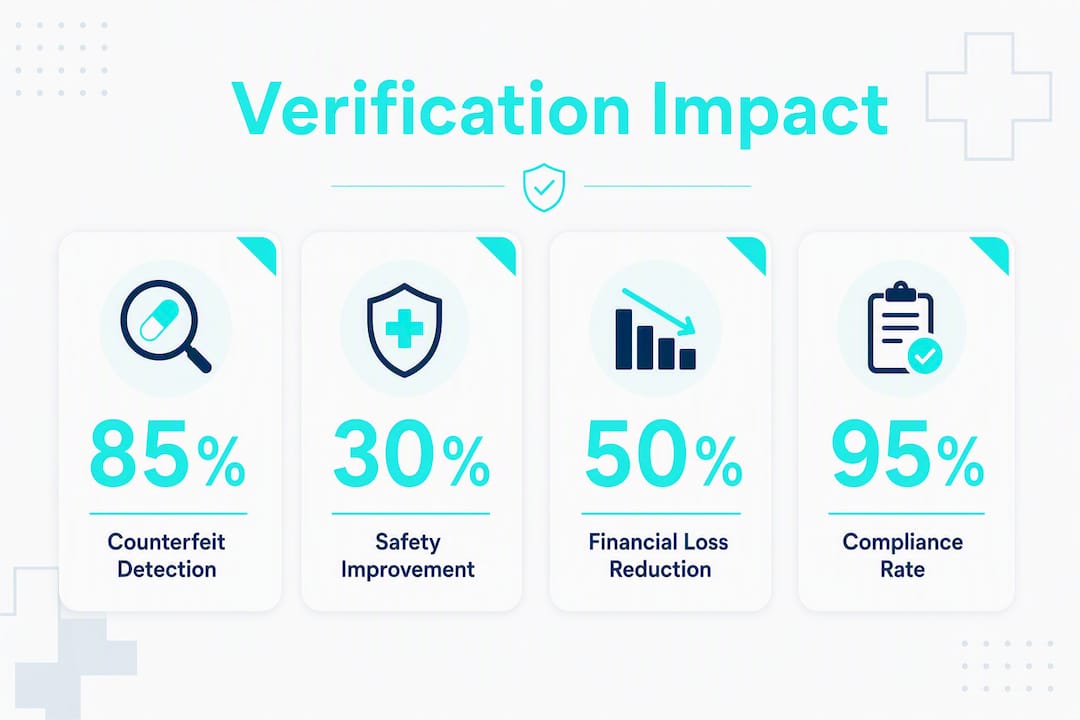
Product authenticity verification protects consumers from harm, shields brands from revenue loss, and gives retailers the compliance-ready documentation regulators increasingly demand. Three facts drive this home: counterfeit goods create direct patient safety risks in healthcare settings, a single fake-product incident can permanently erode customer lifetime value, and grey-market diversion quietly drains margin without triggering a single return. If you manage product integrity, loss prevention, or procurement, the operational priorities are clear:
Pilot item serialization on your highest-risk SKU before scaling
Add forensic inspection to your returns workflow at the point of receipt
Train frontline staff on a consistent, non-accusatory verification routine
Table of Contents
What does product authenticity verification actually mean?
Authenticity verification is the process of linking a physical product to an immutable digital record and confirming that link at any point in the product lifecycle. It is not the same as validation (confirming a product meets a specification), serialization (assigning a unique identifier), or traceability (tracking movement through the supply chain). Those are related disciplines, but verification is the act of checking. Think of serialization as the infrastructure and verification as the use of it.
The scope runs from manufacture through distribution, point of sale, returns processing, and post-sale consumer interaction. Each stage is a potential entry point for a counterfeit or diverted item, which is why a verification system that only covers the factory gate misses the majority of real-world risk.
Key term distinctions at a glance:
Verification: Confirming a specific item is genuine at a specific moment
Validation: Confirming a product meets a defined specification or standard
Serialization: Assigning a unique, item-level identifier (the foundation for verification)
Traceability: Recording and querying an item’s movement history across the supply chain
Why verification matters for retail: trust, safety, and financial exposure
The most immediate reason to verify is safety. In healthcare and medical supply categories, a counterfeit or tampered product can cause direct patient harm. Item-level verification helps hospitals and clinics confirm product legitimacy at the point of use, reducing clinical risk that no insurance policy fully covers.
Brand trust is the second pressure point. A single counterfeit exposure can erode consumer trust rapidly and unfairly damage the authentic brand. Customers who receive a fake do not blame the counterfeiter. They blame the retailer or brand that sold it to them, and they rarely come back.
The financial exposure is harder to see but just as real. Retailers face an organized counterfeit returns racket where fraudsters swap genuine products with high-quality fakes and collect refunds. Returns policies optimized for speed, without forensic verification, are a common vulnerability in high-value goods sectors. Grey-market diversion adds a second layer: genuine products sold through unauthorized channels at prices that undercut authorized retailers and void warranties.
The scale of counterfeiting in the U.S. market is significant. U.S. Customs and Border Protection regularly seizes counterfeit shipments worth hundreds of millions of dollars annually, and those seizures represent only a fraction of what enters the market.
Verification converts these invisible risks into actionable intelligence. Every authenticated scan generates a timestamped, geolocated record. Patterns in that data reveal grey-market routes, flag geographic anomalies, and build the evidentiary trail needed for enforcement actions.
Which industries face the highest risk?
Risk is not evenly distributed. Some categories face existential threats from counterfeiting; others face margin erosion. Knowing where you sit determines where to put your first pilot dollar.
Medical devices and pharma: Counterfeit or tampered supplies create direct patient safety risk. Regulatory pressure from FDA UDI requirements adds compliance urgency on top of the safety case.
Luxury goods and apparel: Grey-market diversion is the primary threat. Authorized product sold through unauthorized channels destroys price integrity and brand positioning.
Cosmetics and personal care: Fake cosmetics often contain unlisted or dangerous ingredients. The reputational damage from a product-safety incident in this category is severe and fast-moving.
Consumer electronics: High unit values and complex supply chains make electronics a prime target. Refurbished or cloned components are frequently passed off as new.
Food and beverage: Adulteration and mislabeling are the main risks. Premium categories like olive oil, supplements, and spirits are disproportionately targeted.
For gray market medical equipment, the procurement risk is compounded by the fact that diverted product may have been stored improperly, voiding its safety profile even if it started as genuine. Medical supply and PPE categories should be the first pilot candidates for any healthcare retailer or distributor.
What verification methods are available and how do they compare?
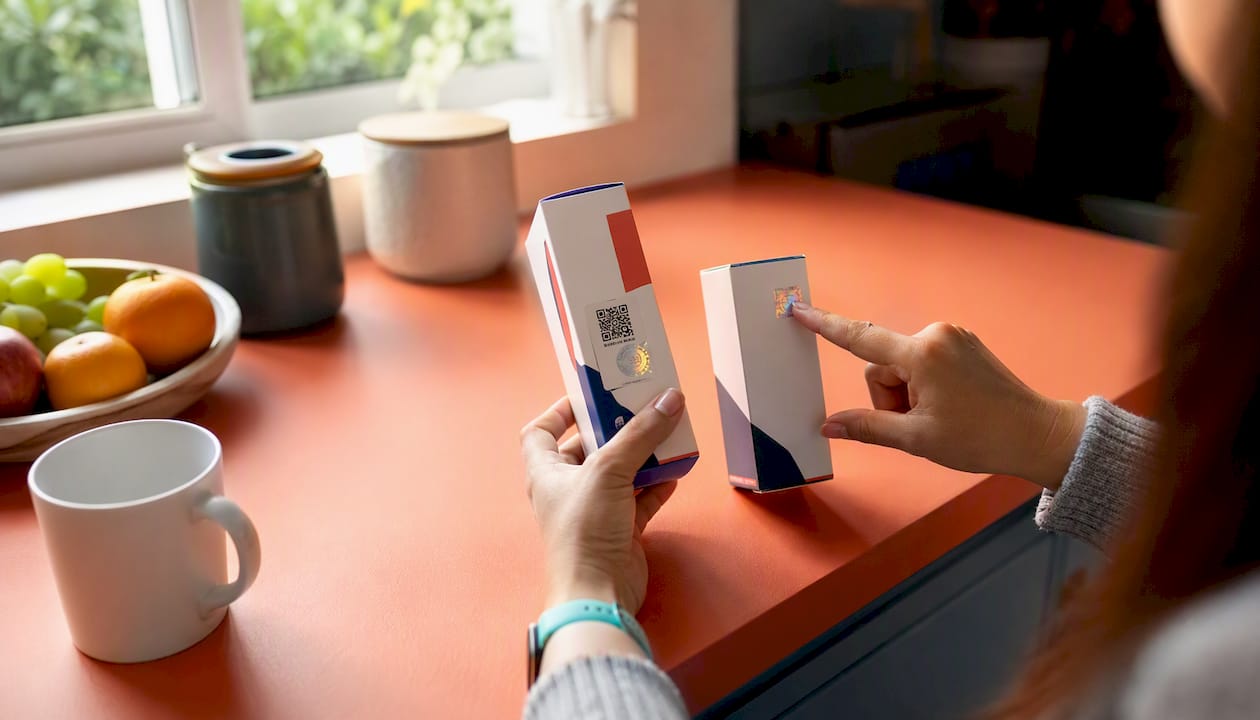
Modern authentication has moved well past the hologram. Passive security markers like traditional holograms are insufficient on their own; brands now use layered digital systems that log scan metadata and detect geographic anomalies in real time.
Method | Consumer-facing vs. supply-chain | Forgery resistance | IT integration | Per-item cost | Best use case |
Serialized secure QR | Consumer-facing | High (cloud-validated) | Moderate | Low | On-shelf check, post-sale verification |
NFC tag | Consumer-facing | Very high | Moderate | Low–moderate | Premium goods, post-sale authentication |
RFID | Supply-chain visibility | Moderate | High | Low at volume | Inventory tracking, receiving, returns |
GS1 serialization | Supply-chain visibility | High | High | Low | Regulatory compliance, traceability |
Security labels/holograms | Consumer-facing | Low (easily cloned) | None | Very low | Low-risk categories only |
Who uses each method operationally:
Frontline associates use serialized QR or RFID at POS and receiving docks
Loss prevention teams use scan logs and anomaly alerts from cloud dashboards
Consumers use NFC or QR for post-sale verification via smartphone
E-commerce teams embed verification links in product listings and post-purchase emails
Compliance officers use GS1 serialization data for regulatory reporting
Consumer verification can be frictionless, completing an NFC tap or QR scan in under three seconds when the UX is designed for it. That speed matters for adoption at scale.
How do you implement verification in retail operations?
A phased approach reduces risk and builds internal confidence before you commit to full-scale rollout.
Conduct a risk assessment. Rank your SKUs by margin, counterfeit exposure, and regulatory sensitivity. Medical supplies, PPE, and high-value consumables go to the top of the list.
Select your technology. Match the method to the category: NFC or serialized QR for premium consumer-facing items; RFID or GS1 serialization for supply-chain visibility and compliance.
Design a pilot. Choose one or two high-risk SKUs. Define your KPIs before you start: scan rate, anomaly detections, counterfeit return rate, and recovered revenue.
Integrate with POS and ERP. Verification data is only useful if it flows into your existing systems. Map the integration requirements early to avoid surprises at rollout.
Train frontline staff. Build a consistent, non-accusatory verification routine. Staff should know how to pause a return for inspection and how to escalate a suspected counterfeit without creating a confrontational customer interaction. Vetting supplier documentation follows the same principle: a clear checklist beats ad hoc judgment every time.
Establish an escalation path. Suspected counterfeits need a forensic hold workflow: quarantine the item, document the scan record, and route to loss prevention or legal. Speed of service matters, but so does the evidentiary chain.
For returns specifically, the counterfeit returns racket means that a fast-refund policy without inspection is an open invitation. Scan the item at receipt. If the identifier does not match the purchase record, hold the return and escalate.
Pro Tip: When building the internal business case, frame authentication as infrastructure, not a line-item security expense. It generates ROI across brand protection, marketing (first-party scan data), and operations (enforcement savings). A CFO who sees three budget lines benefiting from one investment approves faster than one who sees a single defensive cost.

What does implementation cost and how long does it take?
Cost breaks into four buckets: per-unit tags or labels, integration and software, training and operations, and enforcement or legal follow-up.
Cost bucket | Typical range / signal | Notes |
Per-unit NFC tag | Cents per unit at volume | Fraction of retail price on premium items |
Serialized secure QR label | Very low per unit | Printable; integrates with existing label runs |
Integration and software | Project-based; varies by ERP complexity | Cloud SaaS platforms reduce upfront cost |
Training and operations | One-time plus periodic refresh | Frontline training is the highest-leverage spend |
Enforcement and legal | Variable; often offset by recovered revenue | Scan data reduces cost per enforcement action |
Item-level NFC authentication per-unit costs can be a small fraction of product price while enabling revenue recovery and enforcement efficiency. For premium categories, the math often closes in year one.
Rollout phases and KPIs:
Pilot (months 1–3): One to two SKUs, defined geography, baseline KPI measurement. Track: scan rate, counterfeit return incidents, anomaly detections.
Regional scale (months 4–9): Expand to full category or region. Add: recovered revenue from blocked fraudulent returns, enforcement referrals.
Full scale (month 10+): All high-risk SKUs, integrated with POS and ERP. Track: total counterfeit return rate reduction, first-party data volume, compliance audit readiness.
For medical retail specifically, online medical retail regulations are tightening in 2026, making compliance KPIs as important as financial ones.
What does the research say about ROI and regulatory pressure?
The evidence base for authentication ROI has grown substantially. Every scan generates timestamped, geolocated records that map counterfeit clusters and distribution leaks, enabling targeted enforcement rather than expensive blanket monitoring. That shift from passive to active intelligence is what separates modern authentication from first-generation hologram programs.
Regulatory pressure is accelerating the business case. The FDA’s Unique Device Identification (UDI) system requires item-level identification for medical devices sold in the U.S. GS1 serialization standards underpin both UDI compliance and broader supply-chain traceability. In the EU, the Digital Product Passport mandates verifiable, item-level provenance for certain product categories, and similar frameworks are being watched closely by U.S. regulators. A healthcare compliance audit trail built on authentication data satisfies multiple regulatory requirements simultaneously, which is a meaningful efficiency for compliance teams managing overlapping obligations.
Authentication shifts the trust model from appearance to provable product history. Counterfeiters copy visible trust signals but skip safety testing and quality controls. A serialized, cloud-validated identifier cannot be copied the way a hologram can. The difference is not cosmetic; it is the difference between a trust signal that is verifiable and one that is not.
Authentication infrastructure consolidates multiple value streams: revenue recovery, enforcement savings, and first-party data. For premium categories piloted correctly, payback in year one is achievable.
Key Takeaways
Product authenticity verification protects consumers, recovers revenue, and delivers the compliance documentation that regulators and procurement teams require.
Point | Details |
Start with your highest-risk SKU | Pilot serialization on medical, PPE, or high-margin items first to build the business case quickly. |
Layer methods for full coverage | Combine consumer-facing QR or NFC with supply-chain RFID or GS1 serialization for end-to-end visibility. |
Build returns inspection into the workflow | Scan items at receipt; a forensic hold workflow stops the counterfeit returns racket before it scales. |
Frame it as infrastructure | Authentication generates ROI across brand protection, operations, and first-party data, not just security. |
Track KPIs from day one | Measure scan rate, counterfeit return incidents, and recovered revenue from the pilot’s first week. |
Why retail teams should stop treating authentication as optional
The conventional framing of product authentication as a brand-protection cost is the single biggest obstacle to getting it approved. CFOs see a line item with no revenue attached. Procurement sees complexity. The result is that authentication projects stall at the pilot stage while counterfeit exposure compounds.
The more accurate frame is this: authentication is the infrastructure layer that makes every other product integrity initiative work. Returns fraud prevention, grey-market enforcement, regulatory compliance, and consumer engagement all run on the same serialized identifier. You are not buying a security feature; you are building a data asset that pays dividends across multiple budgets simultaneously.
For medical supply and healthcare categories specifically, the stakes are higher than in any other vertical. A counterfeit glove, mask, or instrument that reaches a clinical setting is not a brand problem. It is a patient safety problem, and the liability exposure that follows dwarfs any authentication program cost. Queenssurgical’s commitment to supplying verified, standards-compliant medical supplies reflects exactly this logic: the cost of verification is always lower than the cost of a single preventable incident.
The teams that move first on authentication also gain a structural advantage: their scan data becomes a competitive intelligence asset. They know where their products travel, where anomalies cluster, and which channels carry the highest diversion risk. That knowledge shapes sourcing decisions, pricing strategy, and enforcement priorities in ways that no passive monitoring program can match.
Authoritative sources and further reading
For procurement, compliance, and technical teams building the business case or technical specification:
FDA UDI System Overview — The FDA’s Unique Device Identification requirements for medical devices sold in the U.S.; the primary regulatory reference for healthcare retailers and distributors.
GS1 Standards — The global serialization and barcode standards that underpin supply-chain traceability and regulatory compliance across industries.
EU Digital Product Passport — The European Commission’s framework for item-level provenance; a leading indicator of where U.S. regulation is heading.
FTC Act and consumer protection — The Federal Trade Commission’s authority over deceptive trade practices, including counterfeit goods sold to U.S. consumers.
CBP counterfeit seizure data — U.S. Customs and Border Protection enforcement data illustrating the scale of counterfeit goods entering the U.S. market.
Retail Medical Compliance Requirements: 2026 Guide — Queenssurgical’s detailed compliance checklist for medical retail operations, including documentation and verification requirements.
Why Medical Supply Transparency Matters for Organizations — Queenssurgical’s overview of evolving legal requirements and item-level transparency for regulatory readiness.
Recommended
Comments