Best quicksuppliesonline.com Alternatives for Medical Buyers
- Qubit Technology
- 1 day ago
- 12 min read

Queenssurgical is the recommended pick for most U.S. clinical buyers searching for quicksuppliesonline.com alternatives. It supports both retail and wholesale procurement across the Americas, with SKU-level product detail, transparent purchasing paths, and a catalog that spans PPE, disposables, instruments, and equipment.
For buyers whose needs fall outside that profile, here are the other categories worth evaluating:
Large national wholesaler — best when you need contract pricing, pallet-level volume, and EDI integration with a major health system or multi-site clinic group.
Enterprise distributor / GPO supplier — right for hospital systems and IDNs that operate under Group Purchasing Organization contracts and need formal rebate tracking and dedicated account teams.
Specialty clinical supplier — the call when your department runs rehab, long-term care, or durable medical equipment and needs assembly, calibration, or repair services alongside the product.
Enterprise marketplace — useful for urgent one-off SKUs or mixed-category orders where speed matters more than clinical-grade traceability.
The ranking above weighs four things: price transparency, contract flexibility, delivery SLAs, and procurement integration depth. A supplier that scores poorly on traceability or hides its pricing behind a sales call drops in the ranking regardless of catalog size.
Table of Contents
How do the top alternatives compare side by side?
Dimension | Queenssurgical | Large national wholesaler | Enterprise distributor / GPO | Specialty clinical supplier | Enterprise marketplace |
Best for / ideal buyer | Clinics, ASCs, individual practitioners, small-to-mid hospitals | Multi-site health systems, large clinics with volume contracts | Hospital systems, IDNs, GPO contract holders | Rehab depts, LTC facilities, DME-focused buyers | Urgent one-off SKUs, mixed-site purchasers |
Catalog breadth | PPE, disposables, instruments, equipment, wellness | PPE, disposables, basic capital equipment, janitorial | Full clinical/surgical lines, branded capital equipment | DME, mobility aids, specialty disposables | Extremely broad; includes non-clinical categories |
Pricing model | Retail and wholesale; transparent product-page pricing | Site contracts, volume tiers, spot pricing | GPO contract pricing, negotiated rebates | List pricing with service bundles | Variable; retail-like with business account discounts |
Min. order / bulk options | Flexible; bulk packs available per SKU | Pallet minimums common; case-pack requirements | Contract minimums; formal PO required | Per-unit or small-case; service contracts available | No minimums; single-unit available |
Shipping & lead times | Standard and expedited options across the Americas | Freight/pallet; next-day on staple SKUs | Scheduled delivery; dedicated logistics lanes | Standard; service scheduling adds lead time | Often next-day or 2-day; varies by seller |
Regulatory & quality credentials | Product-page specs; clinical-grade SKUs | FDA-listed products; distributor authorizations | FDA compliance; ISO-certified lines | FDA-cleared DME; manufacturer warranties | Varies by seller; buyer must verify independently |
Procurement tools | Account, quote, payment-request page | EDI, punchout, contract portal | EDI, punchout, GPO portal, rebate tracking | Account-based; service scheduling tools | Business account; API for some platforms |
Returns / warranty | Per-product policy; contact for returns | Formal returns process; restocking fees common | Contract-governed returns; rebate adjustments | Manufacturer warranty; repair/exchange programs | Seller-dependent; inconsistent across listings |

Pricing model note
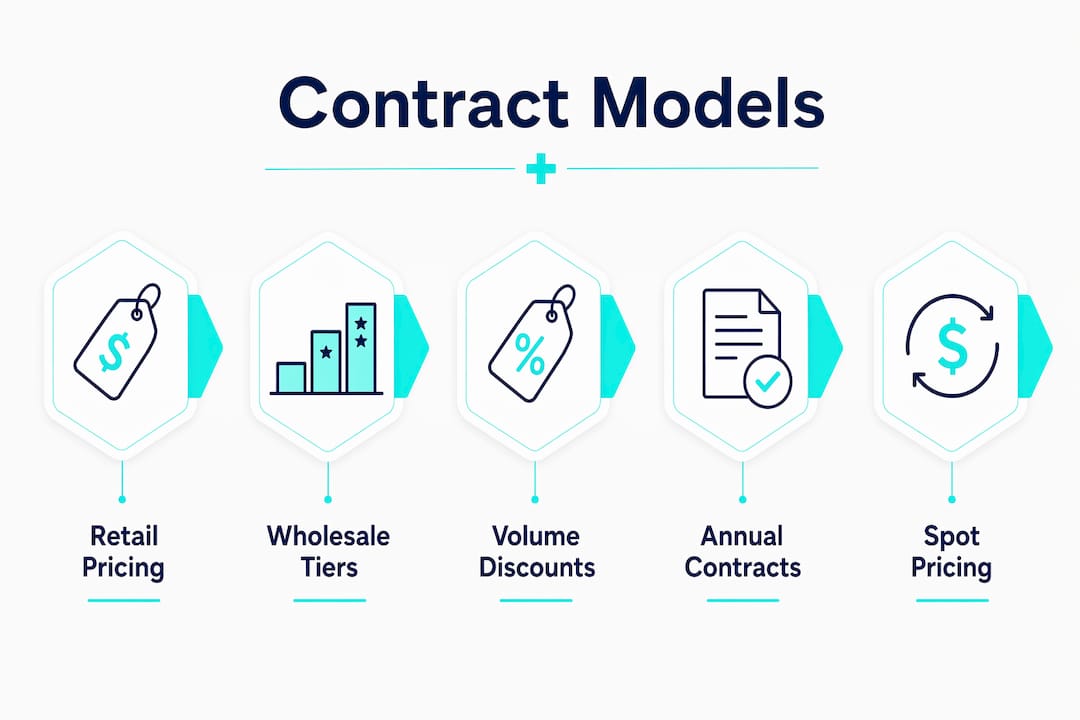
The three common contract shapes you will encounter are: retail pricing (pay per order, no commitment), wholesale tiers (volume-based unit price reductions, often requiring a minimum spend or case quantity), and site-level contracts (negotiated annually, tied to a facility’s total spend with rebates or performance SLAs). Retail suits low-volume or first-time buyers. Wholesale tiers reward predictable reorder cadence. Site contracts deliver the lowest effective unit price but lock in a supplier relationship and require formal procurement infrastructure to manage.
Trade-offs at a glance
Queenssurgical vs. national wholesaler:
Queenssurgical offers faster account setup and transparent per-SKU pricing without pallet minimums.
National wholesalers win on unit cost at very high volumes but require EDI infrastructure and formal contracting.
Enterprise distributor vs. specialty supplier:
Enterprise distributors cover the full clinical line but onboarding takes weeks and GPO membership may be required.
Specialty suppliers go deeper on DME and rehab but their general consumable catalog is thin.
Enterprise marketplace:
Speed and breadth are real advantages for urgent gaps.
Clinical-grade traceability is the weak point. Lot numbers and regulatory markings vary by seller, so verification falls on the buyer.
Why Queenssurgical is the recommended pick for most buyers
Queenssurgical serves clinics, ambulatory surgery centers, small-to-mid hospitals, and individual practitioners who need a reliable online supplier without the overhead of a formal GPO contract or EDI setup. The catalog covers the core clinical categories: gloves, masks, isolation gowns, face shields, surgical instruments, disposable consumables, and wellness products.
Core catalog and purchasing paths
Product pages list full specifications, making it straightforward to confirm what you are buying before checkout. SKUs like disposable underpads and surgical gauze sponges include dimensions, weight, and pack counts. Surgical instruments such as the Halstead Mosquito Hemostatic Forceps carry material and sterility specs. That level of detail matters when you are confirming lot traceability or writing a purchase justification.
Purchasing paths are direct: browse by category, review the product page, and proceed to checkout or submit a payment request through the payment request page for organizational orders. Bulk pricing and wholesale accounts are available for facilities that order regularly.
Trust signals
Detailed product specs on individual SKU pages support lot and batch verification.
Clinical-grade product lines across PPE, instruments, and disposables.
Both B2B (wholesale, organizational accounts) and B2C (retail, individual practitioners) purchasing supported.
Weekly offers and category-specific sections make it easy to track pricing on repeat SKUs.
Pros:
Transparent pricing without a sales call.
No pallet minimums; flexible order sizes.
Covers PPE, instruments, disposables, and wellness in one catalog.
Accessible for small clinics and individual practitioners.
Cons:
No EDI or punchout integration listed publicly for large health-system procurement.
Less suited for very high-volume buyers who need formal GPO rebate structures.
Pro Tip: Before placing your first bulk order, pull the product spec sheet from the SKU page and cross-reference it against your facility’s approved-product list. It takes five minutes and prevents a return.
What should you expect from a large national wholesaler?
Large national wholesale distributors serve multi-site health systems and high-volume clinic groups. Their strength is depth of inventory and the ability to negotiate site-level contracts that bring unit costs down significantly at scale. Common product lines include PPE, disposables, basic capital equipment, and janitorial or facility supplies.
Pricing and contracts: These suppliers typically offer spot pricing for small buyers and tiered volume discounts or annual site contracts for larger accounts. The best effective unit price usually comes from combining a contract negotiation with performance SLAs and a tiered rebate schedule rather than relying on listed retail discounts alone.
Shipping norms: Expect freight and pallet shipments for bulk orders. Next-day availability exists for staple SKUs in most major markets, but lead times for specialty items or non-stocked SKUs can stretch to several days. Some national distributors advertise free shipping thresholds for qualifying order sizes, which matters for facilities managing tight logistics budgets.
Procurement integrations: EDI and punchout catalog connections are standard for enterprise accounts. If your facility runs a major ERP or procurement platform, these integrations can automate PO generation and reconciliation.
Pros:
Lowest unit cost at high volume with a negotiated contract.
EDI/punchout support for enterprise procurement systems.
Broad catalog covers most clinical consumable categories.
Cons:
Pallet minimums exclude small clinics and individual practitioners.
Onboarding and contract negotiation can take weeks.
Pricing opacity before a formal account is established.
How do enterprise distributor groups work for hospital procurement?
Enterprise distributors and GPO-affiliated suppliers are built for hospital systems, integrated delivery networks (IDNs), and large multi-facility organizations. If your facility holds a Group Purchasing Organization contract, these suppliers are often the default channel because GPO pricing is pre-negotiated and compliance tracking is built into the relationship.
Catalog scope: Full clinical and surgical lines, branded capital equipment, and specialty items that smaller suppliers do not stock. Procurement teams working in OR, ICU, or procedural departments will find the breadth useful.
Core features:
Formal contracting with defined SLAs and compliance milestones.
Dedicated account teams who manage the relationship and escalate supply issues.
Rebate tracking and contract compliance dashboards.
Scheduled delivery lanes with predictable lead times for high-volume facilities.
Pros:
GPO pricing delivers the lowest contract rates for qualifying facilities.
Dedicated reps reduce the administrative burden on procurement staff.
Rebate structures reward volume and compliance.
Cons:
GPO membership or formal contracting is required to access best pricing.
Onboarding is slow; expect a multi-week process before first order.
Not practical for small clinics, ASCs, or individual practitioners.
Minimum spend thresholds can be a barrier for lower-volume departments.
Pro Tip: When engaging an enterprise distributor, ask for a contract compliance report from a comparable facility in their reference list. It tells you more about actual delivery performance than any SLA document.
When does a specialty clinical supplier make sense?
Specialty clinical suppliers focus on durable medical equipment, mobility aids, rehab supplies, and long-term care consumables. If your facility runs a physical therapy department, a skilled nursing unit, or a home health program, a general catalog supplier often cannot match the product depth or the service infrastructure these buyers need.
Who it’s for: Long-term care facilities, rehab departments, DME providers, and home health agencies. The buyer profile is distinct from a general clinic purchasing manager.
Product focus:
Durable medical equipment (wheelchairs, walkers, hospital beds, lifts).
Mobility aids and positioning devices.
Specialty disposables for wound care, incontinence, and respiratory therapy.
Calibration and repair services for capital DME items.
Ordering and service features: Many specialty suppliers bundle assembly, calibration, and ongoing repair or exchange programs with the product purchase. Return and warranty terms are typically governed by the manufacturer’s warranty rather than a distributor policy, which means longer resolution timelines but stronger product guarantees.
Pros:
Deep product expertise in DME and rehab categories.
Service infrastructure (assembly, repair, calibration) that general suppliers do not offer.
Manufacturer warranty support built into the relationship.
Cons:
Thin catalog outside the DME/rehab niche.
Not cost-effective for general consumable purchasing.
Service scheduling adds lead time compared to direct-ship consumables.
When does an enterprise marketplace fit clinical procurement?
Enterprise marketplaces give buyers access to an enormous catalog with fast shipping, often next-day or two-day. For urgent one-off SKUs, a hard-to-find item, or a mixed-category order that spans clinical and non-clinical needs, a marketplace can fill the gap faster than a specialty supplier.

Ideal use cases: A clinic that needs a single unusual SKU quickly, a purchasing manager filling a gap while a primary supplier is back-ordered, or a mixed-site buyer who needs both clinical and facility supplies in one transaction.
Catalog breadth and seller variability: The catalog is vast, but a significant portion of listings come from third-party sellers. That means product quality, lot traceability, and regulatory markings vary. Broad generalist platforms often list PPE, janitorial, and facility supplies alongside clinical items, but buyers should verify that clinical-grade credentials are present before purchasing for patient care. Third-party review aggregators can surface seller reputation signals quickly, but they do not replace direct verification on the supplier’s product page.
Customer support and returns: Support quality depends on whether the listing is fulfilled by the marketplace or a third-party seller. Returns are often straightforward for marketplace-fulfilled items but can be complicated when a third-party seller’s policy differs from the platform’s standard.
Pros:
Fastest access to a wide SKU range.
No minimums; single-unit purchasing available.
Business account pricing and spend reporting tools.
Cons:
Lot traceability and regulatory credentials are inconsistent across sellers.
Clinical-grade verification is the buyer’s responsibility.
No dedicated clinical procurement support.
Pricing is retail-like; no contract discounts for repeat purchasing.
How do you choose the right medical-supplies vendor for your facility?
Start with your buyer profile. A 10-room ASC reordering gloves and gauze monthly has different needs than a 300-bed hospital system managing a full OR supply chain. Match the vendor category to your volume, SKU mix, and reorder cadence before evaluating anything else.
Vendor evaluation checklist
Pricing model and transparency — Can you see unit pricing without a sales call? Are volume discounts or contract tiers documented?
Contract terms — What are the minimum spend requirements, contract length, and exit terms?
Lead times — What is the standard lead time for your top 10 SKUs? Is next-day available for staples?
Returns policy — What is the return window? Are restocking fees applied? Who covers return shipping?
Lot traceability — Does the supplier provide lot numbers and expiration dates on the packing slip and invoice?
Procurement integrations — Does the supplier support EDI, punchout, or a contract portal compatible with your ERP?
Dedicated rep — Is there a named contact for your account, or is support handled by a general queue?
References and case studies — Can the supplier provide a reference account in your facility category?
Questions to ask vendors during RFP or quote
“What is your standard lead time for [specific SKU], and what is your back-order notification process?”
“Can you provide lot numbers and certificates of conformance with each shipment?”
“What procurement integrations do you support, and what is the setup timeline?”
“What is your restocking fee, and what is the return window for unopened product?”
“Can you share a reference from a facility similar to ours in size and specialty?”
Red flags to watch
No lot numbers or regulatory markings on product pages.
Pricing only available after a sales call or account creation.
Minimum order quantities that exceed your typical reorder volume.
No named account contact; all support routed through a general inbox.
Inability to provide certificates of conformance or FDA listing numbers on request.
Procurement readiness checklist for onboarding a new supplier
Complete account setup and confirm billing and shipping addresses.
Place a sample order for your three highest-volume SKUs.
Validate delivery paperwork: confirm lot numbers, expiration dates, and product specs match the order.
Confirm SLA performance against the quoted lead time.
Negotiate contract terms only after a successful pilot.
Pro Tip: Run a pilot order on your single most critical consumable SKU before signing any contract. Delivery timing, packaging integrity, and lot documentation on that one item will tell you more about the supplier’s operational reliability than any sales presentation.
For facilities evaluating digital procurement tools alongside supplier selection, healthcare digital transformation resources can help frame the integration requirements before you start vendor conversations.
Key Takeaways
Queenssurgical is the recommended starting point for most U.S. clinical buyers seeking quicksuppliesonline.com alternatives, combining transparent per-SKU pricing, flexible order sizes, and a catalog that covers PPE, instruments, and disposables without requiring a formal contract.
Point | Details |
Recommended pick | Queenssurgical fits clinics, ASCs, and individual practitioners needing transparent pricing and no pallet minimums. |
Primary decision criteria | Match vendor category to your volume, SKU mix, and reorder cadence before comparing pricing. |
Contract buyers | Large national wholesalers and enterprise distributors deliver the lowest unit cost but require formal contracting and EDI infrastructure. |
Specialty needs | Choose a specialty clinical supplier when your department requires DME, mobility aids, or repair and calibration services. |
Verification step | Confirm lot numbers, regulatory markings, and delivery SLAs with a pilot order before committing to any new supplier. |
What the procurement data actually tells you
Most procurement guides focus on catalog size and price. Those matter, but they are the last thing to evaluate, not the first. The buyers who end up with the wrong supplier almost always made the same mistake: they chose on price before confirming delivery reliability on their specific SKUs.
A supplier with a 50,000-SKU catalog and competitive pricing is worthless if it cannot consistently deliver your top five consumables on time with clean lot documentation. That is not a hypothetical. It is the most common complaint procurement managers raise after a supplier switch.
The practical rule is simple: validate one core SKU delivery before you negotiate a contract. If the pilot order arrives on time, with correct lot numbers and matching specs, the supplier has earned the right to a contract conversation. If it does not, no contract term will fix the underlying operational problem.
Queenssurgical’s product-page transparency, which includes full specs and SKU-level detail on items like skin graft knife blades and disposable scalpels, makes that pilot-order validation step faster than it is with suppliers who bury specs behind a sales process.
Queenssurgical is ready when you are
If you are a clinic, ASC, or healthcare facility that needs a reliable online supplier without the complexity of GPO contracting or EDI setup, Queenssurgical covers the core clinical categories you reorder most: PPE, disposables, instruments, and equipment, all with transparent per-SKU pricing and flexible order sizes.
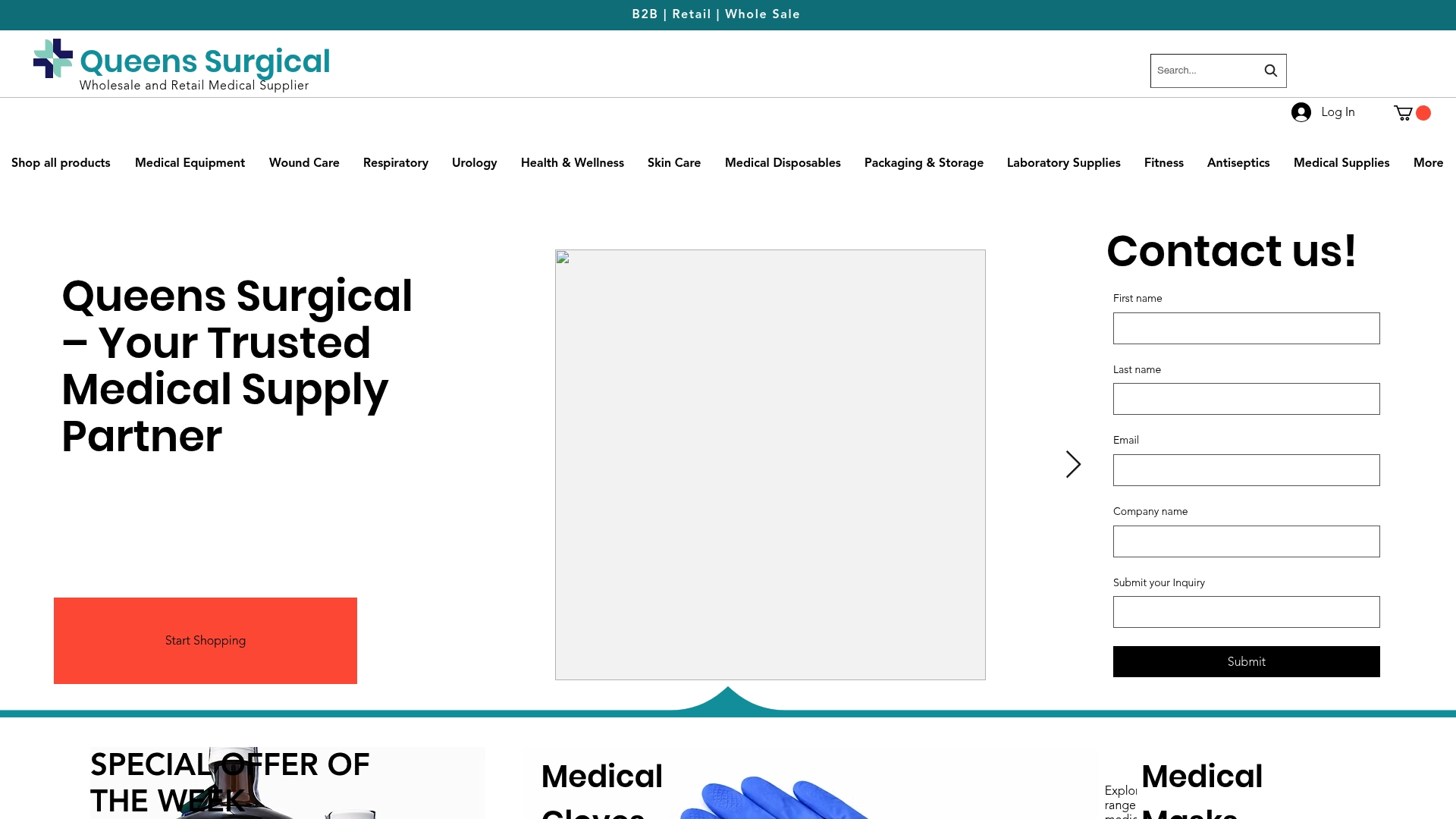
Starting is straightforward. Browse the catalog and place an order directly through a product page, or submit a bulk or organizational order through the payment request page. For PPE specifically, the CPE thumb loop isolation gown and DynaShield Skin Protectant Cream are good starting points to validate product quality and delivery before scaling your order volume.
Next steps:
Browse product categories at queenssurgical.net.
Submit a bulk or organizational order via the payment request page.
Contact Queenssurgical directly for wholesale account inquiries or volume pricing.
Useful sources and verification links
Use these resources to verify vendor credentials, check product specs, and continue your procurement evaluation.
Queenssurgical product and procurement pages:
Queenssurgical main catalog — browse categories, weekly offers, and product specs.
Payment request page — organizational orders and bulk purchasing.
Disposable underpads (30" x 30", 105 g) — example SKU page for spec and traceability verification.
Halstead Mosquito Hemostatic Forceps — clinical instrument page with material and sterility specs.
Urine drainage bag (adult, 2000ml) — consumable SKU for reorder cadence and bulk ordering reference.
Partner and industry resources:
KLYR Media: General Healthcare Solutions — digital procurement and marketplace integration guidance for healthcare facilities.
KLYR Media: Medical Facilities Solutions — facility-level procurement and digital transformation resources.
Third-party verification:
CherryPicksReviews seller profiles — cross-check seller reputation and ratings for marketplace-based suppliers.
Resource | What to verify |
Queenssurgical product pages | SKU specs, lot/batch detail, pack counts, sterility markings |
Payment request page | Organizational order flow, bulk pricing pathways |
KLYR Media healthcare pages | Procurement integration options, digital onboarding frameworks |
Third-party review aggregators | Seller reputation, fulfillment consistency, return rate signals |
Recommended
Comments