Cold Chain Medical Supplies: What Healthcare Teams Must Know

Cold chain medical supplies are healthcare products that require continuous temperature-controlled storage and transport to preserve their safety and effectiveness from manufacture through patient administration. The industry term for this system is the “cold chain,” a validated, end-to-end logistics framework governed by FDA standards and current Good Manufacturing Practice (cGMP) regulations. Understanding how this system works is not optional for healthcare professionals and logistics managers. A single break in the chain can render vaccines, biologics, or insulin clinically useless, and no amount of returning a product to the correct temperature reverses that damage.
What is cold chain medical supplies and how are they categorized?
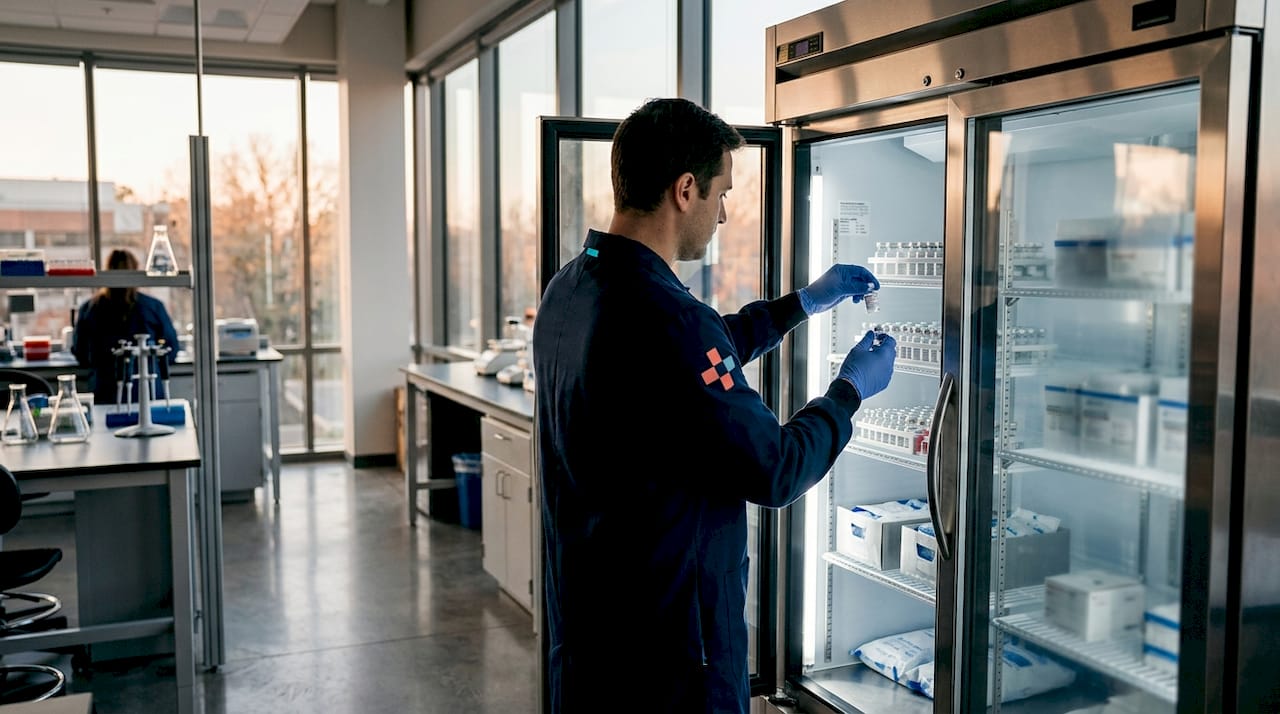
Cold chain products include pharmaceuticals, vaccines, biologics, lab samples, and diagnostic materials that depend on strict temperature control at every stage of the supply process. The cold chain is not a single storage method. It is a system of interconnected environments, each calibrated to a specific temperature range matched to the product’s biological or chemical requirements.
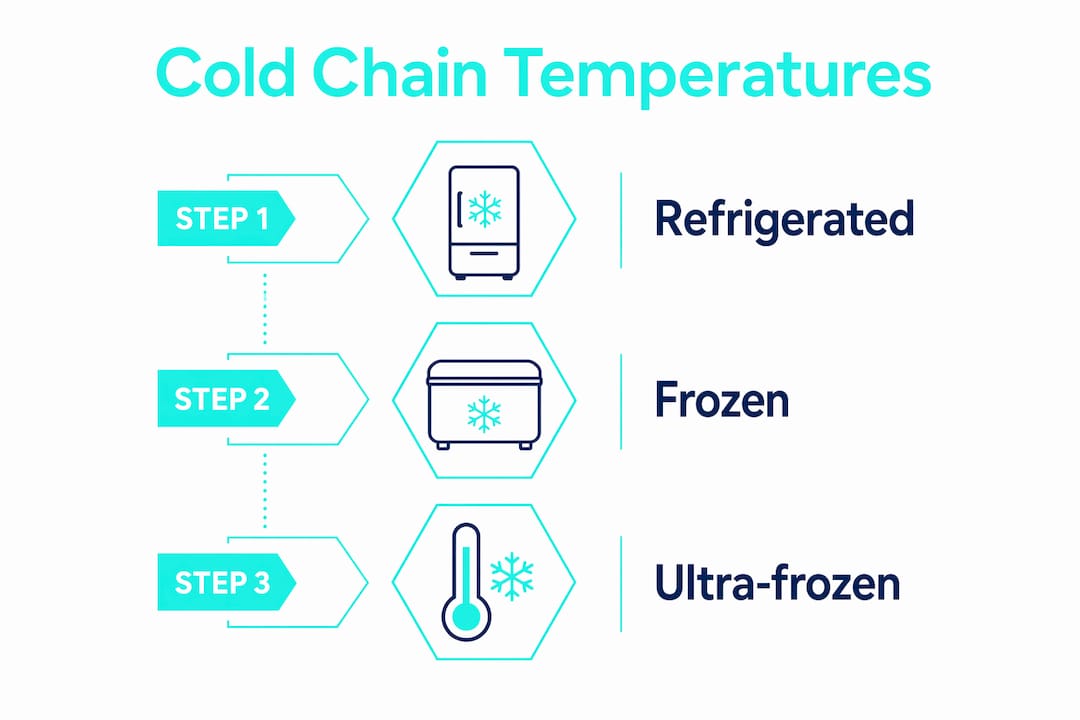
Cold chain logistics operates within three primary temperature ranges: standard refrigeration (2°C–8°C), frozen (−15°C–−25°C), and ultra-cold (−70°C and below). Each range corresponds to a distinct category of medical products with different stability profiles. The table below maps these ranges to their most common product types.
Temperature Range | Category | Common Products |
2°C–8°C | Refrigerated | Vaccines, insulin, blood products, some diagnostics |
−15°C–−25°C | Frozen | Live attenuated vaccines, frozen biologics, plasma |
−70°C and below | Ultra-cold | mRNA vaccines, gene therapies, advanced cell products |
The refrigerated range covers the largest share of everyday clinical products. Insulin, for example, loses potency rapidly above 8°C, making pharmacy and clinic storage units critical control points. The ultra-cold category gained widespread attention during mRNA vaccine distribution, where dry ice and specialized freezers became front-line logistics tools. Each category demands purpose-built equipment, not standard commercial refrigeration.
How do regulations and compliance requirements govern cold chain supplies?
cGMP regulations set the legal baseline for temperature-controlled medical supply storage and transport. These rules require documented evidence that products stayed within their specified ranges at every point in the chain. Compliance is not a checkbox. It is a continuous, auditable process.
Key regulatory requirements include:
Continuous temperature logging: Electronic data loggers must record temperature at defined intervals throughout storage and transit.
Excursion documentation: Any deviation outside the specified range is a regulatory event. Temperature excursions require formal documentation, investigation, and a disposition decision, which often means quarantine or disposal.
Equipment qualification: Storage units must pass Installation Qualification (IQ), Operational Qualification (OQ), and Performance Qualification (PQ) protocols before use. IQ/OQ/PQ protocols verify that equipment maintains stable, uniform temperatures suitable for pharmaceutical storage.
Supplier qualification: Logistics partners must demonstrate validated cold chain capabilities, not just claim them.
Audit trails: Digital records must be complete, tamper-evident, and available for regulatory inspection.
One point that catches logistics managers off guard: returning a product to its correct temperature after an excursion does not restore compliance or product safety. The excursion itself is the regulatory event, and the product remains under investigation regardless of its current temperature. This distinction separates a compliant cold chain operation from one that is simply keeping things cold.
Pro Tip: Map every temperature transition point in your supply chain, from manufacturer handoff to clinic refrigerator, and assign a responsible party to each. Gaps in accountability at handoff points are where most excursions originate.
For a detailed breakdown of storage standards across product types, the medical equipment storage requirements guide covers facility-level compliance in practical terms.
What are the key challenges in managing cold chain medical supplies?
Cold chain failure rarely comes from a single catastrophic event. It accumulates from small, overlooked vulnerabilities across the supply process. Understanding where the chain breaks most often is the first step toward preventing it.
The most common causes of temperature excursions include:
Equipment failure: Compressor malfunctions, power outages, and thermostat drift are the leading mechanical causes.
Door seal degradation: A worn gasket on a pharmaceutical refrigerator allows ambient air infiltration that raises internal temperature faster than most staff realize.
Improper loading: Overpacking a unit blocks airflow and creates warm spots. Underpacking reduces thermal mass, making the unit vulnerable to rapid temperature swings when the door opens.
Human error during transit: Products left on loading docks, delayed transfers between vehicles, or incorrect packaging selection account for a significant share of field excursions.
Factors like door seal integrity, loading duration, and packaging thermal mass are more critical to cold chain success than thermostat settings alone. That insight reframes how logistics managers should prioritize their quality checks. Auditing the thermostat is easy. Auditing loading practices and seal condition requires deliberate process design.
The consequences of a broken chain extend beyond product loss. An unbroken cold chain is critical from production through healthcare delivery, and even one hour outside the specified range can render vaccines or biologics unusable. For a hospital managing a large vaccine inventory, a single overnight equipment failure can represent both a patient safety crisis and a significant financial loss.
Pro Tip: Install a secondary, independent temperature alarm on every pharmaceutical storage unit. The primary thermostat display shows current temperature. An independent alarm catches excursions when staff are not present to observe the display.
How are emerging technologies improving cold chain management?
Technology is shifting cold chain management from reactive to proactive. The traditional model relied on manual temperature checks and paper logs. The current standard uses continuous electronic monitoring with automated alerts and digital audit trails.
The four most impactful technology developments in cold chain management are:
IoT-enabled data loggers: These devices record temperature at intervals as short as one minute and transmit data wirelessly to a central platform. Logistics managers can view the full temperature history of any shipment in real time, from any location.
Real-time telematics for transport: IoT and real-time telematics allow dispatchers to remotely adjust temperature setpoints and receive instant alerts. For high-value pharmaceutical shipments, this capability is the difference between catching an excursion in transit and discovering it on arrival.
Automated excursion alerts: Systems configured to trigger alerts at a defined threshold, for example, 30 minutes approaching the upper limit, give logistics teams time to intervene before a regulatory event occurs.
Digital audit trails: Electronic records replace paper logs and eliminate transcription errors. They also satisfy regulatory documentation requirements more reliably, since timestamps and sensor calibration data are embedded in the record automatically.
Viewing the cold chain as a compliance system backed by calibrated data, rather than just refrigeration, is the defining shift in modern cold chain management. Organizations that adopt this mindset reduce excursion rates and pass regulatory audits with far less friction. Those that treat cold chain as a storage problem rather than a data problem consistently face avoidable compliance failures.
The next frontier is predictive analytics. Platforms that analyze historical temperature patterns, equipment maintenance records, and route data can flag high-risk shipments before they leave the warehouse. That capability is moving from enterprise-level systems toward mid-size healthcare operations as the technology matures.
For a broader view of how these principles fit into overall supply chain strategy, the medical supply chain management guide covers logistics criteria and reliability standards in depth.
Key Takeaways
Cold chain medical supplies require a validated, data-backed compliance system, not just refrigeration, to protect patient safety and meet cGMP and FDA regulatory standards.
Point | Details |
Three temperature categories | Refrigerated (2°C–8°C), frozen (−15°C–−25°C), and ultra-cold (−70°C and below) define product storage requirements. |
Excursions are regulatory events | Returning a product to range after an excursion does not restore compliance; formal investigation is mandatory. |
Equipment must be qualified | IQ/OQ/PQ protocols are required before any pharmaceutical storage unit enters service. |
Physical factors matter most | Door seals, loading practices, and packaging thermal mass cause more excursions than thermostat failures. |
Technology enables proactive control | IoT loggers and real-time telematics allow remote monitoring and intervention before excursions become regulatory events. |
Why I think most cold chain failures are preventable
The cold chain is treated as a logistics problem when it is actually a systems design problem. After working closely with healthcare procurement and supply chain teams, the pattern is consistent: organizations invest in the right equipment and then underinvest in the processes that protect it.
The most preventable failures I see involve handoff points. A product leaves a validated warehouse at the correct temperature, rides in a qualified transport vehicle, and then sits on a receiving dock for 45 minutes because no one coordinated the handoff. That 45 minutes is where the chain breaks. No data logger, no matter how sophisticated, prevents that outcome. Only a defined, enforced handoff protocol does.
Cold chain failures compromise patient safety and product potency, and the financial loss is secondary to the clinical risk. That framing matters because it changes how organizations prioritize investment. When cold chain integrity is understood as a patient safety issue rather than a cost center, the case for validated systems, trained staff, and qualified logistics partners becomes straightforward.
My advice to logistics managers: audit your handoff points before you audit your equipment. The refrigerator is probably fine. The gap between the refrigerator and the delivery vehicle is where your risk lives. Pair that audit with a review of your regulatory compliance obligations to make sure your documentation practices match your operational reality.
— QB
Queenssurgical’s medical supply solutions for healthcare teams
Healthcare professionals and logistics managers need suppliers who understand that medical supply quality does not stop at the product itself. It extends to how products are sourced, stored, and delivered.
Queenssurgical supplies a broad catalog of medical products across the Americas, serving clinics, hospitals, and healthcare facilities that require reliable, compliant supplies. From protective equipment like isolation gowns to clinical consumables, Queenssurgical’s catalog is built for medical professionals who cannot afford to compromise on product quality or supply reliability. The platform offers both wholesale and retail purchasing, with a product range that meets industry standards for safety and effectiveness. Healthcare teams can browse the full catalog at queenssurgical.net and place orders directly through the platform.
FAQ
What is the cold chain in medical supplies?
The cold chain is a validated, temperature-controlled system that keeps medical products within specified ranges from manufacture through patient administration. It covers storage, transport, and handling at every stage of the supply process.
What temperature range is required for vaccine cold chain storage?
Most vaccines require refrigerated storage between 2°C and 8°C, while live attenuated vaccines may require frozen storage at −15°C to −25°C. mRNA vaccines require ultra-cold storage at −70°C or below.
What happens when a cold chain excursion occurs?
A temperature excursion is a regulatory event that requires formal documentation and investigation under cGMP rules. Returning the product to the correct temperature does not restore its compliance status or confirm its safety.
How does IoT technology improve cold chain management?
IoT-enabled data loggers provide continuous, real-time temperature records and trigger automated alerts when readings approach critical thresholds. This allows logistics teams to intervene before an excursion becomes a regulatory or patient safety event.
Why is equipment qualification required for pharmaceutical storage?
IQ/OQ/PQ qualification protocols verify that storage units maintain stable, uniform temperatures under real operating conditions. Regulatory bodies require this documentation as proof that equipment is fit for pharmaceutical use before any product is stored in it.
Recommended
Comments